

















Every market forecast has a political assumption buried inside it.
Someone decides how much pain a president will absorb before folding, then prices everything else around that guess.
That assumption is usually the sturdiest part of the model. Voters notice gas prices, and bond markets punish deficits.
Presidents heading into a midterm tend to move before either gets ugly.
So when commodity desks model a war, they rarely model troop movements or negotiating rooms. They model thresholds.
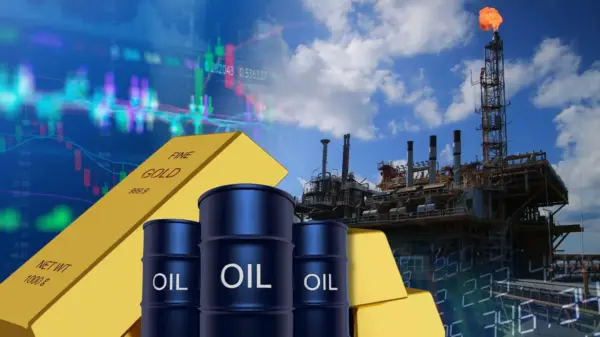
Oil above $100 a barrel. Gasoline close to $5 a gallon. A 10-year Treasury yield above five percent.
Hit those levels and Washington historically finds a deal in a hurry. The framework has outlasted embargoes, invasions and a half-dozen Gulf crises.
This month, all three levels broke. Nothing happened.
The exit that was supposed to arrive with the pain never showed up, and the most influential research desk in American banking has stopped pretending it can see one.
JPMorgan Chase (JPM) has walked away from its baseline forecast for the Iran war, six months after building that forecast around those exact numbers.
Why oil forecasts run on political pain thresholds
The war began Feb. 28, and commodity strategists needed a framework almost immediately.
JPMorgan’s was economic rather than military. The bank assumed a specific set of breaking points would force President Donald Trump into an agreement to reopen the Strait of Hormuz sometime in June, according to CNBC.
Those breaking points were crude above $100, pump prices near $5 and the 10-year yield topping five percent.
More Wall Street:
- Morgan Stanley drops blunt verdict on Ozempic maker
- Jim Cramer sends strong warning to stock market investors
- UBS sets $730 target on a stock it just stopped doubting
An interim deal did arrive in June. It fell apart within weeks, and the fighting has escalated since.
A U.S. naval blockade of Iranian ports remains in force, and the two sides have not been back at a table in any serious way.
The Strait is why the math matters. More than ten million barrels per day of Gulf output sat shut in during August, according to the International Energy Agency, which now expects total world supply to fall 5.7 million barrels per day this year.
That would be the steepest full-year contraction since the pandemic. “Inventories have so far played a crucial role in balancing the market,” the agency said.
What JPMorgan told clients about the oil endgame
“We simply don’t know how to model the endgame,” said Natasha Kaneva, the bank’s head of global commodities strategy, in a Sept. 17 note reported by CNBC.
It was the first time since the conflict began that the desk had no baseline view at all.
Related: OPEC+ has lost control of the oil market
The bank still runs the arithmetic. It puts fair value for Brent crude near $90 while the benchmark trades around $105, after nearly touching $110 earlier in the week.
Brent averaged $91 a barrel in August, $7 above the July average, according to the U.S. Energy Information Administration.
Every one million barrels per day of lost supply adds roughly $4 to the futures price, by JPMorgan’s own estimate. The gap implies traders are pricing in four million barrels per day of additional losses on top of what is already gone.
What is missing is the part that used to come next. Kaneva said six months of crossed redlines have left the exit less clear, not more.
The reason crude sits at $105 instead of $140 is that demand is falling almost as fast as supply. World consumption is on track to drop 2.5 million barrels per day this year, the International Energy Agency said in its September report.
Record fuel prices are doing what record fuel prices always do, which is convince people and factories to buy less.
Here is where those redlines actually stand:
- Crude: Brent traded near $105 a barrel this week after approaching $110, according to CNBC.
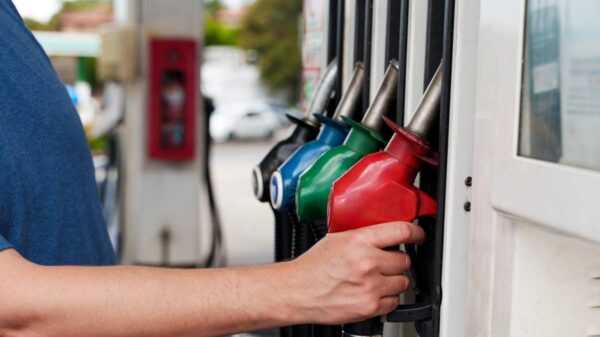
- Gasoline: the national average hit $4.4386 a gallon on Sept. 17, more than $1 above the price a year ago, according to AAA.
- Bonds: the 10-year Treasury yield pushed above five percent for the first time since 2023, reported Bloomberg.
- Diesel: the national average set a record $6.31 a gallon, according to AAA data.
What crossed redlines cost you at the pump and the bank
I ran the pump math against the roughly 470 gallons a typical American driver buys in a year. At AAA’s current national average, that works out to about $500 more than the same driver paid last September, before a single grocery or airfare markup.
Diesel does the quieter damage. At $6.31 a gallon it prices every truckload of food, furniture and packages crossing the country, which is a large part of why the consumer price index is running 3.4% above year-ago levels.
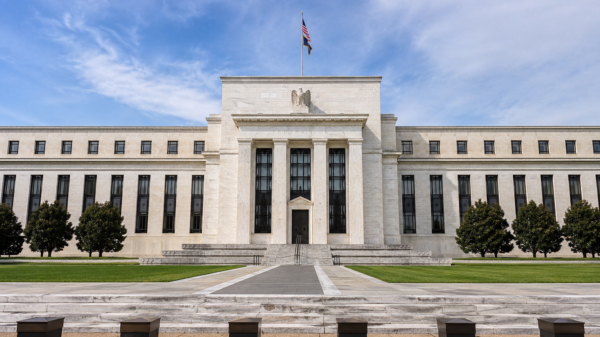
The bond side lands on the same household. The Federal Reserve raised rates on Sept. 16 for the first time in three years, to a 3.75% to 4% range, with Chair Kevin Warsh pointing at elevated inflation as the reason.
Mortgage quotes, auto loans and credit card balances are all influenced by that interest rate, which is how a war 7,000 miles away reaches a kitchen table in Ohio.
If you drive for a living, the squeeze already shows up in your monthly numbers. If you don’t, it reaches you through freight, delivery fees and the shelf price of almost everything trucked.
The administration is not backing off. Washington is waging “the greatest economic isolation campaign in the history of the world” against Iran, Treasury Secretary Scott Bessent told the House Financial Services Committee, according to Spectrum News.
Why the next oil move belongs to Trump, not the model
What struck me most in my analysis of the redline scoreboard is that the price model never failed. Brent behaved exactly as the barrel math said it would.
The political assumption is the piece that broke, and that is a much harder thing to rebuild. A bank can revise a supply curve overnight. It cannot revise a president.
Trump told Axios on Thursday, Sept. 17, that he is nearing a choice on whether to “go in and annihilate them” or wind the war down. He meets leaders from six Gulf countries Tuesday, Sept. 22, at the United Nations General Assembly.
For investors, the practical read is that crude no longer trades on a resolution timeline, because there is no longer one to trade. Any position built on the war ending by winter is now a wager on one man’s decision, and the biggest bank in the country has told clients in writing that it cannot handicap that.
The cushion is inventories. Stockpiles have drawn 555 million barrels since the war began, well short of the 1.6 billion JPMorgan originally modeled, which is the only reason $105 crude has not become $140 crude.
The International Energy Agency’s own base case now pushes a Gulf recovery into 2027, with production rebounding eight million barrels per day next year. That is a forecast about barrels, though, and the barrels were never the hard part.
Watch that buffer. The next redline will be the one nobody thought to write down.