




















Every technology that changes how people get around has to win two arguments. The first is whether the machine works. The second, which takes much longer, is what happens to the people who used to do the job.
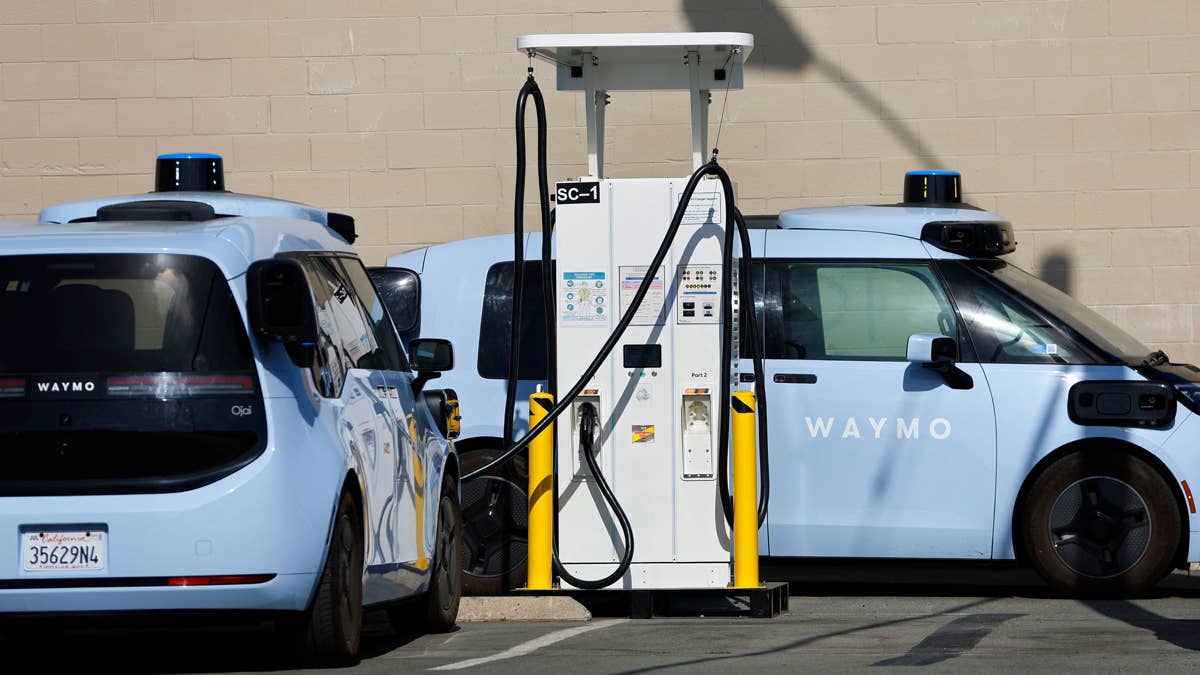
Waymo has largely won the first argument. Alphabet’s (GOOGL) autonomous driving unit has served more than 20 million fully autonomous rides and covered more than 300 million fully autonomous kilometers, with a 94% reduction in injury-causing crashes compared with human drivers in the US cities where it operates with nobody behind the wheel, according to Waymo.
For most of that run, this was an American story. Phoenix, then San Francisco, Los Angeles, Austin and Atlanta, then a fast wave of Sun Belt cities.
The map changed quickly after that. London arrived in October 2025, Tokyo moved from supervised testing toward a commercial target of 2027, and Munich landed in August as the company’s first European Union market, according to CNBC.
This week brought a fourth country, and it is the most instructive of the group. Waymo said Friday, Sept. 18, that it plans to launch a fully autonomous, all-electric ride-hailing service in Singapore in 2028, working with the city-state’s Ministry of Transport and Land Transport Authority (LTA).
That is a two-year runway in a country roughly the size of New York City. It is also the first time a government welcoming Waymo has attached a labor condition to the invitation in writing.
Why Singapore is a harder robotaxi market than it looks
On paper, Singapore is the easy version of this problem. Dense, wealthy, English-speaking, obsessively mapped and governed by a transport ministry that plans in decades rather than quarters.
I lined up Waymo’s four international announcements by date, and the pattern is not really about technology. Each new market has handed the company a different political problem to solve, and Singapore’s is the one American cities have spent five years avoiding.
Related: Waymo’s driverless cars run on a secret weapon
The country is not waiting on Waymo, either. Grab (GRAB) and WeRide (WRD) opened Singapore’s first public autonomous passenger service in the Punggol residential district on April 1, after a trial phase that carried more than 1,000 riders and logged over 30,000 kilometers of autonomous driving, according to Grab. Rival operator ComfortDelGro runs vehicles built on Pony.ai technology through its Zig app.
Those partnerships were announced last September, which means Singaporeans had been riding driverless vehicles for months before Waymo booked its slot, as Fortune reported.
What Waymo promised Singapore and when riders can book it
The rollout plan is deliberately unhurried. An initial fleet of all-electric Jaguar I-PACE vehicles arrives in the coming months, trained specialists drive them manually through 2027 to build high-definition maps and adapt the system to local road geometry and monsoon weather, and commercial rides through the Waymo app follow in 2028, subject to approvals the company does not yet hold.
More Automotive:
- Tesla Cybercab features unexpected restriction at launch
- BYD sends Toyota, Detroit clear message on solid-state batteries
- China just launched a $19,170 electric vehicle
Singapore “has built one of the safest, most efficient, and most forward-thinking transportation ecosystems in the world,” said Waymo co-CEO Tekedra Mawakana. Transport Minister Jeffrey Siow said the vehicles will be deployed first in the west of the country, starting with the Labrador and HarbourFront area, according to Mothership.
Tokyo shows how fast the framing hardens once a market is locked in. The Japanese service is meant to run with nobody at the wheel from launch, and “from day one, this will be an unmanned service for the public,” Mawakana told reporters there, reported Reuters.
Here is how the four international markets stack up:
- United Kingdom: London announced in October 2025 as Waymo’s first market outside the US, with Jaguar I-PACE vehicles testing on public roads, according to Fortune.
- Japan: Tokyo targeted for 2027 with taxi operator Nihon Kotsu and the GO app, starting small before scaling to roughly 100 vehicles, reported Reuters.
- Germany: Munich targeted for late 2027, the company’s third international market and first in the EU, according to CNBC.
- Singapore: commercial service targeted for 2028 through the Waymo app, in partnership with the Ministry of Transport and LTA, according to Waymo.
What Singapore said about taxi and private hire drivers
Read the statement closely and you find the sentence that makes this announcement different from the other three. The government said it will not allow autonomous vehicle deployment to “run ahead of our ability to retrain and support affected drivers,” building on a manpower transition package announced in July, according to the LTA.
My analysis of that line is that it functions as a throttle, not a slogan. Singapore is telling one of the best-funded private companies in the world that fleet growth is tied to a retraining timetable the state controls, and it put that in the same release that welcomed the company in.
The scale is modest for now. Siow said driverless vehicles will add capacity to the taxi and private hire fleet and fill gaps, including trips human drivers avoid and hours when public transport has stopped running.
The incumbents already work that way. Grab’s Punggol service created new roles for its driver-partners, including safety operator and remote operator positions. Both Grab and ComfortDelGro have set up academies to move drivers into fleet and remote monitoring work.
For anyone driving for a living in Atlanta or Austin or Phoenix, that is the part worth watching. No US city has offered its drivers a written promise about pace. Singapore just did, and that language tends to get copied once one government proves it can be enforced without scaring the technology away.
What a fourth country means for Alphabet investors
None of this shows up in Alphabet’s results yet. Other Bets, the segment that houses Waymo, generated $450 million in revenue and an operating loss of $1.2 billion in the first quarter of 2026, according to The Motley Fool, and the company does not break out Waymo separately.
Capital is not the constraint. Waymo raised $16 billion at a $126 billion valuation earlier this year, according to TechCrunch, which buys a lot of patience in markets where approvals take years.
The prize is still theoretical and very large. The global robotaxi market could be worth more than $400 billion by 2035, with the US portion at roughly $48 billion, according to Goldman Sachs estimates cited by The Motley Fool.
What Singapore adds is not revenue in 2028. It is a template. Waymo now has four national regulators grading its safety case at once, and the one with the strictest labor language also has the cleanest roads and the most patient government.
If the retraining condition turns out to be workable, expect London, Munich and Tokyo to reach for the same language, and expect the robotaxi bull case to start pricing labor politics alongside lidar.
Related: Waymo is bringing robotaxis to the country that invented cars