











Every barrel of oil carries two price tags, the one the buyer pays and the one everyone else pays for letting that sale happen.
For most of 2026, you’ve been paying the second one at the pump. The war with Iran has kept gasoline above $4 a gallon for much of the year, and crude spent September trading back above $100 a barrel.
Washington’s answer has been to go after the money rather than the barrels. Sanctions, a naval blockade and a steady stream of warnings to foreign banks all aim at the same goal, which is starving Tehran of oil revenue.
The catch rarely makes the talking points. Pressure only works if it lands on the customer, and Iran has essentially one big customer left.
That customer is also the country the White House most wants to keep friendly right now, with a presidential summit days away and a trade truce ticking toward its expiration date.
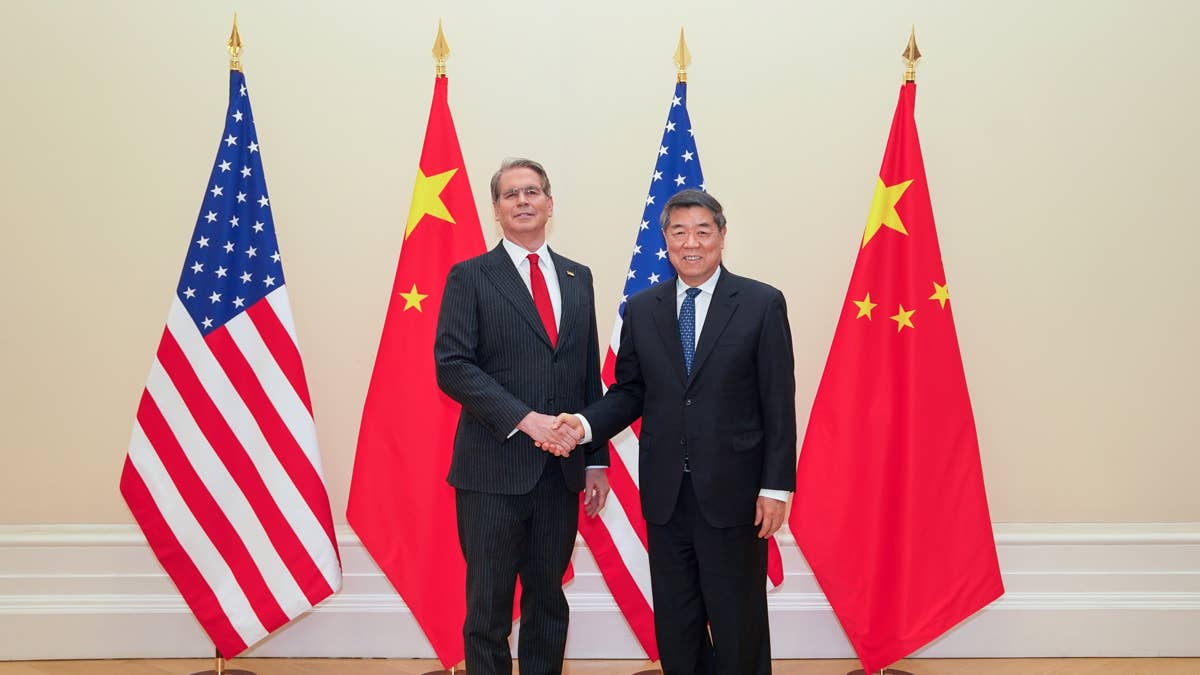
On Sunday, Sept. 20, Treasury Secretary Scott Bessent sits down in New York with Chinese Vice Premier He Lifeng, the top economic envoy for the country that buys roughly 90% of Iran’s exported oil.
I’ve covered Bessent’s Iran oil campaign since June, and this meeting is where its biggest contradiction finally comes due. What happens in that room could shape what you pay to fill your tank this winter.
Why China’s appetite for Iranian oil shows up in your gas tank
China purchases about 90% of Iran’s oil exports, with small independent refiners known as teapots handling most of those imports, according to the U.S. Treasury.
Those teapots, clustered mostly in Shandong province, run on discounted crude that China’s state-owned giants avoid for fear of U.S. penalties. That discount is the whole business model, and it’s the revenue stream Washington wants shut.
More Oil & Gas:
- HSBC raises its oil forecast as the Hormuz backup plan burns
- Oil prices hit very unwelcome levels
- OPEC+ has lost control of the oil market
The squeeze is real. Iran has “only about 30 million barrels” of crude left that China hasn’t already bought, Bessent said in a Fox News interview, according to the Washington Times.
Your wallet hasn’t felt much relief. Brent crude, the global benchmark, settled at $103.87 a barrel on Friday, Sept. 18, while West Texas Intermediate (WTI), the U.S. benchmark, closed at $100.30, according to CNBC.
The national average for regular gasoline stood at $4.47 a gallon on Sept. 18, according to AAA.
The link to your tank runs through the global market. Oil is priced worldwide, so when Chinese refiners lose cheap Iranian supply, they start bidding for the same barrels your local station depends on.
Chinese teapots may need to buy Russian crude or fuel oil instead “or risk cutting throughput in October when their inventories run thin,” Kpler senior crude analyst Muyu Xu told Reuters, according to OilPrice.com.
What Bessent and He Lifeng plan to discuss in New York
Bessent, U.S. Trade Representative Jamieson Greer, and He will meet in New York on Sunday, ahead of President Donald Trump’s Sept. 24 summit in Washington with Chinese President Xi Jinping, according to a statement from Greer’s office.
Bessent previewed the talks at a House Financial Services Committee hearing on Tuesday, Sept. 15, after a lawmaker asked whether Washington would act against Chinese banks that allegedly facilitate trade with Iran.
“With China, we have had some very good private discussions,” Bessent told lawmakers, according to the South China Morning Post. He said he looked forward to raising sanctions tied to the war in Iran with his Chinese counterpart, Bloomberg reported.
Iran is only one line on a crowded agenda, though.
Bessent and He Lifeng meeting agenda to watch
- Iran finance: Treasury has sanctioned some Chinese independent refineries but has so far held off on larger Chinese financial institutions, Reuters reported.
- Tariff truce: A possible extension of the U.S.-China truce, which expires Nov. 10, is expected to come up, according to Reuters.
- Rare earths and farm goods: Bessent has said he expects Beijing “to fully meet its commitments on rare earths and U.S. agricultural products,” Axios reported.
- Artificial intelligence: The two sides are expected to open preparatory talks on AI safety and governance, according to the South China Morning Post.
When I lined up Bessent’s testimony against the official meeting previews, what struck me was how little of the public agenda is about oil. Iran came up in the hearing because lawmakers pushed it, while the formal statements lead with trade, minerals, and AI.
The trade-off behind Bessent’s pressure on China’s oil buyers
Treasury can hit the buyer of Iran’s oil, or it can protect the trade peace that keeps rare-earth magnets and soybean orders moving. Doing both at the same time is the hard part.
Many observers doubt Bessent will follow through against China as Washington tries to hold together a fragile trade truce and avoid a global economic shock, Bloomberg reported in August.
Related: Trump’s Strait of Hormuz blockade squeezes drivers
Expectations for major new deals are low, and the weekend looks like “an exercise in kind of managing the relationship,” Wendy Cutler, policy director for the Asia Society in Washington, told Reuters.
I ran the numbers on what that balancing act is worth to you. Gasoline’s 2026 low was $2.81 a gallon in the week of Jan. 8, according to Finder, which tracks AAA data. At $4.47, you’re paying $1.66 more per gallon.
Fill a 15-gallon tank once a week, and that gap costs you about $25 a fill-up, or roughly $1,295 over a year. That’s the money riding on how the oil squeeze and the trade truce play out together, a tension I also traced when Bessent laid out his Iran oil and dollar strategy in June.
What the Trump-Xi summit could mean for gas prices this fall
The part I didn’t expect when I started digging is that Iran may no longer be the biggest driver of your gas bill. By Bessent’s own estimate, Tehran has little unsold crude left to ship to China anyway.
Oil prices have gained more than five percent since a drone attack damaged Saudi Arabia’s East-West pipeline, and JPMorgan Chase (JPM) estimates Middle East oil flows are running about six million barrels a day below their 2025 average, according to CNBC.
That makes Sunday’s meeting less about Iranian barrels and more about whether the world’s two largest economies stay out of a fresh trade fight while the Gulf sorts itself out. A stable truce won’t fix the price at the pump, but it protects what you pay for electronics, cars, and the everyday goods built with Chinese parts.
Watch three dates. The Trump-Xi summit lands Sept. 24, Chinese teapots face their inventory test in October, and the tariff truce runs out Nov. 10.
Bessent walks into Sunday’s meeting as the man squeezing Iran’s last big customer. He may walk out as the man working hardest to keep that same customer as a trading partner, and your fall budget will show which role won.