






















Updated July 21, 2026
Price: NVDA closed at $203.28 on July 20, 2026, up 0.23% on the day. Earlier in July the stock traded as high as roughly $211.81, lifting market capitalisation above $5.1 trillion.
Verdict: The consensus target of $301.62 implies about 48% upside from here. The published range runs $180 (−11%) to $500 (+146%). The bear case still requires an identifiable demand event, and the supply chain has not produced one.
Next catalyst: Fiscal Q2 2027 earnings, expected around August 26, 2026. Between now and then, watch the Vera Rubin ramp — initial shipments are guided for Q3 2026 with volume in Q4.
The standard bear argument on Nvidia (NVDA) is that growth must decelerate from here. The reported numbers say deceleration has not started. In fiscal Q1 2027, reported in late May 2026, Nvidia posted $81.6 billion in revenue, up 85% year over year, with data centre revenue of $75.2 billion, up 92% (CNBC). Annualise that single data centre quarter and you get roughly $300 billion — which is 39% larger than Nvidia’s entire company-wide revenue of $215.94 billion for all of fiscal 2026. One segment, run-rated, is now bigger than the whole business was last year. And yet the stock closed at $203.28 on July 20, 2026 — roughly a third below the $301.62 average target held by 61 analysts polled by S&P Global.
Here is the part almost no competing analysis states plainly: prediction markets are pricing this extraordinary compounding machine as a coin flip. Polymarket currently assigns a 46% probability that NVDA trades as low as $152 during July — a roughly 24% drawdown — while simultaneously giving 88% odds it closes the period above $190. Those two numbers are not contradictory; together they describe a market that believes in the destination but expects violence on the way. It is worth recording how that bet has aged: with NVDA at $203.28 on July 20 and only days left in the month, the $152 print the market priced as near-even odds has not arrived, and the 88% call on closing above $190 is tracking correctly. The lesson is not that prediction markets were wrong — a 46% probability is supposed to fail more often than not — but that the drawdown scenario was priced as volatility rather than as thesis breakage, and volatility is exactly what it turned out to be. That is the actual state of the Nvidia debate in mid-2026, and it is a far more useful frame than “AI is a bubble” versus “AI is forever.” Having tracked this name through the Blackwell ramp and the DeepSeek scare of early 2025, the pattern is consistent: Nvidia’s earnings keep beating and its multiple keeps compressing.
Key Facts
- NVDA closed at $203.28 on July 20, 2026 (+0.23%), after trading as high as about $211.81 earlier in the month and carrying a market capitalisation above $5.1 trillion — StockAnalysis, FX Leaders
- Consensus price target of $301.62 across 61 analysts, implying about 48% upside from $203.28; the low target is $180 (−11%) and the high is $500 (+146%) — S&P Global via Public.com
- Recent house targets: KeyBanc $330 (July 14, 2026), MarketBeat consensus $304.26, Morgan Stanley $288 — MarketBeat
- Vera Rubin, the Blackwell successor, is on track for initial shipments in Q3 2026 with volume ramping in Q4; first samples have shipped to customers — Wccftech, DigiTimes
- Next earnings: fiscal Q2 2027, expected around August 26, 2026
- Fiscal Q1 2027 revenue of $81.6 billion (+85% YoY), data centre revenue $75.2 billion (+92%) — CNBC, May 20, 2026
- Fiscal 2026 full-year revenue of $215.94 billion (+65.5%) and earnings of $120.07 billion (+64.8%) — NVIDIA Newsroom
- CEO Jensen Huang has guided to at least $1 trillion in Blackwell and Vera Rubin orders through 2027 — CNBC, March 16, 2026
- Polymarket prices a 46% chance NVDA hits a low of $152 in July, against 88% odds it closes above $190 — Polymarket, July 18, 2026
- SemiAnalysis estimates data centre compute revenue could land 20% above consensus in the second half of fiscal 2027, based on supply-chain checks
What is actually happening, and why the stock fell on a record quarter
The single most instructive fact about Nvidia in 2026 is that data centre revenue nearly doubled and the stock slid anyway. That is not irrational. It is what happens when a company’s results are strong but its multiple is being reset by investors who assume the growth rate cannot persist.
The mechanism is worth stating in plain terms. Nvidia sells accelerated computing systems — GPUs, networking, and increasingly full rack-scale platforms — into hyperscaler capital expenditure budgets. The useful analogy is not chip sales but electrical grid construction. Nobody buys a transformer because they like transformers; they buy it because they have committed to building capacity that must be energised. Nvidia’s revenue is a derivative of other companies’ multi-year buildout commitments, which is why order visibility matters more than any single quarter’s shipments.
That visibility is now unusually long. At GTC in March 2026, Huang put a number on the order book that no competitor has matched, and framed supply rather than demand as the binding constraint. “In fact, we are going to be short,” he told the audience.
“Well, I’m here to tell you that right now where I stand — a few short months after GTC DC, one year after last GTC — right here where I stand, I see through 2027, at least $1 trillion,” said Jensen Huang, Founder and Chief Executive Officer of NVIDIA (CNBC).
A trillion-dollar visible pipeline through 2027, against a company currently running about $326 billion in annualised revenue, is the bull case in a single sentence. The bear case is that order books are not contracts, and hyperscaler capex is the most reversible line item in technology.
What the supply chain and competitors are actually doing
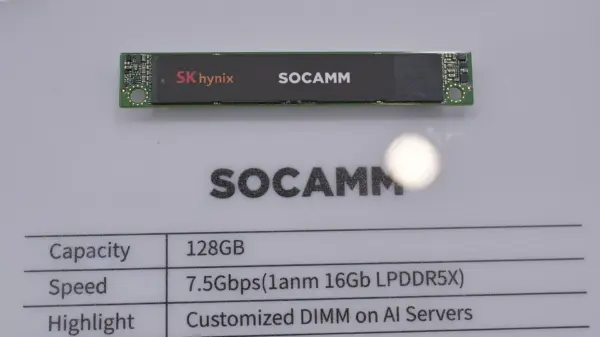
The supply chain response is where the demand story gets independently verified, and it corroborates rather than contradicts management. Nvidia has certified Micron, Samsung and SK Hynix to supply HBM4 for the Vera Rubin platform — a three-supplier qualification that signals Nvidia expects volumes large enough to require all of them. Micron has since contracted its entire calendar 2026 HBM supply on both price and volume, with purchase orders extending into 2027 and 2028, as detailed in our Micron bull-versus-bear breakdown. Memory suppliers do not lock multi-year take-or-pay agreements against demand they expect to evaporate.
Third-party supply-chain research points the same direction. SemiAnalysis, drawing on checks with chip materials suppliers, manufacturers, server makers and major cloud companies, estimates Nvidia’s data centre compute revenue could come in 20% above Wall Street consensus in the back half of fiscal 2027. That is an unusually specific claim built from channel evidence rather than modelling.
The competitive picture is genuinely more contested than a year ago. AMD has become a credible second source in AI accelerators — our AMD forecast covering its $700 bull and $385 bear cases lays out that trajectory. More pointedly, DeepSeek is now building its own chip, which is the clearest expression yet of the customer-becomes-competitor risk that hangs over every merchant silicon vendor.
Huang’s answer is to compete on cost per token rather than raw silicon. “Computing demand is growing exponentially — the agentic AI inflection point has arrived. Grace Blackwell with NVLink is the king of inference today — delivering an order-of-magnitude lower cost per token — and Vera Rubin will extend that leadership even further,” he said on the May 2026 earnings call.
Market impact: what the numbers actually support
Setting the bull and bear inputs against each other makes the disagreement measurable.
| Input | Bull reading | Bear reading |
|---|---|---|
| $75.2bn data centre quarter, +92% | Annualises above all of FY2026 revenue | Impossible comparison base for FY2028 |
| $1trn order book through 2027 | Visibility no rival can claim | Orders are not binding contracts |
| $301.62 consensus target | ~48% upside from $203.28 | Low target of $180 implies 11% downside |
| Vera Rubin ships Q3, ramps Q4 2026 | Next cycle on schedule, delay rumours denied | Ramp risk shifts to execution in Q4 |
| China shipments resuming | Revenue excluded from guidance — pure upside | Policy reversible at any time |
| Three-supplier HBM4 qualification | Nvidia planning for enormous volume | Also de-risks rivals’ memory access |
| DeepSeek building own silicon | Validates the compute category | Largest customers becoming competitors |
| 46% odds of $152 print in July | Volatility, not thesis breakage | Market prices a 24% drawdown as a coin flip |
Two data points deserve more weight than they usually get. The first is a quality-of-earnings question our own reporting surfaced: of Nvidia’s $120.07 billion in fiscal 2026 profit, $8.9 billion did not come from chips. That is roughly 7.4% of net income sourced from something other than the core operating business — a meaningful figure when the entire bull case rests on operating durability, and one that rarely appears in target-price models.
The second is the shape of the analyst distribution itself. A consensus of $301.62 sounds like agreement until you see the range: $180 at the low, $500 at the high. That is a 178% spread between the most bearish and most bullish published targets on a $4 trillion-class company. Dispersion that wide on a mega-cap is not normal — it means the sell side cannot agree on the most basic question of whether this is a cyclical hardware business or a structural compute utility.
Synthesising those two points produces something neither states alone: the disagreement about Nvidia is not about demand, which is visible and corroborated by suppliers. It is about earnings quality and terminal multiple. Both bulls and bears accept the $75.2 billion quarter. They disagree on what multiple a business earns when its largest customers are simultaneously its emerging competitors.
There is a third number that reframes the drawdown entirely. Nvidia’s fiscal 2026 revenue of $215.94 billion grew 65.5%, while earnings of $120.07 billion grew 64.8% — margins held essentially flat through a doubling of scale. That is the rarest outcome in hardware, where volume growth almost always arrives with margin compression as product mix shifts toward lower-margin systems. Flat margins through a 65% revenue expansion suggests pricing power is intact, not eroding. If the bear thesis were already playing out in the operating numbers, this is precisely where it would show up first — and it has not. For context on how capital is positioning around the same buildout, see our coverage of IREN’s $105 bull case against a $46 bear case.
Regulatory and geopolitical tension
Nvidia carries more policy risk than any other mega-cap, and it runs in both directions. US export controls restrict advanced accelerator sales into China, which protects the technology lead while removing a large addressable market outright. Loosening those controls would unlock revenue but accelerate domestic Chinese capability. Tightening them further protects the moat and removes revenue. Neither path is unambiguously good for shareholders.
That balance has started to shift. At GTC in March 2026, Huang said Nvidia had received purchase orders for H200 processors from Chinese customers and was “restarting our manufacturing” for that market (CNBC), and by mid-July 2026 reporting indicated chips were actually reaching Chinese customers. The detail that matters for valuation is what management has done with it in the model: Nvidia assumes no China data centre compute revenue in its outlook. Whatever China contributes is therefore upside that is not in the guidance and not in the consensus target — a rare case where a geopolitical thaw is structurally un-priced rather than partially discounted. It also cuts the other way: because nothing is assumed, a re-tightening of controls costs the model nothing, which is precisely why the risk is asymmetric in shareholders’ favour on this specific line.
The DeepSeek development sharpens this considerably. When a Chinese AI lab moves to build its own chip, that is partly a commercial decision and partly a direct consequence of export policy — restrictions create the incentive to design around the restricted component. Export controls intended to slow a rival can therefore accelerate the emergence of a competitor, which is the central strategic irony of the current regime.
There is a second regulatory front that receives less attention: antitrust scrutiny of AI compute concentration. With Nvidia supplying the overwhelming majority of training accelerators and now bundling networking and rack-scale systems, regulators in both the US and EU have an obvious structural question about vertical integration. No enforcement action has landed, and it would be wrong to price one in. But the risk is asymmetric — it does not affect demand, it affects what portion of the value chain Nvidia is permitted to capture, and that flows straight to margin rather than revenue.
What happens next: three predictions
First, the $152 level probably does not print, but the volatility is real. Polymarket’s 46% is roughly consistent with normal volatility for a stock that has already pulled back toward $197. Reaching $152 would require an actual demand signal — a hyperscaler capex guidance cut, or a Vera Rubin delay — rather than sentiment. The 88% odds on closing above $190 tell you the market itself treats the downside as a wick, not a trend.
Second, the multiple re-rates on the fiscal Q2 2027 print, not on new orders — and that print is now dated. Fiscal Q2 2027 results are expected around August 26, 2026, which gives the market roughly five weeks of drift before the next hard number. If SemiAnalysis is directionally right about a 20% consensus beat in the second half, the argument that growth is decelerating becomes untenable for at least two more quarters. Watch whether management converts any portion of the $1 trillion order book into disclosed backlog. Orders reframed as backlog would be the single most powerful re-rating catalyst available, because it converts a Huang statement into an audited number.
Third, customer-silicon announcements accelerate and matter less than headlines suggest. Expect more DeepSeek-style in-house chip programmes. Each will generate a drawdown. Each will also take three to four years to reach volume, against a Vera Rubin cycle already contracted through 2027. The gap between announcement risk and delivery risk is where the mispricing lives.
The honest conclusion: at $203.28, NVDA is not priced for perfection — it is priced for deceleration that the reported numbers have not yet shown. The bull case to $301.62 requires only that fiscal 2027 does not break. The bear case to $152 requires an identifiable demand event, and none is currently visible in the supply chain. July’s price action is a small piece of evidence for that reading: the market assigned near-even odds to a $152 print, the month is nearly over, and the stock instead spent it between roughly $197 and $212.
FAQ
What is Nvidia’s (NVDA) stock price right now?
NVDA closed at $203.28 on July 20, 2026, up 0.23% on the day, after reaching about $211.81 earlier in the month. The pullback followed a record fiscal Q1 2027 in which revenue rose 85% year over year.
What is the analyst price target for NVDA stock?
The consensus target is $301.62 across 61 analysts polled by S&P Global, implying roughly 48% upside from the July 20 close of $203.28. The lowest published target is $180, about 11% below current levels, and the highest is $500. KeyBanc set $330 on July 14, 2026, and Morgan Stanley sits at $288.
When does Nvidia next report earnings?
Fiscal Q2 2027 results are expected around August 26, 2026. That print, rather than any new order announcement, is the most likely trigger for a re-rating in either direction — it is the first hard test of whether the 85–92% growth rates the bear case assumes must fade have actually begun to fade.
Is Nvidia selling chips in China again?
Partially. Huang said at GTC in March 2026 that Nvidia had received H200 orders from Chinese customers and was restarting manufacturing for that market, and by mid-July 2026 chips were reaching customers there. Critically, Nvidia assumes no China data centre compute revenue in its outlook, so any China contribution sits outside both guidance and the consensus target.
How big is Nvidia’s data centre business?
Data centre revenue reached $75.2 billion in fiscal Q1 2027, up 92% year over year. Annualised, that single segment runs at roughly $300 billion — about 39% larger than Nvidia’s entire fiscal 2026 revenue of $215.94 billion.
Why did NVDA stock fall despite record earnings?
Because the decline was multiple contraction rather than an earnings problem. Investors reduced what they will pay per dollar of earnings on the assumption that 85–92% growth rates cannot persist, even though the reported figures showed no deceleration.
What would invalidate the bull case on Nvidia?
A hyperscaler capital-expenditure guidance cut, a Vera Rubin schedule slip, or evidence that customer in-house silicon is reaching volume faster than expected. General AI-bubble anxiety is already reflected in the compressed multiple.
Is DeepSeek building its own chip a serious threat?
Directionally yes, practically not soon. Custom silicon programmes typically need three to four years to reach meaningful volume, while Nvidia’s Vera Rubin cycle is already contracted through 2027 with HBM4 supply qualified across Micron, Samsung and SK Hynix.
Quick Take
- Where it trades: $203.28 at the July 20, 2026 close, with a market cap above $5.1 trillion.
- The gap: consensus $301.62 across 61 analysts implies ~48% upside; the published range is $180 to $500 — a dispersion that is abnormal for a mega-cap.
- What the numbers show: fiscal Q1 2027 revenue $81.6bn (+85%), data centre $75.2bn (+92%). Deceleration has not started in the reported figures.
- What resolved in July: the market priced near-even odds of a $152 print. It did not happen — the drawdown was volatility, not thesis breakage.
- Un-priced optionality: China shipments have resumed, but no China data centre compute revenue is in the outlook.
- Next test: fiscal Q2 2027 earnings around August 26, 2026, with the Vera Rubin ramp guided for Q3–Q4.
This article is informational analysis only and does not constitute investment advice. Semiconductor equities are highly volatile and AI infrastructure demand is subject to rapid revision. Prices, targets and prediction-market odds quoted are timestamped snapshots as of July 21, 2026, and will move. Conduct your own research and consult a regulated financial adviser before making any investment decision.