

















New brokers rarely get much room for error in a market dominated by established names.
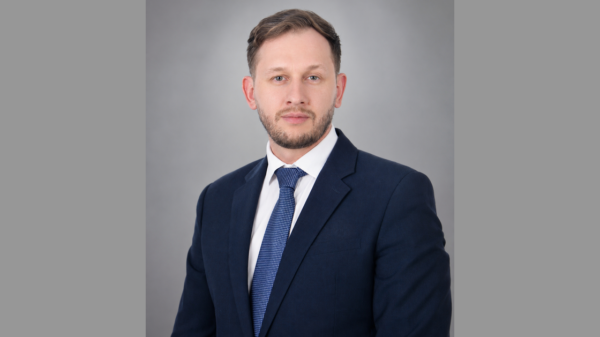
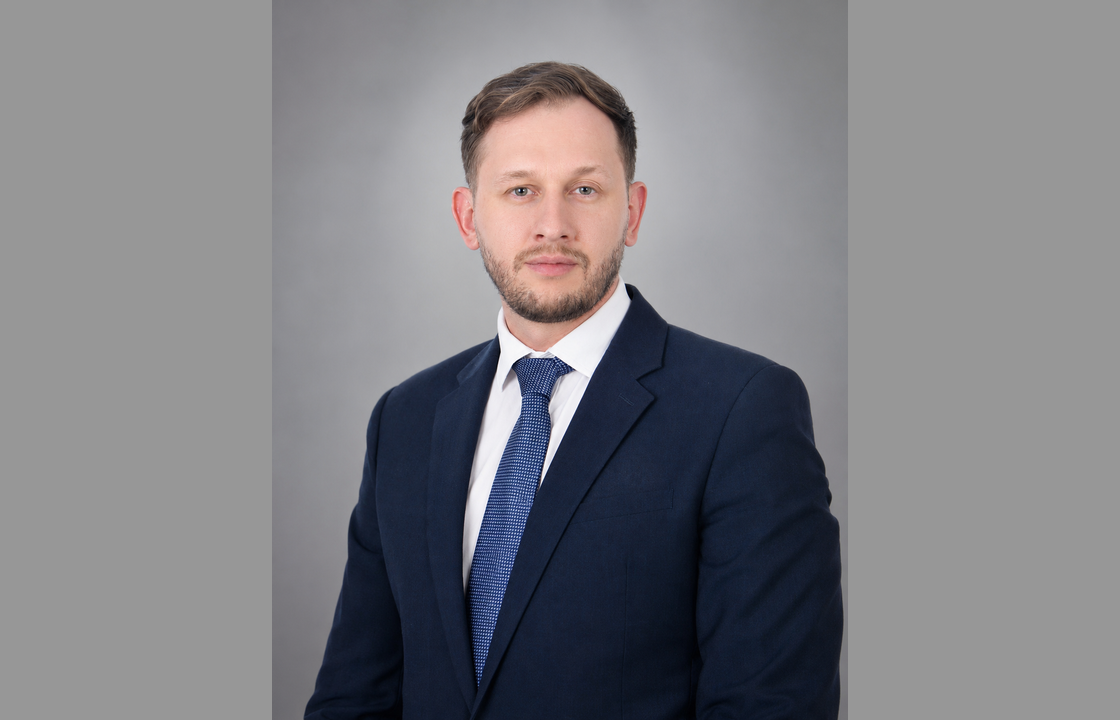
Alex Kolpokchi, who spent more than a decade at IG Group and Pepperstone, believes Base Markets can compete by stripping away some of the complexity that has built up around retail trading.
His argument is straightforward: traders should know what they are paying, how their orders are executed, and how their money is handled.
Base Markets charges $4 round turn per standard FX lot through its Base Zero account and is targeting the UAE for its next regulatory expansion, with plans to eventually broaden into other asset classes.
Invezz: You spent more than a decade at IG Group and Pepperstone before founding Base Markets. What did that experience show you, and what did you want to do differently?
I joined IG in 2013 as a trainee sales trader and spent around five years there, first on the German support desk and later in business development.
That gave me a very strong foundation in the industry. I then joined Pepperstone in 2018 and spent roughly seven years with the business, including four years leading its Middle East operations from Dubai and serving as a director of its DFSA-regulated entity.
Both were very valuable experiences. They are reputable and well-regulated businesses—particularly IG, given its size and history—and I learned a great deal from both about what it takes to build and operate a credible broker.
Looking at the industry as a whole, however, I felt that in recent years it had moved too far away from the actual product and what really matters or what should matter to the end client.
It became less about trading the financial markets and the conditions surrounding that experience, and more about selling an image of trading.
At times, parts of it became a little ridiculous, in the form of oversized bonuses, expensive sponsorships, exaggerated promises, and the almost obligatory Lamborghini somewhere in the advertising.
There is nothing wrong with marketing a business, of course, but none of those things tell a client what they will actually pay, whether there is meaningful liquidity behind the price they are shown, how their orders will be executed, whether they can withdraw their money properly or whether somebody competent will respond when they have a problem.
Those are the things that determine whether the broker is actually any good. Instead, a lot of what we see in the industry these days sells a certain image predicated on hope and aspiration, the very things that are provided to try and get the client to trade with a broker, ultimately leading to a poor trading experience and losses.
That is where the idea for Base came from. We wanted to build a serious broker without all the noise around it and put the fundamentals back at the centre of the relationship.
Base is not an attempt to reinvent brokerage. We are taking what we learned from established businesses and applying it within a company that can remain closer to its clients and make practical decisions when something needs to be solved.
Our team brings experience from firms including IG, Pepperstone, Capital.com, StoneX, and XTB, with senior responsibility across dealing and market risk, finance, payments, sales and operations.
That premise, together with the team behind it, gives us a strong starting point, but clients will ultimately judge us on what we deliver.
It goes against the current grain, but intentionally so; we think our unique selling point is honesty and integrity, and that in itself says a lot about the current state of the industry.
Invezz: Base Zero charges USD 4 round turn per standard FX lot from the first trade. How did you arrive at that price, and how can it support a profitable business?
The decision on how we price our main products came from a fairly simple question: what should a valuable client pay without having to negotiate for it first?
At most brokers, the starting commission is closer to USD 7 round turn and active clients may later receive part of that back through rebates, volume tiers, or individual arrangements. There may be a commercial logic behind that structure, but from the client’s perspective it creates a lot of unnecessary steps.
We decided to cut to the chase. With Base Zero, the commission is USD 4 round turn from the first trade, without having to reach a certain volume or negotiate a private arrangement first.
A client trading on a Base Zero account can see the actual commission from the beginning and does not need to calculate what the eventual cost may be after tiers, rebates, and various conditions are applied.
We also built the business around this price from the outset. It is not a temporary offer that has been applied to a much more expensive operating model.
The commercial logic is based on keeping the structure relatively lean, attracting clients who trade regularly and earning less on each individual trade over a longer relationship.
Of course, there will still be clients who prefer the rebate system and want special arrangements based on their trading volumes.
To allow this degree of commercial flexibility, we also offer the Base Standard account. Here too, the spreads and costs are communicated transparently, with the possibility to agree a bespoke arrangement if such is required by the client.
I also think parts of the industry have become too focused on how much money can be made from a client, and how quickly.
The model can become one of bringing somebody in, earning as much as possible while they are active, and then replacing them with the next client.
We would rather take a slower and steadier approach: earn less on each trade but build a longer-term relationship with somebody who chooses to stay because the pricing is fair and the overall experience works for them.
If done properly, that should produce a better outcome for the client and a more sustainable business for us in the long term.
Base is also part of a group of companies and was built alongside a substantial systematic fund.
This allowed us to establish key relationships and invest in dealing, monitoring, and risk infrastructure earlier than a newly launched broker normally could.
The two businesses operate separately, but the scale and infrastructure behind the fund help us keep the underlying model efficient and offer pricing that many other brokers in the earlier stage of their lifecycle would simply not be able to offer.
Ultimately, the model works if we retain clients, generate repeat activity, and continue to give clients a reason to stay, rather than relying on a constant cycle of replacing one client with the next.
That should really be the same discipline that all brokers rely on, rather than churning through clients quickly in the hope to replace them.
We have simply designed our pricing model around a lower starting commission with a view to build longer lasting client relationships.
Invezz: The CFD industry continues to face scrutiny over leverage, client losses and marketing practices. How do you expect regulation to evolve over the next five years, and where does Base’s own licensing strategy go next?
Regulation is extremely important, but I think the industry sometimes treats it as a very binary question: a broker with a long list of top-tier licences must be good, while a broker with a smaller regulatory footprint must be bad.
The reality is more nuanced. There are brokers regulated by some of the world’s leading regulators that I personally would not want to trade with, and there are brokers without such an extensive collection of licences that I consider credible operators.
A licence is therefore the starting point rather than the entire answer.
Clients should look at the business more holistically: what team is behind the broker, what are their operating principles, whether the pricing and terms are transparent, how client money is handled, what the execution and withdrawal experience is like, and whether there are experienced people taking responsibility for the operation.
Over the next five years, I think regulators will increasingly take the same broader view. Leverage will remain part of the discussion, but the focus is likely to extend further across the client journey: how a client was acquired, what expectations were created through the advertising, whether the product was appropriate for them, and how the broker behaved once they began trading.
Regulation also needs to remain proportionate and work across borders.
If one jurisdiction introduces very restrictive rules while clients can easily open accounts with less regulated providers elsewhere, the activity may simply move rather than disappear.
This is something we have already seen in the last decade, and it can improve domestic statistics without necessarily improving the overall outcome for the client.
Cross-jurisdictional cooperation therefore matters even more. You sometimes see brokers market themselves using the credibility of a highly regulated entity, while the client is ultimately onboarded with another entity under a different regulatory framework and may receive a very different level of protection or overall experience.
The contractual entity may be disclosed somewhere in the fine print of the terms, but the main impression created by the marketing comes from a licence that does not actually cover that client.
I would like to see regulators work more closely across jurisdictions and pay greater attention to how regulatory credentials are used at group level, as well as whether the entity promoted most prominently is the one actually providing the service.
We have already seen some movement in that direction, and I think that cooperation will continue over the coming years.
That is another reason why clients should assess a broker holistically rather than relying only on the most recognisable licence displayed on its website.
Base is currently regulated by the Financial Services Commission in Mauritius.
Mauritius provides an established regulatory framework from which to launch the international business and begin building an operating track record.
Our immediate licensing priority is now the UAE because we see it as a core market for our future and somewhere we intend to establish a proper long-term presence.
After that, we will look to expand our regulatory footprint further as the business grows. The aim is not to collect licences for the sake of displaying more logos; each new entity needs a genuine commercial purpose and the people, capital and controls required to operate it properly.
Invezz: Base is entering a crowded market dominated by established global brands. Beyond lower commissions, what would persuade an experienced trader to give Base part of their business?
Experienced traders are naturally sceptical about a new broker, and I think that is entirely reasonable.
If somebody already has a broker that works for them, I would not expect them to move everything to Base—or any other broker, for that matter—because of an advertisement, an interview, or even a lower commission.
The realistic starting point is to give us a small part of their business and test the experience.
Open a demo or fund a smaller live account, verify the commission, compare the spreads and execution using the strategy and trade sizes they normally use, make a withdrawal, and see how the team responds when something needs to be resolved. That gives the trader their own evidence rather than asking them to rely on ours.
Lower commissions provide a reason to look at Base, but they are only one part of the decision.
To me, premium service should be practical rather than theatrical. We process withdrawal requests typically within 24 hours, hold retail client funds in segregated accounts across multiple financial institutions, and give clients access to real people, including a named account manager and, where needed, direct access to senior decision-makers within the business.
I also think parts of the industry have developed a fairly complacent, take-it-or-leave-it mindset.
Clients are often given a standard answer, a standard account and a standard set of conditions, regardless of whether their requirements create a genuine reason to consider something different.
We want to remain commercially flexible and try to accommodate client requests wherever possible. It means listening to what the client is trying to achieve and looking for a practical solution rather than automatically falling back on a lazy default answer.
Established global brands have an obvious advantage in recognition and existing trust.
Our advantage is that we can remain closer to the client, respond more quickly, and take ownership of the relationship. We have to prove that through the experience we provide.
The commission may be what persuades somebody to test Base, but the execution, withdrawals, flexibility of our offering, and service will determine whether they stay.
Invezz: What are Base Markets’ priorities over the next twelve months, and where do you want the company to be in three to five years?
Over the next twelve months, the priorities are fairly straightforward.
We need to progress our UAE regulatory plans, strengthen our presence in the market, and turn the early activity we have seen into a more established business.
At this stage, the focus is on continuing to invest in credible talent, infrastructure and client offering, while demonstrating that the activity we are generating can be scaled.
That means building a sensible mix of direct clients and partners without becoming overly dependent on one acquisition channel or one geography.
A brokerage can show rapid growth while still being quite fragile underneath, so the quality and balance of that growth matter as much as the headline numbers.
Over three to five years, our ambition goes beyond building a larger CFD broker. We will expand into other asset classes and develop a broader financial-services offering. ‘
We are already well positioned for that given the wider scope of businesses within the group, but the sequence matters. The immediate priority is to establish the core brokerage, build the UAE business and continue investing in the foundations required to scale it properly.
From there, we intend to add further licences that allow us to enter other markets, alongside the products and infrastructure required to offer a broader range of asset classes.
The real challenge will be growing the business without losing the responsiveness, accountability and practical decision-making that we have today.
Our success, in my view, will be defined by our ability to scale significantly and broaden our reach while staying true to the qualities and moral values that set us apart.
The post Base Markets CEO Alex Kolpokchi on pricing, regulation, and the future of CFDs appeared first on Invezz