






















For most of the past two years, investors concentrated almost exclusively on the companies designing AI chips or building the large language models consuming them. Now, according to Wells Fargo equity strategist Ohsung Kwon, the investment opportunity is beginning to spread much further through the economy. In a note reported by Bloomberg this week, Kwon argued that spending on artificial intelligence infrastructure is now “trickling down to the broader economy,” making capital-goods companies the “biggest AI-adjacent” beneficiaries of the current investment cycle.
The timing of that call could hardly have been better. Just hours later, AMD reported one of the strongest AI-driven quarters in the semiconductor industry’s recent history. Revenue rose 50% year over year to $11.5 billion, data-center revenue more than doubled to $6.7 billion and represented roughly 58% of total sales, while adjusted earnings of $1.66 per share exceeded analyst expectations. Yet despite beating estimates across the board and issuing third-quarter guidance above consensus, AMD shares fell 8.94% in after-hours trading.
That disconnect is precisely what makes Wells Fargo’s thesis interesting. AI demand remains exceptionally strong. The question increasingly confronting investors is whether the best way to participate is still through the companies making AI chips or through the businesses supplying everything those chips require.
Wells Fargo’s Argument: Follow the Spending, Not Just the Chips
Kwon’s argument is not that semiconductor companies have become poor businesses. Rather, it is that the unprecedented capital expenditure cycle underway across hyperscale cloud providers is beginning to benefit companies much further down the supply chain.
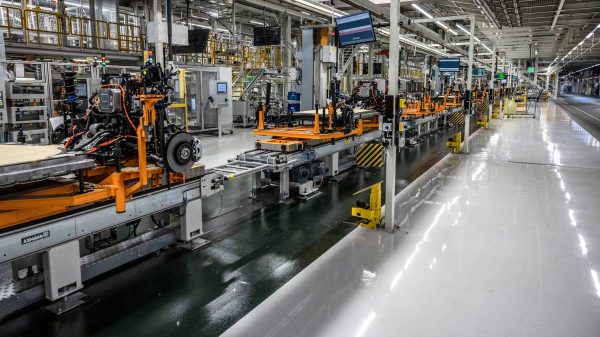
Building an AI data center requires substantially more than GPUs. Operators must purchase electrical equipment, transformers, switchgear, cooling systems, backup power, industrial automation, networking infrastructure, mechanical components and construction services before the first server is even installed.
As AI infrastructure investment expands, Wells Fargo believes those suppliers become increasingly important participants in the spending cycle rather than indirect beneficiaries.
Unlike semiconductor manufacturers, many of these companies derive only part of their revenue from AI infrastructure, meaning investors may be paying lower valuation multiples for businesses that nevertheless benefit from the same underlying investment trend.
AMD Shows Demand Isn’t the Same as Stock Performance
AMD’s second-quarter results demonstrated that AI demand remains exceptionally strong.
The company generated record quarterly revenue of approximately $11.5 billion, up 50% from a year earlier. Data-center revenue reached $6.7 billion, increasing 107% year over year and accounting for roughly 58% of total company sales. Management also guided third-quarter revenue to between $12.7 billion and $13.3 billion, above Wall Street expectations.
Ordinarily, those numbers would be expected to drive a strong market reaction.
Instead, AMD shares declined 8.94% in after-hours trading. Although the company beat revenue and earnings estimates, investors focused on adjusted gross margin of 54%, below expectations of roughly 56%, as AMD said the near-term ramp of its Helios AI infrastructure platform would temporarily weigh on profitability. Reuters also noted that expectations heading into the results had become exceptionally high after months of AI-driven enthusiasm, leaving little room for even strong operational performance to surprise investors.
That distinction matters. AI infrastructure spending continues accelerating. The investment returns generated by companies directly associated with AI, however, are increasingly being judged against exceptionally demanding valuations.
Who Actually Benefits From Data Center Spending?
If Wells Fargo’s thesis proves correct, the primary beneficiaries extend well beyond semiconductor manufacturers.
Companies such as Eaton, Vertiv, Quanta Services and Schneider Electric supply much of the electrical distribution, cooling, power management and infrastructure equipment required to build AI data centers. Wells Fargo’s argument is that these businesses may increasingly capture AI spending even though they are not semiconductor manufacturers.
Each new hyperscale data center requires enormous amounts of physical infrastructure before servers begin processing AI workloads. Electrical systems must distribute increasing levels of power, cooling equipment must manage higher thermal loads and industrial manufacturers must deliver components capable of operating reliably under demanding conditions.
The investment case therefore shifts from betting on which company wins the next generation of AI chips to identifying businesses positioned to supply the infrastructure every AI deployment requires regardless of which semiconductor vendor ultimately dominates.
The Bear Case: Capex Cycles Always End
The argument is not without risks.
Capital expenditure cycles have historically been highly cyclical. The telecom fibre buildout of 2000 and 2001 remains one of the clearest examples. Years of aggressive infrastructure investment created enormous demand for equipment suppliers before overcapacity and slowing spending left many companies facing sharp declines in orders and profitability.
Backlogs themselves should also be interpreted carefully. Large order books demonstrate customer demand but do not automatically translate into revenue, profitability or cash flow. Delays in construction, supply chains or customer spending can postpone recognition even when demand remains intact.
Some strategists also question whether AI infrastructure spending can continue growing at its current pace once the largest cloud providers complete the first wave of capacity expansion.
That debate explains why Wells Fargo presents its view as an investment thesis rather than an established market outcome. AI spending may continue spreading through industrial supply chains, but that depends on hyperscalers maintaining elevated capital expenditure over multiple years.
What Investors Should Watch Next
The strongest evidence supporting or challenging the thesis will not come from semiconductor companies alone. Microsoft, Alphabet, Amazon and Meta are collectively expected to spend well over $350 billion on capital expenditure during 2026, with much of that investment directed toward AI infrastructure. Whether those companies continue expanding data-center spending will ultimately determine demand across the broader industrial supply chain.
Equally important will be disclosures from industrial companies themselves. Rising orders tied specifically to AI infrastructure, expanding backlogs linked to hyperscale customers and increasing references to data-center demand during earnings calls would strengthen Wells Fargo’s argument that AI investment is spreading throughout the capital-goods sector.
AMD’s latest results already illustrate the underlying tension. AI demand remains powerful enough to double data-center revenue at one of the industry’s leading chipmakers. Yet that operational success was not sufficient to satisfy investors who had already priced in extraordinary growth.
Whether Wells Fargo’s thesis proves correct will depend on whether the next phase of AI investing rewards the companies building the intelligence or the companies supplying the electricity, cooling systems and industrial infrastructure that make that intelligence possible.