














Nvidia is no longer a stock call. At roughly 8% of the S&P 500 – the largest single-company weight the index has carried in its modern history – a view on NVDA is a view on the index itself, whether the holder intended one or not. NVIDIA Corp (NASDAQ: NVDA) closed at $230.36 on 4 September 2026, up 23.5% year to date against the S&P 500’s 12.9%. Our bull case is $365; our bear case is $145. And the single most important disclosure of the last quarter was not the $96.2bn of revenue. It was three balance-sheet lines that all moved the same direction at once: accounts receivable up $22.3bn in ninety days, purchase commitments up from $119bn to $279bn, and guarantee exposure to a single customer’s landlord rising to $105bn.
Put those three together and you get the insight the earnings coverage skipped. NVIDIA’s reported growth is real – Data Center revenue of $89.0bn was up 117% year on year – but an increasing share of the demand behind it is being financed by NVIDIA itself. The company is extending payment terms to its buyers, pre-committing to its suppliers, guaranteeing its customers’ lease obligations, and booking equity gains on stakes in the same ecosystem. In the June quarter, GAAP net income of $59.7bn actually exceeded non-GAAP net income of $54.0bn, an inversion driven by $7.8bn of net gains on equity securities. That is the cleanest single number in the filing: NVIDIA earned more from marking up its investments in AI companies than most S&P 500 constituents earn in a year, and it flowed straight through the headline EPS.
Key facts
- $230.36 – NVDA closing price, 4 September 2026; 52-week range $164.07-$236.54 (StockAnalysis)
- $96.2bn – Q2 FY2027 revenue, up 106% year on year; Data Center $89.0bn, up 117% (NVIDIA 8-K, 26 Aug 2026)
- $63.1bn – accounts receivable at 26 July 2026, up from $40.7bn at 26 April; days sales outstanding rose from 45 to 60 (NVIDIA 10-Q)
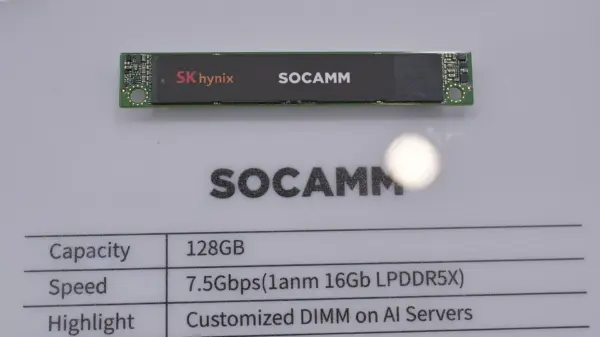
- $279bn – supply and capacity commitments, up from $119bn a quarter earlier, “primarily related to the procurement of memory”
- $108.5bn – maximum gross guarantee exposure, including $105bn tied to the SB Energy PORTS-Pike campus leased to OpenAI
- $11.9bn – purchase price agreed for Hugging Face on 2 September 2026, plus up to $1.0bn of retention equity (NVIDIA 8-K, 2 Sep 2026)
- ~8% – NVIDIA’s weight in the S&P 500, the highest single-stock concentration in the benchmark on record
What is actually happening: a beat that was never in doubt
The July quarter was the largest in the company’s history by a wide margin. Revenue of $96.2bn was up 18% sequentially and 106% year on year. GAAP and non-GAAP gross margins were both 75.0%. Operating income reached $63.7bn on $8.4bn of operating expenses – an operating margin of 66%, which for a hardware business at this scale has no real precedent. Within Data Center, hyperscale revenue of $48.7bn more than doubled year on year, while the AI Clouds, Industrial and Enterprise line grew 138% to $40.3bn, a faster clip than the hyperscalers.
Guidance was the part that moved the stock: Q3 revenue of $108.0bn plus or minus 2%, with the explicit caveat that NVIDIA “is not assuming any Data Center compute revenue from China” in the outlook. Gross margin is guided down to 74.0%, a 100 basis point step down, with operating expenses rising to roughly $9.2bn on a GAAP basis. Melissa Otto, global head of Visible Alpha research at S&P Global, told CNBC that the magnitude of the top-line growth “blew away expectations.”
Jensen Huang’s framing of the moment was characteristically compressed. “AI has reached its inflection point. It’s doing useful work. Its tokens are productive and profitable. Now, compute is revenue,” said the founder and CEO in the 26 August release, adding that “this time last year, one lab alone was driving the buildout; today, we have a golden age of new AI labs and startups, multiple frontier labs scaling in parallel, a thriving open-model ecosystem and physical AI coming online.” Vera Rubin, the next platform generation, is in full production and shipping into partners including CoreWeave, Google Cloud, Microsoft Azure, Oracle Cloud Infrastructure and Nebius.
What the players are actually doing: NVIDIA is underwriting its own demand
Here is the reporting that matters, and it is all in the filings rather than the headlines. Start with the customers. Accounts receivable rose from $40,710m at 26 April to $63,059m at 26 July – a $22.3bn increase in a single quarter, against revenue of $96.2bn. Days sales outstanding went from 45 to 60. In the CFO commentary, Colette M. Kress, NVIDIA’s executive vice president and chief financial officer, attributes this to “extended payment terms on large, multi-quarter agreements with certain investment-grade customers.” Read plainly: roughly two-thirds of a quarter’s sales are sitting on the balance sheet as an IOU, and NVIDIA has agreed to wait longer for them. Operating cash flow of $24.1bn was down from $50.3bn in the prior quarter for exactly this reason.
Now the suppliers. NVIDIA’s future commitments table shows supply and capacity obligations of $279bn, up from $119bn a quarter earlier – a $160bn increase that Kress attributes “primarily to the procurement of memory.” Add cloud service agreements ($29bn), data centre leases not yet commenced ($25bn), equity investments ($25bn) and capital expenditure ($8bn), and total contractual commitments reach $366bn, of which $120bn falls in the remainder of fiscal 2027 alone.
Then the landlords. In August 2026, NVIDIA entered guarantees providing credit support on the land, power and shell buildout to secure approximately 4.25 gigawatts at SB Energy’s PORTS-Pike Technology Campus in Ohio, a site that “will exclusively host NVIDIA infrastructure under 20-year leases to OpenAI.” Those guarantee obligations are “capped at a total of $105 billion.” NVIDIA also holds an option to provide credit support for approximately 3.8 additional gigawatts as the site scales. The company’s own estimate is that each generation of infrastructure deployed there could represent roughly 1.5 million GPUs, or $150bn to $200bn of NVIDIA revenue.
And the financiers. NVIDIA announced partnerships with Apollo, BlackRock, Blackstone, Brookfield, Goldman Sachs and KKR to establish independent compute financing platforms intended to mobilise over $500bn of third-party capital, subject to definitive agreements. In the same quarter, having ended with $56.6bn of cash and marketable securities, NVIDIA issued $25.0bn of senior unsecured notes. It returned nearly $26.0bn to shareholders and retains approximately $99.0bn of buyback authorisation.
The most recent move was strategic rather than financial. On 2 September 2026 NVIDIA agreed to acquire Hugging Face for approximately $11.9bn plus up to $1.0bn of retention equity, expected to close in the first half of 2027. NVIDIA committed to keep the platform open, permitting model makers and developers to upload and download models of their choosing “and to support other silicon vendors” – an unusually explicit concession that reads as pre-emptive antitrust management.
The data synthesis: how much growth is NVIDIA financing?
No single one of those disclosures is alarming on its own. A market leader extending terms to investment-grade customers is normal. Pre-buying memory in a shortage is prudent. Guaranteeing a landlord for a twenty-year anchor tenant is what an anchor tenant’s supplier sometimes does. What is new is that all four moved sharply in the same quarter and in the same direction, and that a fifth line – the $7.8bn of equity securities gains – flatters the earnings that the market capitalises.
The parallel is not the dot-com era, which is where most of the commentary reaches. It is vendor financing in telecoms equipment at the turn of the century, where Lucent, Nortel and Motorola booked revenue on gear sold to carriers they had themselves lent money to build. The mechanism was not fraud, and for several years it was not even wrong: the demand was genuine and the buyers were real. The failure mode was that receivables and commitments are recognised on different clocks from revenue, so when demand slowed the balance sheet unwound far faster than the income statement had ever suggested it could. NVIDIA’s version is more conservative in every respect – the customers are creditworthy, the guarantees are phased and conditional, the cash pile is enormous – but it is structurally the same shape, and it is now measurable in four separate line items rather than inferred.
| Bull case for NVDA | Bear case for NVDA |
|---|---|
| Q3 guided to $108bn with zero China Data Center compute assumed – pure optionality | Gross margin guided down 100bp to 74.0% as memory procurement costs bite |
| 66% operating margin at $96bn of quarterly revenue, an unprecedented combination | Receivables up $22.3bn in one quarter; DSO 45 to 60 days; operating cash flow halved sequentially |
| ACIE revenue up 138%, growing faster than hyperscalers – demand is broadening | $279bn of supply commitments locked in against a single year of ~$400bn revenue run-rate |
| $99bn of buyback authorisation remaining; nearly $26bn returned in the quarter | $108.5bn of maximum guarantee exposure, $105bn of it tied to one tenant’s leases |
| Hugging Face acquisition buys the open-model distribution layer for $11.9bn | GAAP EPS flattered by $7.8bn of equity gains; $25bn of new debt despite $56.6bn of cash |
On the valuation itself: summing Q1 non-GAAP EPS of $1.87, Q2’s $2.22 and our estimates for the back half implies fiscal 2027 non-GAAP earnings of roughly $9.20 per share. At $230.36 that is about 25 times current-year earnings for a company growing revenue at 106%. On any conventional growth-adjusted framework the stock is not expensive. The bear case has never been about the multiple. It is about whether the E is being pulled forward by the balance sheet.
Regulatory tension: concentration risk is now a market-structure question
The regulatory pressure on NVIDIA comes from three directions that rarely get discussed together. The first is export control. Management guided Q3 assuming no Data Center compute revenue from China, and Hopper shipments to China were under 1% of Data Center revenue in the quarter. That is prudent, but it also means an entire market has been zeroed out of the model – upside if policy loosens, no downside if it tightens further.
The second is antitrust, and the Hugging Face deal walks straight into it. NVIDIA’s public commitment to keep the platform open and “support other silicon vendors” is the tell: the company clearly expects the acquisition of the default open-model distribution point by the dominant accelerator vendor to be examined closely on both sides of the Atlantic. The deal is not expected to close until the first half of 2027, which is a long runway for a $11.9bn transaction.
The third is the one nobody has a regulator for yet: index concentration. At roughly 8% of the S&P 500, every dollar into a plain index fund sends about eight cents into a single semiconductor company, and the broader semiconductor sector now sits somewhere near a fifth of the benchmark. That is a systemic exposure created by passive flows rather than by any investor’s decision, and it means an NVDA drawdown transmits into pension and retirement balances that never expressed a view on AI capital expenditure at all. Data-centre siting politics is becoming the practical constraint: local opposition to new campuses is escalating, and a gigawatt that cannot get a permit is a gigawatt of NVIDIA revenue that slips a year. Investors following the power side of this equation should read our analysis of Vistra (VST), which is on the other end of the same contract.
What happens next: our $365 bull case and $145 bear case
Bull case: $365 by end-2027. This requires fiscal 2028 revenue near $545bn – roughly 26% above an annualised Q3 run-rate, which the Vera Rubin ramp and the PORTS-Pike deployments plausibly support – with gross margin stabilising at 73% and operating expenses scaling to about $45bn. That yields non-GAAP earnings near $12.15 per share on a share count shrinking toward 24 billion. At 30 times, that is $365, a 58% gain from $230.36. The causal chain is straightforward: the $279bn of supply commitments converts into shippable product, the receivables cycle normalises as customers’ own financings close, and China re-enters the model as upside rather than as a zero.
Bear case: $145 by end-2027. This requires only that the financing chain slows, not that AI demand disappears. If memory costs compress gross margin toward 70%, revenue growth decelerates to roughly $400bn in fiscal 2028, and the market re-rates a business with $366bn of contractual commitments and $108.5bn of guarantees from 25 times to 17 times, non-GAAP earnings near $8.50 give you $145 – a 37% decline. The trigger to watch is not a revenue miss. It is a further extension of days sales outstanding, or a customer whose lease guarantee starts to look like a liability rather than a formality.
Our base case sits near $270. Three concrete things to monitor, in order of signal value. First, DSO in the October quarter: if it goes from 60 to 75, the working-capital story becomes the story. Second, whether the supply and capacity commitment line rises again from $279bn – a second $100bn-plus step would say NVIDIA is buying memory at any price, which is bullish for revenue and bearish for margin. Third, the first phase of the SB Energy guarantees becoming effective, currently expected in fiscal 2029; the disclosure language ties activation to data centres becoming ready for service. For the supply chain behind all of this, see our work on TSMC (TSM) and Micron (MU), the company on the other side of that $279bn memory commitment, and on the competitive response at AMD.
Frequently asked questions
What is Nvidia’s weight in the S&P 500?
Approximately 8%, the largest single-stock weight the index has carried on record. In practical terms, roughly eight cents of every dollar invested in a plain S&P 500 index fund goes into NVIDIA, and the semiconductor sector as a whole now represents close to a fifth of the benchmark. That is why NVDA’s 23.5% year-to-date gain against the index’s 12.9% is not just relative performance – it is a large part of the index’s own return.
Why did Nvidia’s GAAP earnings exceed its non-GAAP earnings?
Because of $7.8bn in net gains from equity securities in the July quarter. NVIDIA’s non-GAAP measures exclude gains and losses on equity investments, so GAAP net income of $59.7bn came in above non-GAAP net income of $54.0bn – an inversion of the usual relationship. GAAP diluted EPS was $2.46 against non-GAAP EPS of $2.22.
Is Nvidia financing its own customers?
In several forms, yes, and the company discloses each one. It has extended payment terms, pushing days sales outstanding from 45 to 60 and receivables to $63.1bn. It has guaranteed up to $105bn of a single campus’s lease obligations for an anchor tenant. It holds $25bn of committed equity investments in AI companies, and it is convening more than $500bn of third-party capital through partnerships with Apollo, BlackRock, Blackstone, Brookfield, Goldman Sachs and KKR. None of this is hidden; all of it changes how the revenue should be discounted.
What did Nvidia pay for Hugging Face?
Approximately $11.9bn payable to Hugging Face stockholders, subject to adjustments, plus an equity-based retention programme of up to roughly $1.0bn for employees joining NVIDIA. The agreement was signed on 2 September 2026 and is expected to close in the first half of 2027 subject to regulatory approvals. NVIDIA committed to keep the platform open and to continue supporting other silicon vendors.
What is Nvidia’s price-to-earnings ratio?
Roughly 25 times our estimate of fiscal 2027 non-GAAP earnings of about $9.20 per share, based on reported first-half EPS of $4.09 and the company’s Q3 revenue guidance of $108bn at a 74% gross margin. For a business compounding revenue at 106% year on year, that is a modest multiple – which is precisely why the bear case has to be argued from the balance sheet rather than from valuation.
What would break the bull case?
Not a demand collapse. A financing slowdown. If days sales outstanding extends again in the October quarter, or if one of the AI clouds NVIDIA has backstopped struggles to complete its own funding, the $366bn of contractual commitments becomes a fixed cost against a variable revenue line. That is the mechanism behind our $145 bear level, and it would arrive through the cash flow statement well before it showed up in reported revenue.
This article is analysis and information only. It is not investment advice, and the bull and bear levels described are scenarios, not recommendations or price targets.