















Wall Street spent most of July arguing about how much SpaceX stock is worth.
On Friday, July 24, HSBC became the first major bank to tag it as worth slightly less than the market is already paying.
The bank initiated coverage of Space Exploration Technologies (SPCX) with a hold rating and a $115 price target.
That target sits below July 23’s close of $118.24 and $20 under the $135 IPO price from June.
Shares fell about 4% on July 24 to trade near $113, extending a decline that has taken the stock down roughly 27% in a month.
What makes the note worth reading isn’t the rating; it’s what HSBC had to do to arrive at it.
Why HSBC’s $115 SpaceX price target is lower than it looks
HSBC reached a $115 price target after being unusually generous.
The bank valued SpaceX by pricing each business separately and adding them together. Then it applied a 2x “innovation premium” on top.
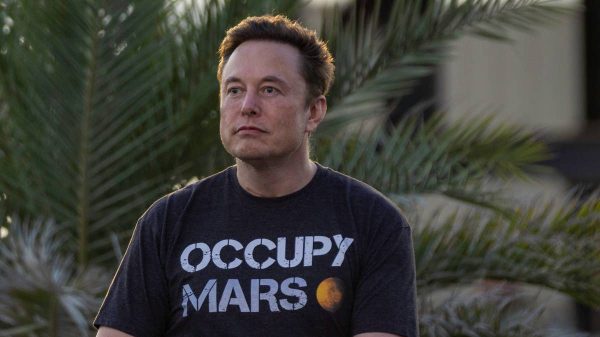
That premium exists to account for Elon Musk‘s record of building companies that reshape industries, CNBC reported.
HSBC used Tesla’s first decade as a public company as its benchmark, so the math already assumes Musk pulls off something extraordinary. Yet, it still lands under the current price.
That is the troubling part for shareholders. Double the company’s worth for the founder alone, and the stock is still fully valued.
HSBC did model a best-case scenario. It put a sky-high valuation at $293 per share, assuming Starship commercializes, Starlink adoption accelerates, and AI revenue arrives faster than expected.
The bank simply doesn’t treat that outcome as the base case, and the $115 target is where its base case lands.
The $106 billion number SpaceX investors should focus on
Most analyst notes fight over revenue growth. HSBC’s forecast doesn’t dispute the growth at all.
The bank expects revenue to more than double to $38.2 billionin 2026 from $18.7 billion in 2025, driven by the AI segment and Starlink.
The problem sits further down the page. HSBC expects SpaceX to keep posting GAAP losses through 2027 and doesn’t see free cash flow turning positive until 2030.
Reaching positive free cash flow costs roughly $106 billion in cumulative cash.
For a reader deciding whether to buy, that figure matters more than the price target.
Free cash flow is the money left after a company pays its bills and funds its equipment, and it’s what eventually pays shareholders.
HSBC is saying SpaceX will burn through more than $100 billion before it produces any.
What HSBC’s forecast implies for the next 4 years
- Revenue roughly doubles in 2026, then keeps climbing
- Losses continue on a GAAP basis into 2027
- Cash usage runs to about $106 billion before it reverses
- Positive free cash flow arrives around 2030
Why the AI business is where HSBC pushes back hardest
HSBC called SpaceX the clear leader in commercial launch and credited Starlink’s lead in satellite internet.
The skepticism starts where SpaceX stops being a space company.
The company absorbed xAI in February 2026, bringing in the Grok model, the Colossus data centers, and the X platform (formerly Twitter).
HSBC believes xAI trails the leading AI developers in both enterprise adoption and computing scale.
To close that distance means spending against Amazon (AMZN), Microsoft (MSFT), and Google.
Related: Morgan Stanley sends strong signal on SpaceX stock price target
The bank also questioned whether orbital data centers can become economically viable within the next decade, and said Starlink’s addressable market is likely smaller than SpaceX’s own estimate.
SpaceX told the SEC its total addressable market runs to $28.5 trillion, with $26.5 trillion of thatin AI.
HSBC is essentially arguing the market has priced a slice of that $26.5 trillion into the stock before anyone has proven it can be reached.
What SpaceX’s own numbers say about the burn
The filings back up the caution.
SpaceX generated $4.69 billion in revenue in the first quarter of 2026 and lost $1.94 billion from operations, according to Reuters.
Starlink is carrying the company. The connectivity segment brought in $3.26 billion of that quarterly revenue with $1.19 billion in operating income.
More Space Stocks:
- SpaceX stock defies latest Wall Street forecasts
- Cathie Wood buys more SpaceX stock after selloff
- SpaceX investors may be ignoring troubling trend
The AI segment produced $818 million in revenue and a $2.47 billion operating loss in the same three months.
Capital spending in Q1 hit $10.1 billion, and $7.7 billion of it went to AI, CNBC reported.
There’s a signal in there that’s worth noticing: SpaceX is spending the majority of its capital on the one segment HSBC says it’s least likely to win.
The one metric bulls tend to skip
Starlink added subscribers fast, reaching 10.3 million by the end of the first quarter from 5.0 million a year earlier, SpaceNews reported.
Average revenue per user, or ARPU, fell to $66 a month from $86 over the same stretch, as SpaceX pushed into lower-priced markets in Africa, Southeast Asia, and Latin America.
That trade works only if subscriber growth keeps outrunning the price decline.
How SPCX stock compares to the market since its IPO
The gap between SpaceX and the broader market since June is clear.
- SPCX from its $135 IPO price: down about 16%
- SPCX from its $225.64 June 16 peak: down about 50%
- SPCX over the past month: down about 27%
- Nasdaq 100 over the past 12 months: up about 23%, Stocktwits reported
Short sellers have collected roughly $15.5 billion in paper gains since the IPO, with short interestnear 31% of the tradable float, Investing.com noted.
The two August dates that matter more than any price target
SpaceX reports its first quarterly results as a public company after the close on Aug. 4. Two trading days later, on Aug. 6, the first lock-up tranche expires.
Up to 911.5 million shares become eligible to sell, lifting the public float from about 4.9% to roughly 12%, CNBC reported.
Musk’s stake stays locked until mid-2027.
For an investor, the sequence is what counts. The earnings report gives the first clean look at cash burn, and 48 hours later, the supply of tradable shares more than doubles.
If the report disappoints, the selling arrives into a market that just got a lot more sellers.
The Falcon 9 decision that raised the stakes on Starship
There’s one more development alongside HSBC’s caution.
SpaceX has begun turning away satellite operators seeking dedicated Falcon 9 launches beyond 2028 and stopped taking new Falcon 9 rideshare reservations, Bloomberg reported.
It has also halted production of some expendable Falcon hardware, including upper-stage components.
Falcon 9 is expected to keep flying NASA and Defense Department missions, and the plans could change if Starship slips further.
Starship’s Flight 13 launched on Friday, July 24, from Starbase after a July 16 abort and a weather delay, carrying 20 Starlink V3 satellites.
What SpaceX investors should actually do with this note
HSBC’s hold is not a sell call, and it does not say the business is broken. It says the price already reflects the good outcome.
For most investors, that means waiting until after Aug. 6 to buy, since both the first earnings report and the float expansion land inside 48 hours.
Anyone already holding SPCX should size the position for a stock that has moved 50% in six weeks and carries 31% short interest. A strong quarter could push it up just as fast.
The bull case needs three specific things: Starship flying often enough to cut launch costs, Starlink adding subscribers faster than ARPU falls, and xAI converting computing contracts into repeat revenue.
HSBC’s $115 target is a bet that at least one of those slips. The Aug. 4 report is the first chance to find out which, if any.