




















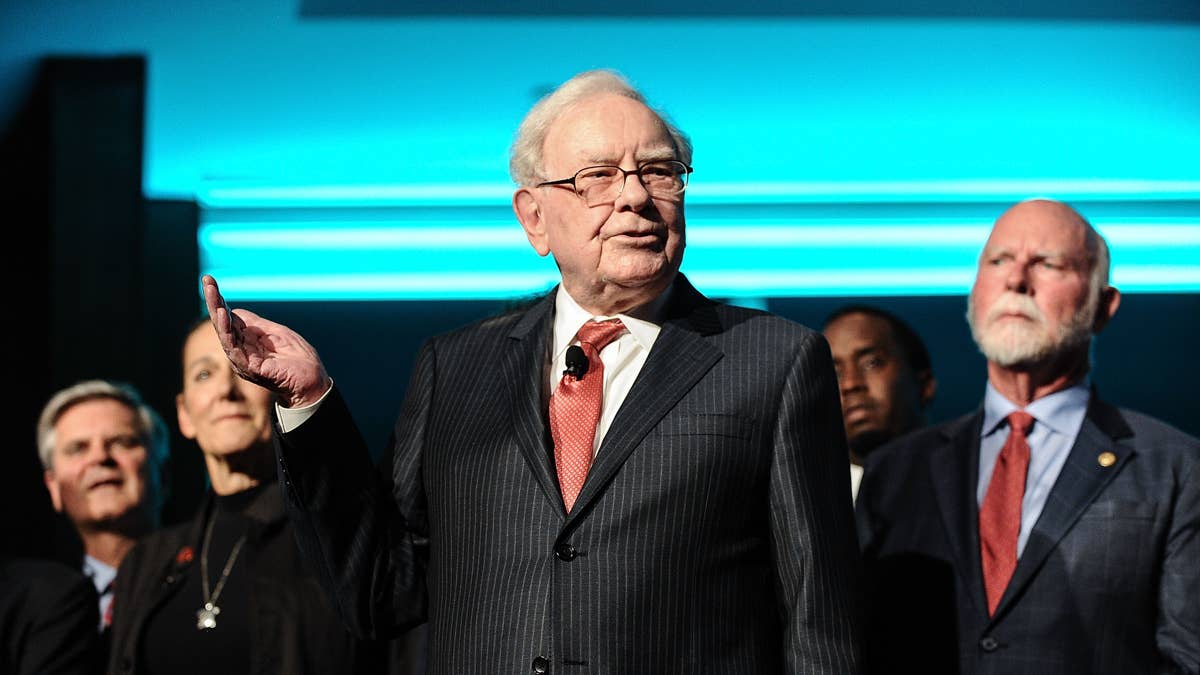
Warren Buffett just wrapped up one of the longest runs in American business history. On Sept. 18, the 96-year-old stepped down as chairman of Berkshire Hathaway after 56 years in the role, handing the chairmanship to his son Howard while remaining on the board as Chairman Emeritus.
Greg Abel, who took over as CEO at the start of 2026, continues to run the company day to day, CNBC reported.
And yet, somehow, his core investing philosophy feels more relevant right now than it has in years.
That philosophy has nothing to do with picking the next hot stock. It centers on something simpler and, according to Buffett himself, considerably harder to master: managing your own mindset as an investor, especially when markets get scary.
The cash cushion behind Warren Buffett’s philosophy
Buffett first put the idea in writing in his 1986 letter to Berkshire Hathaway shareholders, explaining that fear and greed are unpredictable diseases that will always cycle through markets, and that his own goal was simply to be fearful when others are greedy and greedy only when others are fearful.
Buffett’s own balance sheet reflects this discipline in action. Berkshire’s cash pile reached a record $397.4 billion at the end of the first quarter of 2026, evidence that the “fearful when others are greedy” half of his rule was being practiced even as markets kept climbing to new highs, according to TheStreet.
More Warren Buffett:
- Warren Buffett reveals he broke his own investing pattern
- Warren Buffett has a blunt take on today’s market
- Warren Buffett pulls no punches on stock market for 2026
It is not just sitting there out of caution, either. Berkshire had been a net seller of stocks for 14 consecutive quarters through the first quarter of 2026, and the cash is not idle while it waits.
The company pulls in roughly $12 billion a year in interest from its Treasury bill holdings, which takes some of the sting out of holding cash instead of buying stocks, even if there is still a real cost to sitting on the sidelines, according to TheStreet.
None of this requires Berkshire’s kind of resources to apply. Buffett is not telling anyone to predict the next crash, just to have cash set aside before one shows up. Do that, and a downturn turns into a chance to buy rather than a moment where you are forced to sell at the worst possible time.
Buffett’s 3-step portfolio advice
Three steps come out of Buffett’s philosophy. The first is the one most people skip: Build cash reserves before you need them. Investors who put every spare dollar into stocks and skip the emergency fund end up with no options when prices actually drop.
The second step involves checking whether an especially strong stock-market run has pushed a portfolio beyond its intended allocation.
The Vanguard S&P 500 ETF has delivered roughly 15% annualized returns since its 2010 launch, an exceptional stretch that has left many portfolios more concentrated in equities than their owners may realize. This makes a rebalancing check worthwhile even for long-term believers in the market, The Motley Fool reported.
The third step is about mindset. Short-term traders panic when markets fall because they are counting on prices going up. Long-term investors who have the cash to hold on see the same decline differently. Strong companies on sale are still strong companies.
Applying the advice in today’s market
Right now, Buffett’s framework fits the market almost uncomfortably well. The Shiller CAPE ratio has been sitting around 41 this year, well north of its long-run average near 17, according to TheStreet, and that gap has not closed much despite a few pullbacks along the way. Stocks remain historically expensive.
That is part of why Buffett stayed parked on the sidelines despite sitting on hundreds of billions in cash. When the S&P 500 dropped roughly 9% earlier this year, he made it clear he was not anywhere close to ready to put that money to work. A modest pullback from an expensive peak still leaves you with an expensive market, not a cheap one.
Buffett has been explicit about what would change his calculus.
“The most likely time to buy is when nobody will answer their phones because the markets are collapsing,” he told CNBC, as reported by The Motley Fool. Real opportunity requires genuine panic and forced selling rather than an ordinary correction.
He has also put the current volatility in historical context to reassure jittery investors.
“Three times since I’ve taken over Berkshire, it’s gone down more than 50%,” Buffett told CNBC. “This is nothing,” a reminder that the swings rattling most portfolios barely register against the market crashes he has actually lived through.
What comes next for Berkshire investors
Howard chairs. Abel operates. The $397 billion is still sitting there.
Nobody knows what number gets it moving. Buffett never said. He just kept earning 3.7% on T-bills and waiting for a price he actually liked.
You do not need a $300 billion war chest for any of this to apply. Keep enough cash on hand so you are never forced to sell at the worst possible moment. Check whether a strong run has quietly pushed your portfolio too heavily into stocks. And when a real downturn hits, try to treat it as an opportunity instead of an emergency.
Fifty-six years as chairman. He walked away when the plan was ready. No drama. No last-minute reversal.
The man who spent nearly six decades telling investors to be patient about buying turned out to be just as patient about leaving.
Related: Warren Buffett has a stark message for stock market investors