


















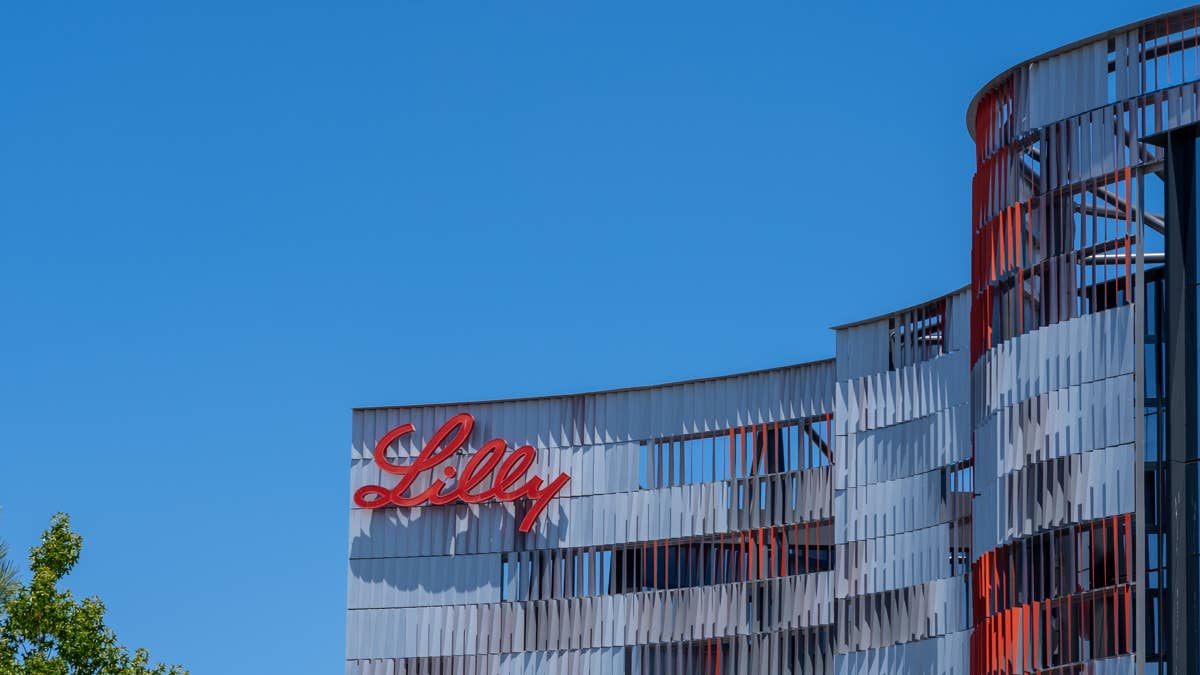
Eli Lilly (LLY) posted a second-quarter result strong enough to shift the debate around its stock.
For months, the debate centered on one worry: a slow start for its new obesity pill. That worry did not disappear in the second quarter, but it stopped driving the conversation.
Bank of America came out of the earnings call pointing to a different number.
The bank thinks the obesity market outside the United States could eventually surpass U.S. sales of the same drugs.
For anyone holding LLY or considering it, that international call is worth a closer look.
Why Bank of America raised its Eli Lilly price target after the quarter
Bank of America lifted its price objective on Eli Lilly (LLY) to $1,344 from $1,334, according to a BofA Global Research report shared with me.
The bank kept its math simple, applying an unchanged 28.5 times multiple to its updated 2027 underlying earnings estimate, which removes one-time research charges.
More Health Care Stocks:
- UBS strongly resets Lilly stock target
- JPMorgan resets LLY stock target on drug demand
- Goldman Sachs sees writing on the wall for Eli Lilly stock
That multiple sits above what BofA uses for other large drugmakers. Lilly is expanding faster than its peers, so the bank pays more for each dollar of future profit.
The raise followed a second quarter that beat expectations.
Lilly reported revenue of $23.0 billion, up 48% from a year earlier, and adjusted earnings of $8.38 a share against a $6.01 consensus, CNBC reported.
Lilly also raised its full-year revenue forecast to $85 billion to $87 billion, up from $82 billion to $85 billion, according to a press release.
The international obesity market that could outgrow the U.S.
For years, the U.S. drove almost all of Lilly’s obesity sales. That is changing quickly, and it is the shift BofA flagged for investors.
The bank noted that GLP-1 sales in international obesity markets are now approaching parity with the U.S.
GLP-1 drugs are a class of medicines, sold as injections and now pills, that treat diabetes and obesity by curbing appetite, BioPharma Dive reported.
Mounjaro, Lilly’s diabetes injection, grew 55% in Europe, 30%in Japan, and 93% in China last quarter.
That growth is why BofA believes the non-U.S. opportunity could eventually surpass the home market, since most large countries have far more untreated patients than the U.S. does.
What the Foundayo launch abroad means for Lilly’s next leg
The clearest catalyst BofA cited is Foundayo, Lilly’s oral GLP-1 pill.
Foundayo matters because it’s a pill, not a shot. That opens the drug to patients who won’t take a weekly injection, a group Lilly’s other treatments have never reached.
Related: UnitedHealth CFO sends stark warning after earnings
Its U.S. debut was modest. Foundayo brought in $98 million, slightly below the roughly $103 million analysts expected, CNBC reported.
BofA is looking past that number and expects the international launch to matter more, estimating roughly 60% of Foundayo’s peak sales to come from outside the U.S.
That launch is close. Lilly has filed for approval in more than 40 countries and plans an overseas rollout in early 2027, BioPharma Dive reported.
Both Lilly and rival Novo Nordisk (NVO) described strong pent-up demand for an oral option abroad, where injectables have faced supply limits, Fierce Pharma reported.
Lilly’s launch has trailed Novo’s oral Wegovy so far, Pharmaphorum noted.
How the Medicare Bridge program feeds U.S. demand
On July 1, Medicare’s GLP-1 Bridge program went live, opening obesity-drug coverage to about 20 million eligible beneficiaries.
BofA said early feedback from Lilly and Novo points to smooth access, with most early adoption coming from patients new to GLP-1 treatment.
Millions of older Americans who could not previously get these drugs now can, widening the paying customer base.
Lilly told analysts that Bridge patients can get both oral and injectable GLP-1s, though injectables remain the early preference.
The pricing trade-off investors keep watching
U.S. GLP-1 prices keep falling as more patients come in through cash-pay channels and programs like Bridge.
BofA pegged second-quarter U.S. net sales at about $580 per prescription, down 15% from a year earlier but flat from the prior quarter.
That drop was milder than the bank had modeled. Still, BofA expects the blended U.S. price to keep falling through the second half of 2026 as cheaper channels grow.
Lilly’s management calls the trade-off worth it, because volume is rising faster than price is falling. That same pattern carried the stock through the first quarter.
Investors should watch this closely, because the call depends on demand outrunning prices. If volume ever stalls while prices fall, the case turns quickly.
Where Lilly’s pipeline keeps it ahead of rivals
The bank said Lilly remains a step ahead of competitors, pointing to late-stage assets that could extend its lead past today’s drugs.
Two names anchor that view:
- Retatrutide, a next-generation triple-hormone shot that posted weight loss approaching bariatric-surgery levels in Phase 3 trials, according to a press release. Its U.S. filing is planned for the first quarter of 2027.
- Eloralintide, an amylin-based drug BofA just added to its Lilly model, reflecting how much depth the pipeline now carries.
The takeaway for investors is that Lilly does not rely on just one product. Even if Foundayo’s U.S. sales remain slow, the company has several ways to extend its franchise.
What LLY investors should do with this
Lilly closed at $1,192.52 on Aug. 6, up 1.94% on the day and up 3.83% over the prior five sessions. That’s also near its 52-week high of $1,249.45.
At that level, BofA’s $1,344 target implies about a 13% increase over the next year.
A few things to keep in mind before acting:
- The stock trades at a price-to-earnings ratioaround 40, so a lot of future growth is already priced in.
- One weak quarter on volume or pricing could hit the shares hard at this valuation.
- The international launch is the real swing factor, and it does not begin in earnest until early 2027.
The case for owning Lilly rests on demand growing faster than prices fall, at home and abroad. The second quarter showed that pattern still holds, which is why BofA raised its target.
Anyone considering LLY should size a position to their own risk tolerance, and remember that even a dominant company can see a sharp pullback when expectations run this high.
Related: Ozempic maker takes biggest rival to court over weight-loss drug ads