













Wall Street’s been debating a rather unusual possibility since the Federal Reserve’s July 29 meeting.
Was the bond market doing the Fed’s tightening for it?
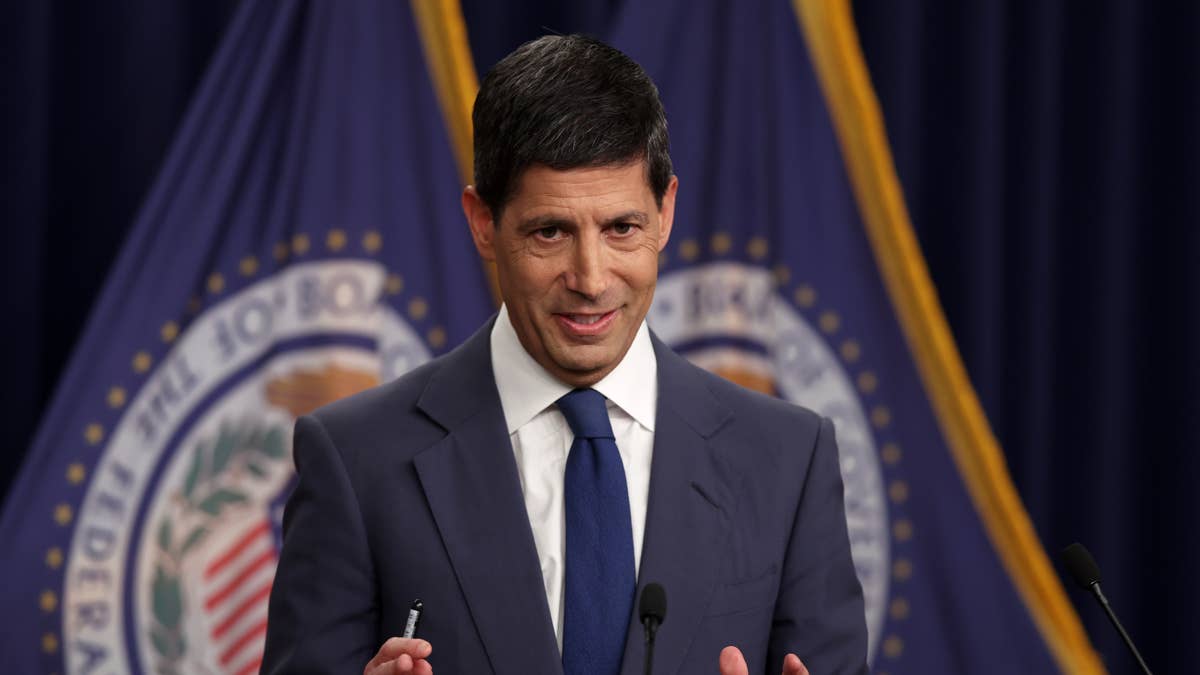
Fed Chair Kevin Warsh stressed that Treasury yields had already moved sharply higher even though policymakers held the federal funds rate steady at 3.50%-3.75%.
However, at the center of things is Warsh’s relatively vague, stripped-down communication, which adds to market uncertainty.
Moody’s economist Mark Zandi alluded to this as well; as I covered, he said, “My concern is that policymakers are unwilling to provide even a modicum of forward guidance.”
In effect, that has fielded a “3D chess” theory that the Fed was deliberately allowing the long-term rates to rise to cool demand without another immediate hike.
Nevertheless, the market reaction was messy
Long-end yields jumped alongside inflation breakevens and term premiums, raising doubts over whether tighter financial conditions reflect confidence in the Fed or growing uncertainty over its strategy.
Now, in a new note shared with me, Bank of America is challenging that tidy explanation.
Why does Bank of America see Warsh’s Fed strategy as a risk to the economy?
Like Zandi, Bank of America economists Aditya Bhave and Mark Cabana are concerned about how little investors know about what would make Warsh change interest rates.
More Economy:
- Bank of America CEO warns inflation will back Fed into a corner
- Bank of America just made a strong call on inflation, economy
- Goldman Sachs says Americans may pay for the AI boom
Interestingly, BofA economists argue there’s a reasonable case for reducing forward guidance, meaning the Fed doesn’t need to tell markets whether September will bring a hike, a hold, or a cut.
However, that’s different from withholding the Fed’s reaction function.
Here’s a quick list of what investors still need to understand.
- Inflation gauges: These measure what Warsh watches most closely when judging price pressures.
- Underlying inflation: How he defines the inflation trend underneath the short-term noise.
- Tolerance threshold: How far can inflation stay from the Fed’s 2% target before it feels it’s time to switch things up?
BofA argues that Warsh has not provided enough of that framework.
So essentially, that uncertainty over the Fed’s reaction function is raising the risk premium investors demand, and it “works like a tax on the economy.”
That trickles down through Treasury yields into mortgages, borrowing, and other financing costs.
Moreover, there’s a credibility dynamic at play here as well. BofA argues markets don’t necessarily require a promise about the next rate decision, but they do need clarity that the Fed has a coherent plan to return inflation to its 2% target.
If investors are unable to see that, they question if there’s a concrete plan at all.
That’s huge, especially if the Fed’s main problem is inflation to begin with. BofA specifically cites the jump in inflation expectations following Warsh’s July press conference.
Why isn’t BofA buying the Fed’s supposed ‘3D chess’ move?
Another major question following the July Fed meeting was whether Warsh was intentionally letting the bond market do some of the Fed’s work.
The feeling is simple.
If long-term Treasury yields jump, borrowing becomes a lot more expensive for businesses and consumers. That could potentially cool spending and investment even if the Fed doesn’t raise its benchmark rates aggressively.
“Warsh is rolling back decades of transparency. We got immediate post-decision statements in 1994, and Greenspan started giving forward guidance in 2003,” said Todd Campbell, former sell side analyst and TheStreet’s Co-Editor-in-Chief. “Investors hate uncertainty. And businesses and consumers tap brakes when higher yields flow into bank lending rates.”
BofA called this the “3D chess at the long end” theory. But the bank doesn’t buy it, and that’s why yields went up.
According to the bank’s economists, a healthy bump in yields would usually come from investors believing the Fed is serious about controlling inflation. Instead, the move also includes heightened inflation expectations and a larger term premium, which can signal greater uncertainty about the Fed’s policy.
That’s not the tightening the Fed should want.
BofA’s view is that the Fed will continue to rely primarily on short-term interest rates, which it can control directly. Long-term yields are tougher to manage, moving for reasons the Fed doesn’t intend.
So, instead of proving that the Warsh had a clever hidden strategy, the bond market’s reaction might have exposed the risks of keeping investors guessing.
Why could the Fed’s next moves make this communication problem even harder?
That backdrop makes Warsh’s experiment with less guidance even more consequential.
BofA itself believes the Fed still has a lot of tightening ahead.
The bank expects 75 basis points of rate hikes in 2026, delivered in 25-basis-point moves in September, October, and December.
That leaves the federal funds rate at 4.25% to 4.50%, where BofA expects it to remain through 2027 and 2028.
Nevertheless, the bank doesn’t see an economy collapsing under the weight of current rates.
It expects growth rates to average nearly 2.5% in the back half of 2026, buoyed by a resilient consumer and continued AI investment. Moreover, the labor market also looks relatively stable, with unemployment expected to be around 4.2% at year-end.
Nevertheless, inflation is likely to be the harder part of the equation.
BofA expects headline inflation to ease as the oil shock fades, but it expects the underlying pressure to remain stubborn.
Core PCE inflation is forecasted to stay above 3% this year, while BofA estimates underlying inflation is closer to 2.5% than the Fed’s target.
Interestingly, that leaves the Fed facing an uncomfortable combination: an economy that’s robust enough to withstand tighter policy and inflation sticky enough to justify it.
Moreover, it also makes clarity around the Fed’s reaction function all the more valuable.
As we look ahead, the upcoming CPI and employment reports might materially change expectations for September.
BofA forecasts July core CPI at 0.2% month over month and 2.5% year over year, while expecting core PCE to be hotter at nearly 0.24% monthly and 3.3% annually, keeping a September hike firmly in place.
There is also Jackson Hole.
BofA notes that, considering the fallout from the previous meeting, Warsh might sound more hawkish at Jackson Hole if inflation data are firm.
The irony is that even though Warsh is seeking to make Fed communication less influential, the powerful combo of sticky inflation, upcoming rate decisions, and uncertainty about his framework makes every word he says more market-moving than ever.
Related: Bank of America doubles down on Sandisk stock after earnings