

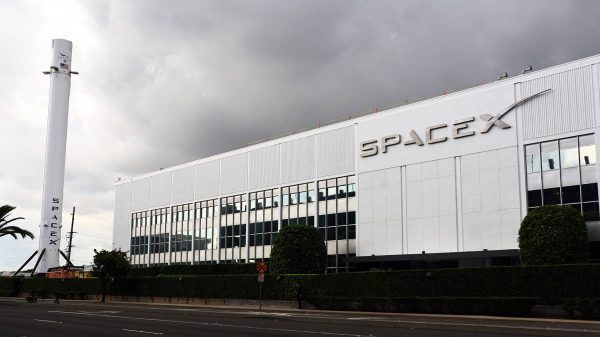













SpaceX (SPCX) gave investors something of a spectacle on Friday.
Reuters reports that Starship’s 13th test flight lifted off from Texas, released 20 Starlink V3 satellites, endured the reentry with its cleanest heat-shield performance yet, and completed an upright splashdown in the Indian Ocean.
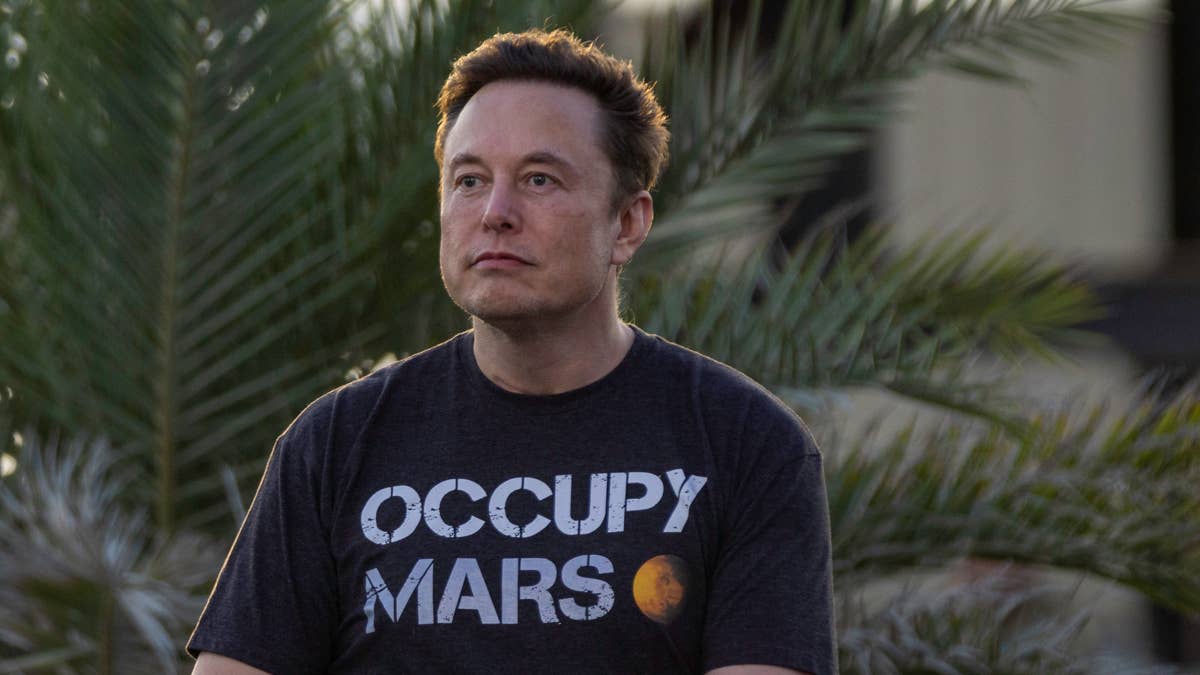
According to The Washington Post, CEO Elon Musk talked about the data haul, arguing SpaceX got everything it needed from the heat-shield experiment “and then some,” while engineer Kate Tice called it “lucky flight 13.” The management’s imagery and cheering made it seem like the mission was a clean sweep.
In reality, though, it wasn’t
The satellites were temporary test articles on a suborbital path, burning up as planned instead of joining the Starlink network. Perhaps more importantly, five Super Heavy engines failed to relight during descent, which sent the booster into the Gulf of Mexico quicker than intended.
SpaceX spokesperson Dan Huot even said that SpaceX targeted a much softer return. The flight advanced upper-stage reentry, payload deployment, and communications testing, but problems with booster reliability and full reusability dampened much of the enthusiasm.
The mixed showing is unlikely to go much for the stock that’s experienced a ton of headwinds of late.
Morgan Stanley’s Adam Jones, though, feels the market is overlooking a critical part of SpaceX’s future value amidst greater scrutiny on launch setbacks, capital spending, and near-term selling pressure.
Why Morgan Stanley say SpaceX’s AI business is worth nothing at $100
Jones believes that the market is beginning to value SpaceX almost entirely as a launch-and-connectivity company, assigning little or no value to its AI assets as reported by Bloomberg.
More SpaceX:
- Elon Musk’s startling claim to SpaceX investors
- Citi sends powerful sign to SpaceX investors
- Beaten-down stock lets you buy SpaceX below market price
According to Jones,
“Many ascribe zero or even negative value for AI given the high capex requirements relative to Space & Connectivity, largely uncertain economics, and the high degree of management time devoted to the business.“
Consequently, he believes that the disconnect offers a far more attractive entry point with investor sentiment deteriorating sharply.
SpaceX shares approached $110.85 on the back of concerns of an upcoming insider lockup expiration, elevated AI spending, and macro uncertainty, along with a broader rotation away from high CapEx technology companies.
Yet Morgan Stanley feels the company’s operating fundamentals remain “largely unchanged.”
Morgan Stanley applies a sum-of-the-parts framework, where basically
Space and connectivity value + AI value = SpaceX equity value
Jonas’s $300 price target (one of the highest on Wall Street) accounts for over 50% of SpaceX’s valuation to AI.
That shows Morgan Stanley values the company’s AI operations at over $150 per share, with the rest coming from launch services, Starship, satellite connectivity, and related space infrastructure.
Not surprisingly, all four banks that helped underwrite SpaceX’s offering agree with Morgan Stanley. Goldman Sachs, Bank of America, Citigroup, and JPMorgan have all issued buy ratings.
How has SpaceX stock performed since its IPO?
As of the latest available Yahoo Finance data, SpaceX (SPCX) stock closed Friday, July 24, 2026, at $115, down 2.7% for the session.
For perspective, according to Forbes, SpaceX priced its IPO at $135 per share on June 11, 2026, closing the first day at a gain of about 19.2% from the $135 IPO price.
Moreover, SpaceX reached its all-time intraday high of $225.64 on June 16, 2026, only two trading sessions after its debut. At that level, the shares were up 67% from the $135 IPO price and 50.4% from their $150 opening trade.
Additionally, Yahoo Finance lists SpaceX’s all-time and 52-week intraday low at $110.85. That was 17.9% below the IPO offer price and 26.1% below the first public trade of $150.
How high could SpaceX stock go?
- According to Seeking Alpha data, Wall Street’s consensus puts SpaceX’s average 12-month target at $236.71, implying 105.7% upside from roughly $115. Forecasts range from $62 to $800, indicating a remarkably wide spread, underscoring disagreement over execution and valuation.
- Morgan Stanley carries one of the more audacious mainstream $300 targets on SpaceX. Its bull case assigns substantial value to SpaceX’s orbital AI opportunity.
- Goldman Sachs rates SpaceX a Buy with a $205 target, reflecting growth across launch, connectivity, and AI, but offers a far more restrained valuation than Morgan Stanley.
- Bernstein’s $239 and Citi’s $200 targets sit nearer the broader consensus, while Macquarie’s recent $250 target suggests roughly 117% upside.
- Raymond James’ Street-high $800 target assumes exceptional Starship and AI execution, according to Barrons.
Sources: Yahoo Finance, Barron’s, Seeking Alpha.
What does Morgan Stanley’s AI valuation mean for SpaceX investors?
The AI debate matters a ton because it’s the bulk of Morgan Stanley’s SpaceX valuation.
Hence, if the AI business generates the value the bank’s analyst expects, SpaceX stock might appreciate substantially even without a major re-rating of its launch, Starship, and satellite-connectivity operations.
Morgan Stanley believes that the traditional space businesses offer a valuation foundation, while Grok, Cursor, and the wider AI platform offer most of the potential upside. At $100 per share, investors might be assigning little or no positive value to that AI opportunity.
Nevertheless, it seems investors aren’t discounting the AI side of its business on the back of massive capital requirements, uncertain long-term margins, intense competition, and the risk of consuming cash for years without offering meaningful returns.
That disagreement essentially defines the investment case.
Morgan Stanley sees a valuable AI platform that investors might receive for free. Bears, on the other hand, see a capital-intensive operation that deserves a negative value, as it’s likely to absorb cash generated by SpaceX’s stronger businesses.
That is perhaps the clear weakness in the “free AI” framing.
An unprofitable business isn’t genuinely free if it requires multiple capital injections, raises borrowing, causes shareholder dilution, or weakens execution elsewhere. In that scenario, slapping a zero value on AI could actually be generous.
The bull case thesis, therefore, depends on two conditions.
SpaceX’s launch and connectivity businesses must independently support something close to a $100 share value, and the AI division must eventually produce returns above its cost of capital.
If either of those assumptions doesn’t come to fruition, $100 might not represent a valuation floor. For investors, the question is not simply whether AI has potential, but whether that potential could create quicker value than it consumes cash.
Related: Bank of America says Alphabet stock investors are missing the bigger signal