














Walmart (WMT) has spent nearly five years living under one of the biggest legal threats the U.S. government has ever aimed at a single retailer.
That threat is now gone, and it cost the company far less than almost anyone expected.
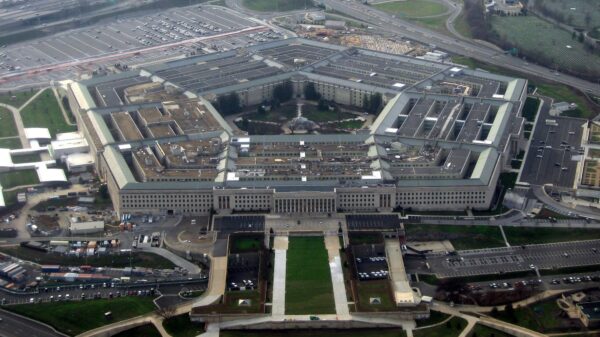
On Friday, Aug. 28, the Justice Department and the Drug Enforcement Administration announced a settlement with Walmart.
The company agreed to pay $50 million to resolve claims that its pharmacies filled thousands of invalid opioid prescriptions.
For a case that once carried the risk of billions in penalties, $50 million is a remarkably soft landing.
Walmart admitted no wrongdoing, and its stock closed higher on the day the news broke.
Why the Walmart opioid settlement ended so much smaller than expected
When the government first sued Walmart in December 2020, the numbers were staggering.
The Controlled Substances Act lets regulators seek penalties for each violation, the DEA stated, and those penalties stack up fast.
Walmart faced up to $67,627 for every unlawful prescription filled and $15,691 for each suspicious order it failed to report, Reuters reported.
Multiplied across thousands of prescriptions, that math pointed toward billions.
So how did a billion-dollar case shrink to $50 million?
The turning point came in March 2024, when U.S. District Judge Colm Connolly narrowed the lawsuit and dismissed large parts of the government’s case.
More Retail Stocks:
- JPMorgan resets Walmart stock price target
- Morgan Stanley resets Amazon stock price target after earnings
- Walmart shoppers must consider one major shift coming to prices
Connolly dismissed claims that Walmart failed to report suspicious orders to the DEA and that its pharmacists failed to document red flags, according to CNBC.
He let only a few claims survive, mainly that pharmacists filled prescriptions the company knew were invalid.
With most of its leverage gone, the government had far less to bargain with, and both sides chose to settle rather than fight.
What the DOJ actually accused Walmart pharmacies of doing
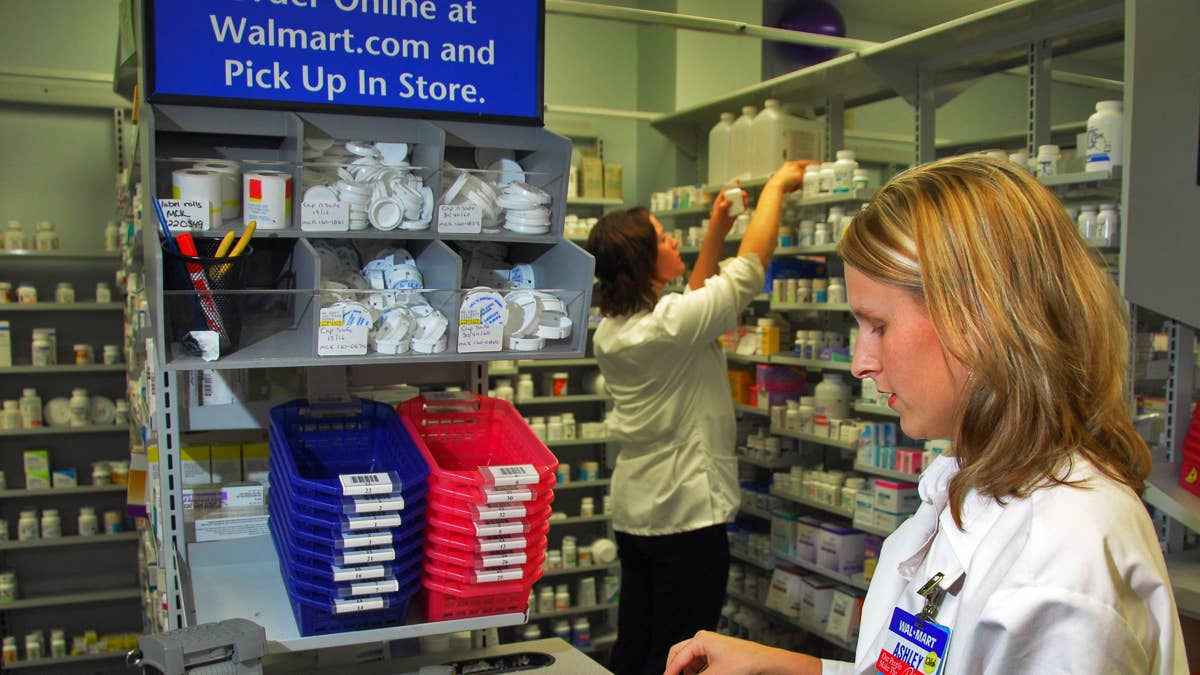
The case traces back to how Walmart ran its pharmacy counters starting in 2013.
Federal prosecutors said the company chose sales growth over safety, even as staff raised alarms.
Walmart pharmacists flagged concerns through thousands of “refusal-to-fill” forms, warning that certain prescribers were running “pill mills,” the DOJ complaint stated.
A pill mill is a doctor’s office or clinic that hands out powerful drugs like opioids with little or no real medical justification.
Instead of acting on those warnings, compliance leaders pushed to keep prescriptions moving, prosecutors alleged.
More than 500,000 people in the U.S. died from opioid overdoses between 1999 and 2019 alone.
The CDC‘s most recent full-year data put the toll at approximately 806,000 through 2023.
That is exactly why the government pursued Walmart so aggressively, and why closing the case is such a relief for the company.
Why $50 million barely registers for Walmart’s business
For most companies, a $50 million legal bill would sting.
Yet the company described the payout as “immaterial” in its regulatory filings. The size of its business explains why.
How the $50 million payout compares to Walmart’s earnings
- Walmart posted $11.79 billion in net income for the six months ending July 31, Benzinga reported.
- The $50 million payment equals about 0.4% of that half-year profit.
- Put another way, the fine amounts to roughly a single day’s operating profit.
The financial hit is small enough that it changes almost nothing about Walmart’s balance sheet or cash flow.
What it does change is the level of uncertainty hanging over the stock.
Resolving this lawsuit matters more to Wlmart than the dollar amount
Investors tend to dislike open-ended legal risk. A multi-billion-dollar lawsuit with an unknown outcome is the kind of thing that can weigh on a stock for years.
By settling, Walmart caps its exposure and takes a messy, unpredictable trial off the table.
Related: BofA points to crucial Walmart numbers most investors ignore
Walmart shares closed higher the day the settlement was revealed. The timing matters because Walmart’s stock has had a rough stretch lately.
WMT recently traded near $103, down about 8.6% year to date, after sliding from a 52-week high of $135.16 reached in May.
Much of that drop followed the company’s second-quarter results, when U.S. comparable sales grew at their slowest pace in six years and JPMorgan trimmed its price target.
Clearing a major legal risk gives investors one less thing to worry about heading into the back half of the year.
How this fits into Walmart’s long opioid history
The Aug. 28 deal closes the last major chapter of Walmart’s opioid exposure.
It follows a much larger settlement the company reached three years ago. In 2022, Walmart agreed to pay $3.1 billion to resolve thousands of opioid lawsuits brought by state, local, and tribal governments.
Rivals CVS and Walgreens reached similar, larger settlements around the same time.
With the federal case now resolved, Walmart’s structural liability tied to the opioid crisis is largely behind it.
The settlement is not purely about money, though. Walmart also entered a memorandum of agreement with the DEA that requires new safeguards going forward.
Those steps include a hotline for employees and patients to report suspected illegal dispensing, closer monitoring of prescription patterns, and a formal process for evaluating suspect prescribers, the DEA stated.
What Walmart investors should take away from the settlement
For investors, the settlement removes a real risk without creating a new one.
Key takeaways for WMT stock investors
- Litigation risk is capped. Walmart avoids a costly trial and knows exactly what this case will cost.
- The financial impact is tiny. At $50 million, the payout is little next to Walmart’s profits.
- The opioid overhang is mostly cleared. Combined with the 2022 deal, Walmart’s major opioid liabilities are now settled.
- Business questions remain. The bigger issue for the stock is slowing U.S. comparable sales, not this lawsuit.
None of this makes Walmart an automatic buy. The stock still trades at a rich valuation of about 35 times forward earnings, and its recent sales slowdown is a genuine concern that this settlement does not fix.
What the deal does is take a worst-case legal scenario off the board.
Walmart is already using its $2.9 billion tariff refund to push prices lower and defend market share. Removing a billion-dollar unknown from the picture lets management and investors focus on the parts of the business that actually drive the stock from here.
The legal drama is over. The retail case is what matters now.
Related: Walmart, Costco, and CVS have a new way to bring you back