















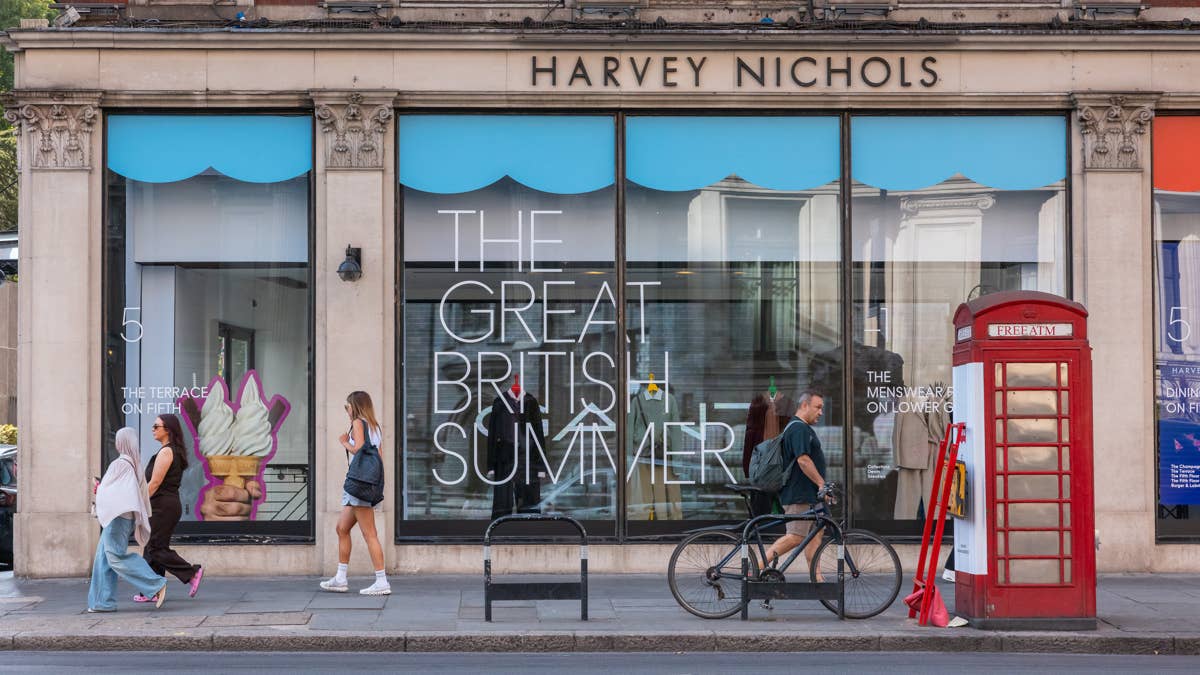
After years of financial losses, Harvey Nichols has a new owner promising to turn around the struggling luxury retailer.
But the takeover has not stopped more store closures and rebranding plans. Several locations are now set to shut down or be converted to another retail brand as the new owner reshapes the business.
Founded in 1831, Harvey Nichols is a British luxury department store chain known for its upscale designer fashion, beauty products, fine wines, and gourmet food. Frasers Group acquired the retailer in August 2026.
Harvey Nichols closes more stores and converts others
Harvey Nichols is preparing to close its Birmingham store on Jan. 3, 2027, affecting at least 60 employees, The Guardian reported. The location, which opened in 2001 at The Mailbox shopping center, is the latest casualty of the retailer’s restructuring under Frasers Group.
The company is also converting its Leeds and Bristol stores to the Flannels brand, ending Harvey Nichols’ physical presence in both markets.
The changes follow the closure of Harvey Nichols’ Dublin store on Sept. 13 after administrators failed to find a way to keep the business operating. The shutdown ended the brand’s physical presence in Ireland and affected 33 workers.
Together, the closures and conversions mark a significant reduction in Harvey Nichols’ U.K. store network following its change in ownership.
After planned changes, the retailer’s remaining U.K. locations under the Harvey Nichols name are expected to include London, Edinburgh, and Manchester. International franchise locations in Riyadh, Dubai, Doha, Kuwait, and two in Hong Kong also remain part of its wider retail presence.
However, the future of the business is still taking shape. Frasers Group has said it will review and rationalize Harvey Nichols’ store portfolio, operating model, organizational structure, and cost base as it works to restore profitability.
Frasers Group CEO Michael Murray told Vogue Business that the company had purchased the Edinburgh and Manchester properties and planned to refurbish them. He also said Frasers Group is willing to invest “significant sums of money” in the London building, provided it can reach an agreement with the landlord.
Murray added that Frasers Group is looking at expansion opportunities for Harvey Nichols through franchise partners, with high potential in Georgia and India.
“The turnaround will require tough choices, and we are prepared to make those decisions, even if that means a smaller business in the near term, to create a stronger and more sustainable Harvey Nichols for the long term,” said Murray in a statement.
Harvey Nichols’ financial struggles
The store closures and conversions come after years of financial losses and a major change in ownership.
Hong Kong luxury goods businessman Dickson Poon acquired Harvey Nichols in 1991 from Debenhams and the Burton Group for £53 million. After 35 years of ownership, Poon put the retailer up for sale in June 2026 as it struggled with mounting losses and a lack of profitability.
Harvey Nichols had not returned to profitability following the Covid pandemic and warned that it could run out of money within a year without additional investment.
The retailer reported a £105 million ($142 million) loss after tax for the year ending March 29, 2025, after writing off intercompany loans, according to its annual report and financial statements.
Revenue fell from £204.8 million ($277 million) to £184.8 million ($250 million) during the year, while pre-tax losses widened from £34 million ($46 million) to £49 million ($66 million). The retailer’s accumulated pre-tax losses had reached more than £140 million ($189 million) over five years.
The financial pressure reflects challenges facing both Harvey Nichols and the wider luxury retail market, including weaker consumer demand, higher operating costs, online competition, and changes in international shopping patterns.
The end of tax-free shopping for tourists in the U.K. has also weighed on luxury retailers that rely on international visitors.
After months of uncertainty, Frasers Group confirmed on Aug. 13 that it had acquired Harvey Nichols through a pre-pack administration process. The deal included six U.K. stores, the retailer’s online business, existing inventory, more than 1,000 employees, and its international franchise agreements.
The Dublin business was handled separately from the main acquisition, while the OXO Tower restaurant in London was excluded from the transaction and sold to another buyer.
The takeover marked the beginning of a major restructuring effort as Frasers Group works to restore profitability and determine how Harvey Nichols fits into its broader retail portfolio.
The strategy also reflects Frasers Group’s broader ambitions in luxury retail. The company already operates Flannels and has built a portfolio of luxury-related investments and retail businesses.
Integrating Harvey Nichols into that network gives Frasers Group another established name to work with, but the latest store decisions show that preserving the brand’s existing footprint is not the priority at every location.
Fashion retail rivals close stores and exit markets
Harvey Nichols is not alone in navigating a difficult retail environment. Luxury and fashion companies have been closing stores, reducing their footprints, and shifting their operations in response to changing consumer demand and pressure on profitability.
The circumstances differ across these retailers, ranging from financial distress and restructuring to strategic decisions about store locations and brand positioning.
Here’s some of my previous coverage of recent store closures:
- Saks Global: Plans to close an additional nine stores following the shutdown of hundreds of locations and its Chapter 11 bankruptcy filing.
- Kering: Closed 133 locations across its brands in 2025, with an additional 100 store shutdowns scheduled worldwide in 2026.
- Capri Holdings: Closed 41 locations across its brands in the year ending June 27, 2026.
- Prada Group: Closed 10 Versace stores since the end of 2025 and plans to shutter more locations while relocating select boutiques to stronger markets in 2026 and 2027.
- Tapestry: Closed 64 directly operated stores during fiscal 2026.
The closures and store conversions underscore that the turnaround will not necessarily preserve Harvey Nichols’ existing physical footprint, potentially leaving some consumers with fewer opportunities to shop in person.
Related: Nearly 200-year-old retailer exits an entire market