




















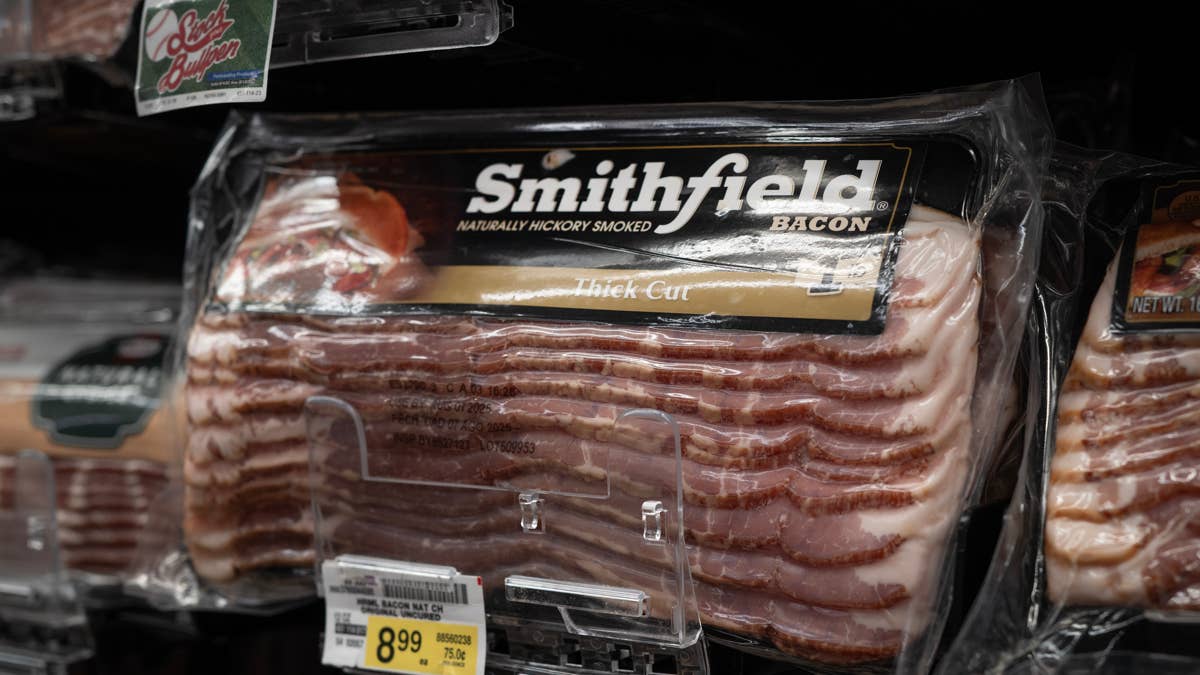
For Americans who regularly buy bacon, ham, and other pork products, there may finally be some relief.
Wholesale prices for two important cuts of pork have dropped sharply, and new retail data show that consumers are already paying less for bacon at grocery stores.
But lower prices may not be the best news for sellers.
The changing market is creating an unexpected challenge for Smithfield Foods, one of the country’s largest pork producers and the company behind popular grocery brands including Smithfield, Nathan’s, Farmland, and Farmer John.
Smithfield products are sold at major retailers, including Walmart. Its broad supermarket presence means changes in the pork market can have implications beyond the company’s financial results.
Bank of America analysts recently warned that deteriorating pork prices and weak demand for certain cuts are putting pressure on the meat producer’s earnings.
The underlying research also reveals an important development for consumers: The economics of bacon and ham are shifting.
And with the holiday shopping season approaching, the timing is particularly relevant for households planning family meals.
Also read: Costco is getting a new kind of member
Smithfield Foods faces a sharp decline in bacon and ham values
The biggest finding in BofA’s report, titled “When pigs are grounded” and shared with TheStreet, is around the wholesale market.
According to the analysts, pork belly values have fallen 44% year over year, while ham values have declined 18%.
Pork bellies are the primary cut used to make bacon, while hams are used in products ranging from traditional holiday centerpieces to processed meats.
More Retail:
- Target tackles a frustrating problem for shoppers
- America’s biggest RV seller closing more stores
- Costco helps members solve a key problem, but at a cost
The declines reflect weak demand for those cuts and a deteriorating market for pork processors.
“Weak belly & ham demand is keeping the pork cutout under pressure,” the analysts wrote.
The pork cutout represents the combined wholesale value of the various cuts obtained from a hog.
For a producer like Smithfield, these weaker prices are posing challenges across its business. Its Fresh Pork segment processes hogs into products sold to retailers, restaurants, and other customers.
The company also operates a Hog Production business and a Packaged Meats division that makes many familiar supermarket products.
Lower wholesale prices can hurt the company’s fresh pork and hog operations, even as cheaper raw materials help the packaged meat business.
But for shoppers, the question is more straightforward: Are bacon and ham actually becoming cheaper?
Is bacon getting cheaper?
The latest figures confirm that, yes, bacon prices are now lower than they were a year ago.
According to the U.S. Bureau of Labor Statistics, the average retail price of sliced bacon was $6.76 per pound in September 2026, compared with $7.29 in September 2025.
Separate NielsenIQ data cited in BofA’s consumer staples report also points to lower bacon prices.
During the four weeks ended Sept. 19, the total value of refrigerated bacon sold at retailers tracked by NielsenIQ declined 9.3% compared with a year earlier.
However, the quantity of bacon purchased fell just 1.5%.
This suggests that the drop in bacon sales occurred not because people stopped buying it, but due to lower average prices and changes in the products shoppers bought.
Smithfield Foods, one of the country’s largest pork producers, also experienced weaker retail sales.
Its sales declined 4.3%, while the quantity of products sold fell 1.2%. Its price and product mix declined by 3.1%.
For consumers, the takeaway is straightforward. Bacon has become cheaper compared with a year ago, although the amount shoppers save will depend on the brand, package size, and retailer.
And while wholesale pork belly prices have fallen much more sharply, it does not mean that the prices you pay at retail stores have also become similarly discounted.
Why lower pork prices are not good news for Smithfield
While falling pork prices might seem like good news for a company that makes bacon, ham, and sausage, the reality is more complicated.
Smithfield doesn’t just manufacture packaged meats.
It also raises hogs and processes fresh pork, meaning that lower market prices can hurt one part of its business, even as they benefit another.
BofA said weaker pork belly and ham prices are weighing on Smithfield’s fresh pork operations, while elevated feed costs are squeezing its hog production business.
Its packaged meats division benefits from lower-cost raw materials, but the company typically passes some of those savings to its customers through lower selling prices.
As a result, the benefits of cheaper pork aren’t enough to offset the pressure elsewhere in Smithfield’s business.
Hence, analysts expect Smithfield’s Hog Production division to record an operating loss of approximately $115 million in 2027. The outlook for Fresh Pork has also weakened because of declining belly and ham values.
However, Smithfield’s Packaged Meats division remains comparatively resilient. The business includes bacon, sausage, hot dogs, deli meats, and other products sold through grocery stores and foodservice channels.
What lower pork prices could mean for holiday grocery shopping
The timing of these developments could be relevant for households preparing Thanksgiving and Christmas meals.
Ham remains a traditional centerpiece for many holiday gatherings, while bacon and sausage feature prominently in breakfast and other family meals.
The sharp decline in wholesale ham values could create opportunities for retailers and meat producers to offer more competitive pricing.
However, BofA’s report does not establish that every supermarket will reduce holiday ham prices or that every Smithfield product will become cheaper.
Retail promotions, contracts, transportation expenses, and demand during the holiday season will influence the prices consumers encounter.
With Smithfield’s portfolio extending beyond its flagship brand to include Farmland, Armor, Farmer John, and Eckrich, developments in the company’s pricing and production costs can affect more than one brand.
For bargain hunters, the practical takeaway is clear. Compare the price per pound of different cuts and brands rather than assuming that lower wholesale pork costs will translate into savings across stores.
Related: Walmart, Target, Dollar General make noticeable changes to stores