



















The U.S. dollar bought 88 cents less in 2026 than it did in 1970. A hundred dollars then is worth $11.61 now, according to the Federal Reserve Bank of Minneapolis.
The erosion did not happen all at once. It built over five decades of federal spending that consistently outpaced revenue, two financial crises that required large-scale government intervention, and several rounds of monetary expansion that followed each one.
The federal government ran a $1.97 trillion deficit in the first 11 months of fiscal year 2026, and the national debt passed $40 trillion.
Both have drawn renewed attention to a question investors have been weighing for years: whether a portfolio built around dollar-denominated assets is as durable a long-term strategy as it once seemed.
What Buffett said about the dollar and currencies
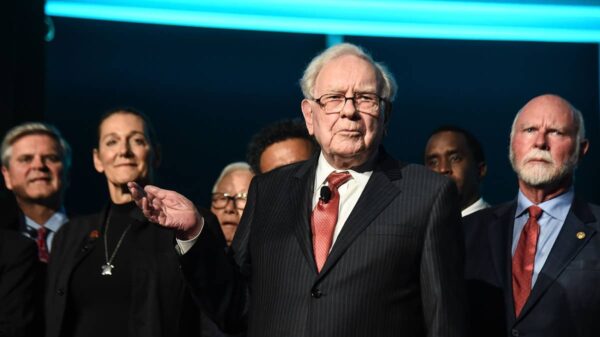
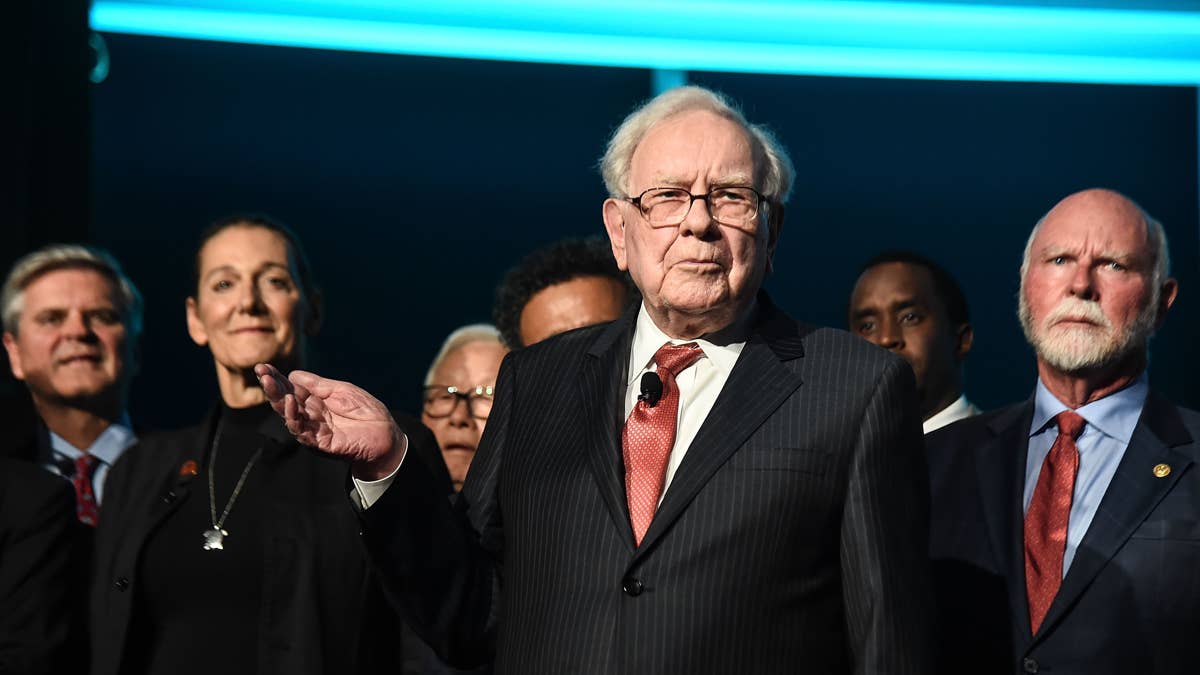
Warren Buffett stepped down as chief executive of Berkshire Hathaway in 2025, ending a tenure of more than five decades at the company’s top. He used his final shareholder meeting in Omaha to address currency risk directly.
“We wouldn’t want to be owning anything that we thought was in a currency that was really going to hell,” he said, as Yahoo Finance reported. Management of Berkshire passed to Greg Abel, his long-designated successor.
More Warren Buffett:
- Warren Buffett reveals he broke his own investing pattern
- Warren Buffett has a blunt take on today’s market
- Warren Buffett pulls no punches on stock market for 2026
“The natural course of government is to make the currency worth less over time,” he said.
The United States has run a deficit in all but four years since 1970. Interest payments on the existing debt have now crossed $1 trillion a year, making debt service one of the largest single line items in the federal budget and a cost that grows as the debt itself does.
How much purchasing power the dollar has already lost
The Federal Reserve Bank of Minneapolis tracks cumulative inflation using Consumer Price Index data going back to 1800. On that measure, the dollar has lost 88.4% of its value since 1970.
Consumer prices rose roughly 17% between 2020 and 2023, the steepest stretch of inflation the country had seen since the 1970s, with annual inflation hitting 8% in 2022 alone. Most Americans felt it in grocery bills, rent payments, and car prices.
The national debt crossed $10 trillion for the first time in 2008 and doubled to $20 trillion by 2017. It passed $30 trillion in 2022 and $40 trillion in 2026. Each threshold came faster than the one before it.
The annual deficit in fiscal year 2026 is tracking close to $2 trillion, with no period of surplus on the near-term horizon.
Where investors have moved money
Gold climbed 149% over the past five years, drawing capital from investors who treat it as a store of value when paper currencies come under pressure.
Ray Dalio, founder of Bridgewater Associates, has publicly argued for years that gold deserves a fixed allocation in any diversified portfolio as protection against long-term currency risk and sovereign debt accumulation. Central banks in China, India, Poland, and several other countries have added to their gold reserves at a pace not seen in decades.
Home prices rose approximately 87% over the past decade, Yahoo Finance reported, citing S&P CoreLogic Case-Shiller index data.
Housing supply has not kept pace with demand in most major U.S. markets. That gap pushed prices well above what general inflation alone would have produced and turned residential real estate into one of the better-performing inflation hedges of the past decade, even after the sharp rise in mortgage rates that started in 2022.
What Buffett recommends individual investors do now
The investment advice Buffett has given individual investors for years has remained the same: Buy a low-cost S&P 500 index fund and hold it.
He has said this in annual shareholder letters and public interviews spanning several decades. The S&P 500 has returned an average of roughly 10% per year over the past century, a figure that accounts for recessions, financial crises, wars, and periods of sustained inflation.
American companies generate real revenue from real customers, raise prices when their input costs go up, and distribute those returns to shareholders over time.
The warning Buffett delivered in Omaha had a specific target: cash and short-term dollar-denominated instruments.
A savings account paying 4% in a year when inflation runs at 5% loses ground in real terms. Treasury bills, certificates of deposit, and money market funds face the same arithmetic. He has argued that the risk in those instruments is not obvious enough, because the loss shows up slowly and the account balance never goes down.
Buffett named equities, real estate, and other productive assets as the better long-term alternative. Owning a business that can raise its prices is a different position from owning dollars that cannot.
At the Omaha meeting, he told shareholders that Berkshire would continue holding American equities and reiterated that view on behalf of individual investors who lack the capital to buy whole companies outright.
A low-cost index fund, in his framework, gets ordinary investors into that same position at minimal cost.
Related: Warren Buffett has a stark message for stock market investors