

















Every market cycle produces its own version of easy money. Meme stocks, meme coins, options trading, leverage, and now the AI boom have all tempted everyday investors chasing fast riches, often using capital they cannot afford to lose.
Warren Buffett built one of the greatest track records in market history by refusing to chase any of it. His central rule for long-term investing has held up through every single cycle since he took control of Berkshire Hathaway six decades ago.
Warren Buffett’s 10-year stock rule and why it still works
Berkshire Hathaway (NYSE: BRK.A)(NYSE: BRK.B) is widely considered one of the greatest stocks of all time, and the numbers back that up. Between 1965 and 2025, the stock generated compound annual gains of 19.7% and a total gain of roughly 6,099,294%, compared with 10.5% annual gains and a 46,061% total gain for the S&P 500 over the same stretch, according to The Motley Fool.
Buffett, who stepped down as CEO at the end of 2025, laid out the philosophy behind that performance in his 1996 letter to shareholders. Investors should focus on purchasing easily understandable businesses “whose earnings are virtually certain to be materially higher five, 10, and 20 years from now,” he wrote, cautioning that only a handful of companies actually qualify.
More Warren Buffett:
- Warren Buffett reveals he broke his own investing pattern
- Warren Buffett has a blunt take on today’s market
- Warren Buffett pulls no punches on stock market for 2026
“If you aren’t willing to own a stock for 10 years, don’t even think about owning it for 10 minutes,” Buffett wrote in that same letter. The line has become one of his most repeated pieces of advice to investors. It has been cited across decades of interviews and shareholder letters as the foundation of his approach when picking stocks.
Buffett reinforced the same idea during his final year as CEO, telling CNBC’s Becky Quick that Berkshire “has a better chance of being here 100 years from now than any company I can think of,” a comment that framed the company itself as the ultimate example of his own philosophy.
Berkshire Hathaway vs S&P 500 returns from 1965 to 2025
History has rarely proven Buffett wrong on this point. Plenty of companies have looked like fantastic stocks in the near term only to burn investors who held on too long, part of why Buffett so rarely chases whatever happens to be the hottest stock in the market at any given moment.
A $100 investment in Berkshire at the start of 1965 would be worth roughly $6.1 million by the end of 2025, versus about $45,500 for the same investment in the S&P 500. Berkshire posted positive returns in 50 of those 61 years, with average gains in winning years of 32% versus 19% for the S&P 500, according to Visual Capitalist.
None of it was linear. From 2015 to 2025, Berkshire returned 234% while the S&P 500 put up 304%. Nvidia, Meta, Palantir. Buffett didn’t own any of them. The decade that belonged to AI was the one stretch where his discipline cost him relative performance.
Berkshire’s own 2025 annual letter to shareholders reinforced the long-term framing directly, noting the company produced $46 billion in net cash flows from operating activities that year, compared with a five-year average of more than $40 billion, underscoring its ability to keep investing across market cycles regardless of short-term conditions, according to Berkshire Hathaway.
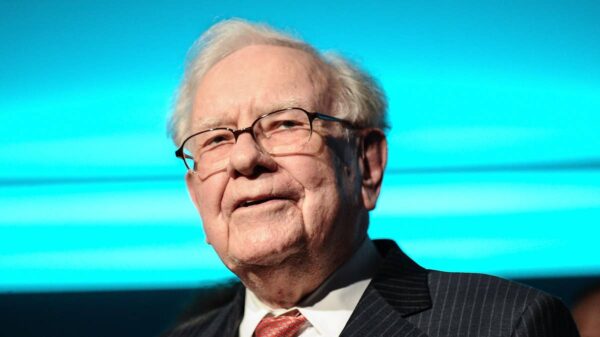
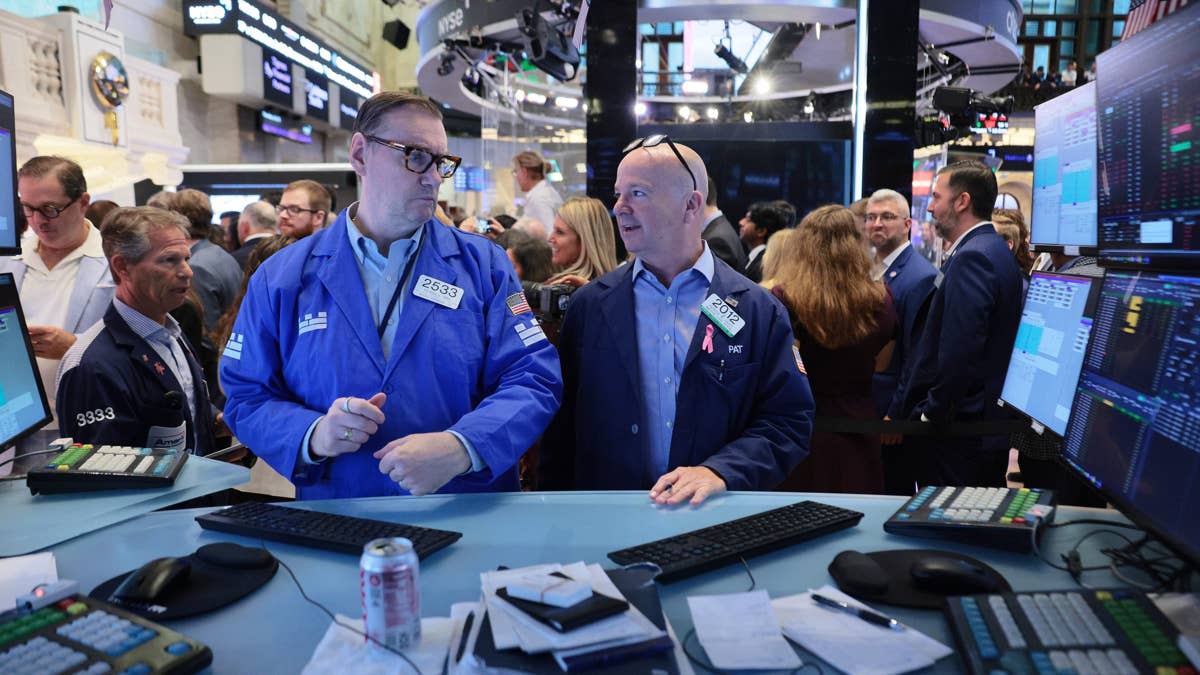
Michael M. Santiago/Getty Images
Coca-Cola stock shows what Buffett’s long-term investing looks like
Buffett’s preference for durable, understandable businesses over the hottest sector of the moment shows up clearly in Coca-Cola, one of Berkshire’s largest and longest-held positions, first purchased in 1988 after the stock was battered by the 1987 market crash. Coca-Cola is a mature company that will never post AI-like growth rates, but its brand strength and expanding beverage portfolio have made it one of the most defensive consumer staples stocks on the market.
Coca-Cola shares have surged roughly 24% so far this year, outperforming the broader market even as investors grow increasingly anxious over stretched AI valuations elsewhere. Its July earnings beat pushed shares to a fresh all-time high, with organic revenue growing 6% and management raising full-year guidance, according to CNBC. Coca-Cola remains one of Berkshire’s five largest equity holdings today, alongside American Express, Apple, Bank of America, and Occidental Petroleum, a concentration detailed in coverage of Greg Abel‘s own capital allocation approach, as TheStreet reported.
Not every observer is convinced the discipline that built Coca-Cola’s position still governs Berkshire under new leadership. Michael Burry has publicly questioned whether Buffett’s successor, Greg Abel, has the same patience for waiting on the right pitch, warning that recent aggressive buying could signal the old discipline loosening, as TheStreet reported.
How retail investors can apply Warren Buffett’s stock picking discipline
Nobody, including Buffett himself, can see the future. Even his own picks have occasionally required re-evaluation when a thesis changes. That reality does not undercut the broader lesson: investors can also protect their downside by favoring stocks built to perform across different market and economic environments rather than chasing whatever trend is dominating headlines this month.
History shows that the longer an investor holds quality stocks, the less likely they are to lose money, though holding period alone cannot rescue a company that is losing money with no clear path to profitability and trades at an extreme valuation. Buffett’s rule was never about time for its own sake. It was about picking businesses worth that much patience in the first place, a distinction underscored by a retrospective on Buffett’s 60-year run, which noted his stock rose from $19 a share in 1965 to more than $750,000 by the time he stepped down, as TheStreet reported.
Sixty years of evidence is why that advice has held up when almost everything else from that era hasn’t. It doesn’t require a prediction. It doesn’t require timing. It just requires an honest answer to one question: would you still want to own this business if you couldn’t check the price for ten years? Most of the time, that question alone tells you everything you need to know.
Related: Warren Buffett doubles down on stock market message for 2026