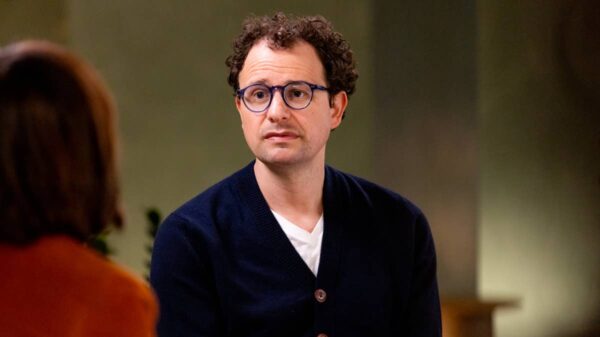






















Suze Orman, a financial personality worth roughly $75 million, just told The Wall Street Journal that she never eats at restaurants. Not because she cannot afford to. Because she thinks you should not either.
The author and television host who has spent decades telling Americans how to handle their money, gave a recent interview to The Wall Street Journal where she made her position clear.
“I refuse to eat out,” she said. “I think that eating out on any level is one of the biggest wastes of money out there,” Fortune reported.
What Suze Orman says about dining out
“We still to this day eat at home,” Orman told the Journal.
On the day of the interview, her wife Kathy Travis had cooked congee rice for lunch and meatloaf for dinner.
The couple does go out occasionally. But Orman said it is never because she wants to spend money on restaurant food. It is because friends want to meet, and she would rather pay the bill than watch people with less money spend what they should not.
“If we go out to eat, the deal is we have to pay because I am not going to let people, who I know don’t have the kind of money that we have, waste their money on food eating out,” she said.
More Personal Finance:
- The tax rules that can quietly ruin your Roth IRA conversion strategy
- Choosing an annuity for retirement rests on hidden features, risks
- One index exposes your bigest retirement fears
Her criticism has gotten sharper as restaurant prices have climbed. Between December 2024 and December 2025, prices for food away from home rose 4.1%. Food consumed at home rose 2.4% over the same period. Overall consumer prices rose 2.7%, according to BLS data.
Fast food has not escaped the trend.
“Look up McDonald’s. Look up Taco Bell. Are you kidding me? $23, $30 just to go to McDonald’s for whatever you eat there,” Orman said.
Why Orman also refuses to buy coffee out
The same logic applies to coffee. Orman, who is 75, brews Cafe Bustelo at home every morning. She is not a Starbucks customer.
“I would drop dead before I bought a coffee,” she told the Journal. “I do one cup a day, and that’s it.”
Her point is not that a single latte will destroy your savings.
The concern is what happens when that latte becomes a daily habit, layered on top of lunches out, weekend dinners, delivery orders, and everything else. Small purchases repeat. They compound. The money that funds them does not.
Orman has said the real cost of daily coffee is not the $5 or $6 you hand over at the counter. It is the years of compounding that money never gets to do. She has told audiences that small regular savings invested early can grow into $1 million or more over a lifetime, depending on returns and timeline.
As an example: investing $100 a month at a hypothetical 7% annual return for 40 years would produce roughly $263,000 before taxes and fees. Investment returns are not guaranteed, and actual results will vary depending on what you hold, when you invest, and market conditions over time.
What this actually costs most Americans each year
Run the numbers on your own spending and you may find that restaurant and coffee habits add up faster than expected.
A $6 coffee five days a week comes to about $1,560 a year. A $25 restaurant meal once a week is roughly $1,300 annually before tip, tax, and getting there. Together, those two habits cost close to $2,900 a year.
That is money that could go toward an emergency fund, a credit card balance, a retirement contribution, or a down payment. It does not have to go there. But you should know it exists as an option before you spend it automatically.
Orman’s criticism applies most directly to people carrying high-interest debt or with no savings cushion. If you have $10,000 on a credit card at 20% interest and you are spending $300 a month eating out, that is a meaningful trade-off worth thinking about.
How to use Orman’s advice without going to extremes
Orman herself is not a model of bare-minimum spending. She flies private. She has owned properties in Manhattan, the Bahamas and South Africa. Her point is not that you should never spend money on anything enjoyable.
It is that you should be deliberate about where your money goes. A weekly dinner out that you plan for, enjoy, and can afford is different from eating out four nights a week because you did not feel like cooking. One is a choice. The other is a habit that does not serve you.
The simplest way to apply her thinking: track what you spend on restaurants, delivery, and coffee for one month.
Add it up. Then look at your savings rate and any debt you are carrying. If the spending is comfortable with where everything else stands, keep it. If it is not, you now know exactly what to cut and how much it would free up.
Orman has said she dislikes strict budgets.
“If you restrict, you limit, you cut back, you don’t buy this, you don’t buy that, and then all of a sudden you explode, and you go out, and you buy everything at once,” she told the Journal. Her preference is awareness over deprivation. Know what you spend. Decide if it is worth it. Then decide consistently.
Related: Suze Orman says the danger has shifted to the employed