















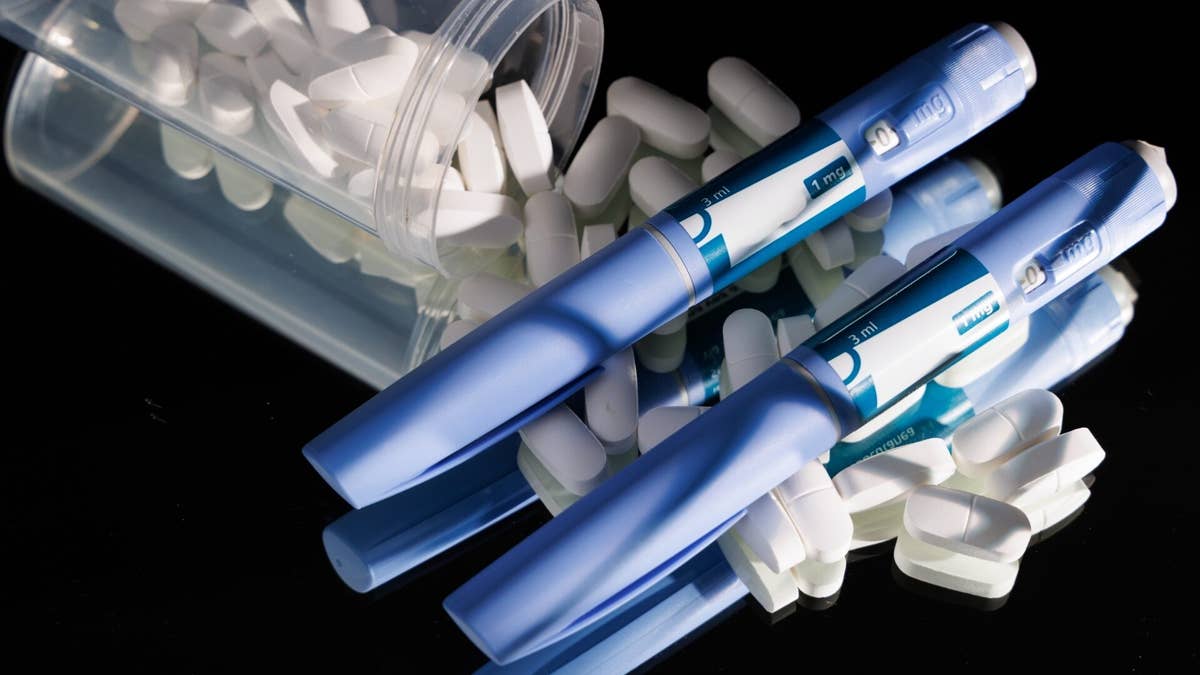
One of the persistent frustrations with GLP-1 weight loss drugs is the commitment they require. Weekly injections, strict maintenance dosing, and the knowledge that if you stop, the weight often comes back.
So, that adherence problem is why 53.6% of patients stopped their GLP-1 therapy within the first year and 72.2% within 2 years, according to an NIH report.
But we have good news. Viking Therapeutics just published trial data suggesting there might be a better way.
On Sept. 22, the San Diego-based biotech reported that participants who switched from weekly to monthly injections of its experimental obesity drug VK2735 maintained an average of 85% of their prior weight loss. Those who switched to every-other-week dosing maintained 90%.
People who stayed on weekly dosing continued to lose weight, reaching 21.7% from baseline at week 33 with no plateau in sight, according to the same trial data report.
Following the report, Shares of Viking Therapeutics (VKTX) surged 36%. In fact, that’s their largest single-day gain since February 2024, when a 120% gain followed positive weight loss drug trial results, CNBC reported.
Also Read: Viking Therapeutics Inc. Latest News and Stories
What the trial actually showed and why the plateau finding matters
I find that the real eye-opener, though, is VK2735’s weight-loss data. Why? During the 21-week induction period, participants lost between 16% and 19% of their body weight, compared with no weight loss in the placebo group, according to the trial data report.
Then, in an exploratory arm where weekly dosing continued through week 33, mean weight loss reached 21.7% with no sign of plateau.
That last detail is important. Most GLP-1 drugs show a plateauing effect at some point — the body adapts, and weight loss slows. VK2735 showed no sign of that ceiling at 33 weeks.
Whether that holds at 52 weeks or beyond is the next question. But for now, the trajectory is exceptional.
More Healthcare Stocks:
- BofA sees Eli Lilly’s overseas obesity sales topping the U.S.
- Eli Lilly’s Foundayo pill wins first European approval
- Novo Nordisk CEO resets expectations for Wegovy’s growth
The flexible dosing maintenance data adds a second dimension. When patients switched to monthly injections, they preserved 85% of their peak weight loss. Every-other-week dosing preserved 90%. The comparison group switched to placebo and preserved only 61%.
We believe flexible dosing approaches will provide patients and their providers with new options for improving long-term adherence.
That is the simple answer to the adherence problem. Monthly dosing for patients who have achieved their target weight reduction is a meaningfully different proposition than lifetime weekly injections.
The competitive landscape just got more complicated for Lilly and Novo
VK2735 is a dual agonist targeting both GLP-1 and GIP receptors. That’s the same dual mechanism as Lilly’s tirzepatide, which powers Mounjaro and Zepbound. That is a direct competitive comparison.
In my last report, I covered Eli Lilly CEO Dave Ricks breaking ground on a $6.5 billion manufacturing facility in Houston and revealing that Foundayo has captured one-third of new oral GLP-1 patient starts.
Lilly is moving fast to cement its lead. The Viking data published Tuesday is exactly the kind of catalyst that reminds investors the duopoly is not permanent.
Related: Eli Lilly CEO reveals astonishing shift in GLP-1 pill market
Roche reinforced that point simultaneously. The Swiss healthcare giant published mid-stage trial data on Sep. 22 for enicepatide, its own dual agonist acquired through a $2.7 billion purchase of Carmot Therapeutics in 2023.
In patients with type 2 diabetes who were overweight or obese — a particularly difficult-to-treat population — enicepatide delivered up to 15.5% weight loss over 48 weeks with no plateau.
Roche’s U.S.-listed ADRs finished essentially flat. This tells you investors already expected this drug to work.
The Novo backdrop that makes timing notable
All of this landed a day after Novo’s capital markets day, which sent its shares lower as investors grew skeptical of the company’s growth plan built around five new “multi-blockbusters” by 2030 and a potential appetite for large acquisitions.
Novo also published CagriSema data on Sep. 21 showing 12.4% weight loss among patients with diabetes, compared with 9.1% for Lilly’s tirzepatide at the 5 mg dose.
But CagriSema had already disappointed earlier this year when it failed to outperform tirzepatide in patients with obesity, triggering a significant ADR decline at the time.
The pattern emerging across these catalysts is that the obesity drug market is evolving from a two-company race into a more crowded, competitive one. Viking’s flexible dosing data, Roche’s enicepatide results, Novo’s strategic uncertainty, and Lilly’s manufacturing buildout are all happening simultaneously.
If you are a patient or know someone who is, more competition means more options. Lilly and Novo now have credible challengers lining up.
Viking at $41 after a 36% surge is still a mid-cap biotech without an approved product. But Sep. 22’s data confirms it has a mechanism, efficacy data, and a clinical story that could earn a real seat at the table.
Related: Lilly looks beyond obesity with $2.88B autoimmune buyout