





Keurig Dr Pepper built one company around two very different businesses: a North American beverage operation led by Dr Pepper and a coffee franchise built around Keurig.
But it is now preparing to separate them, again, since its merger in 2018.
The company plans to split into two publicly traded businesses in early 2027.
The separation will create:
- North American beverage company that will include Dr Pepper and KDP’s other cold-drink brands
- Global coffee company combining Keurig with JDE Peet’s
The separation follows KDP’s acquisition of JDE Peet’s and is the first step in a broader restructuring, leaving investors with two companies with increasingly different growth, margin, and debt profiles.
Bank of America says the split remains on track for early 2027.
And this difference is why BofA thinks the breakup could unlock value.
In a note shared with TheStreet, BofA reiterated its Buy rating on Keurig Dr Pepper and its $38 price objective, around 21% upside from the $31.39 share price cited in the report.
But the bank’s valuation breakdown is more revealing than the price target itself. BofA estimates that the future beverage company alone could be worth roughly $31 per current KDP share, while the global coffee business could be worth about $7 per share.
Simply put, BofA believes the Dr Pepper-led side of the company could eventually be valued at nearly as much as all of Keurig Dr Pepper is worth today.
The reason is that KDP’s beverage business looks considerably stronger than it did when Keurig Green Mountain and Dr Pepper Snapple merged in 2018.
Dr Pepper has become KDP’s biggest growth engine
BofA estimates that the stand-alone beverage company will generate about $13 billion in sales in fiscal 2026.
Between fiscal 2008 and fiscal 2017, the legacy Dr Pepper Snapple operation averaged less than 2% annual organic sales growth.
More Retail:
- Home Depot is making a big bet on cautious consumers
- Another state just banned a controversial retail pricing practice
- JPMorgan just flagged a slow-build food crisis
However, since fiscal 2020, beverage organic sales have exceeded 5% every year and are on pace to do so for a seventh consecutive year in fiscal 2026.
A major reason for this is Dr Pepper.
The brand surpassed Pepsi-Cola in 2023 to become the No. 2 U.S. carbonated soft-drink brand by volume and has continued gaining share since then, according to Beverage Digest data cited by BofA.
Dr Pepper now accounts for roughly 40% of KDP’s U.S. beverage sales, according to NielsenIQ data in the report.
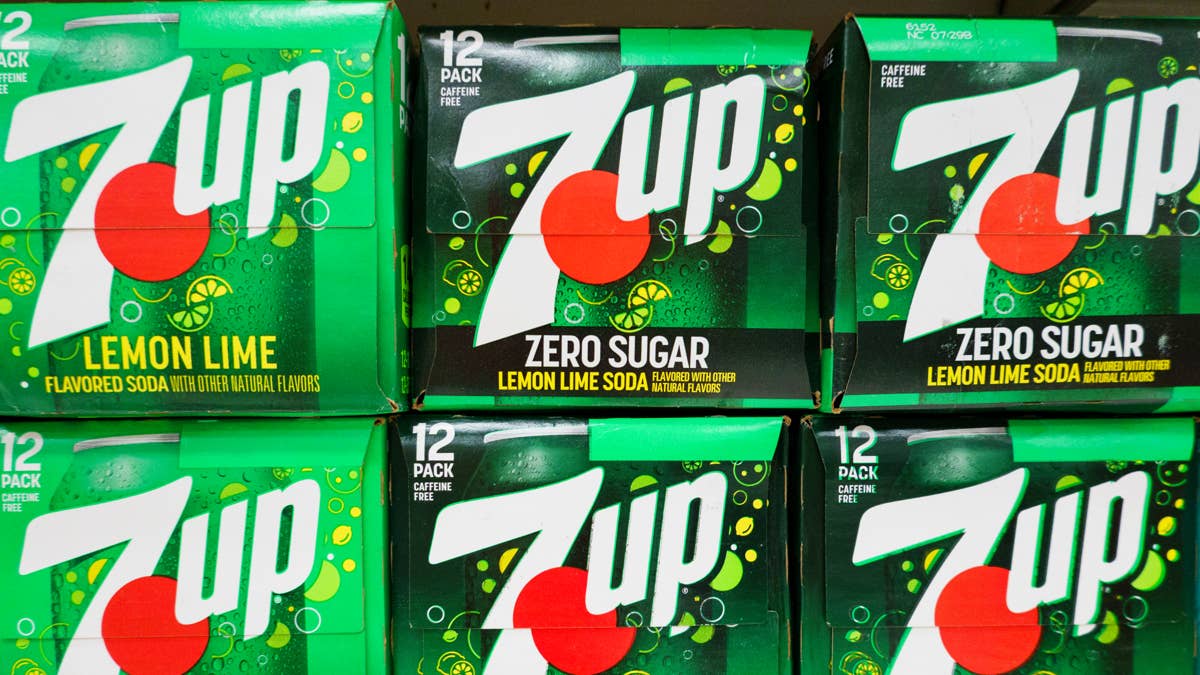
Canada Dry represents another 11%, while A&W and Ghost each account for about 6% and 7UP for 5%.
Soft drinks still account for roughly 76% of KDP’s beverage sales, but the company has also been expanding into faster-growing categories.
Its distribution network carries partner brands including C4, Bloom, Electrolit, Vita Coco, Polar Beverages, La Colombe, and Black Rifle Coffee.
Those agreements give KDP exposure to energy drinks, hydration, functional beverages, and ready-to-drink coffee without requiring it to buy every brand outright.
BofA argues that this allows KDP to put more volume through its distribution system while committing less capital than it would through large acquisitions.
Partner brands have also consistently grown faster than KDP’s owned portfolio.
BofA said partner-brand retail sales increased 36.9% year over year in the second quarter of 2026, compared with 2.5% growth for owned brands.
KDP has simultaneously been bringing more distribution routes in-house, a move BofA believes can improve store-level execution and margins.
BofA sees a valuation gap
Keurig Dr Pepper currently trades at roughly 13 times BofA’s estimated 2027 earnings, compared with about 24 times for Coca-Cola and 15 times for PepsiCo.
BofA argues that Coca-Cola deserves a premium because of its international reach, stronger organic growth, and higher margins.
But it sees KDP’s discount to Pepsi as more difficult to justify. KDP’s combined business generates an EBITDA margin of roughly 24%, compared with about 20% for PepsiCo, according to the bank.
The difference becomes more pronounced when coffee is removed. BofA estimates the stand-alone beverage company could generate about $13.67 billion in 2027 sales and approximately $4 billion in adjusted EBITDA, giving it an EBITDA margin of roughly 29%.
The bank believes a mid-teens EBITDA multiple would be appropriate, placing the business between Pepsi and Coca-Cola in terms of valuation.
At 15 times EBITDA, BofA estimates Beverage Co. would be worth approximately $31 per current KDP share. This means the majority of BofA’s $38 valuation for Keurig Dr Pepper comes from the beverage side.
Coffee remains the biggest question
The future Global Coffee Co. will combine KDP’s coffee operation with JDE Peet’s, creating a company BofA estimates could generate roughly $16 billion in 2027 sales and $3.1 billion in adjusted EBITDA.
But BofA assigns that business a much lower valuation.
Coffee remains a relatively commoditized category compared to that of branded beverages due to:
- Volatile green coffee costs
- Periodic margin pressure
- Less predictable sales growth
BofA estimates the coffee company could command roughly six to eight times EBITDA. At the midpoint of that range, it would be worth about $7 per current KDP share.
The bank also identified three issues that could weigh on the business before the split:
- Need for a permanent CEO
- Uncertainty around its post-separation leverage
- Volatility in coffee commodity prices.
Those pressures come as global coffee prices remain elevated and JDE Peet’s margins trail those of several peers.
Keurig Dr Pepper debt has to come down
KDP also has to reduce a sizable debt burden before the two companies can stand independently.
The JDE Peet’s transaction includes:
- $6 billion of unsecured bonds
- $3.9 billion of term loans
- $4.5 billion of convertible preferred equity linked to the future beverage company
KDP also assumed about $5.3 billion of JDE Peet’s existing debt.
Management reported net leverage of 4.4 times following the transaction, while BofA calculated adjusted net leverage of about 5.3 times.
KDP has been working to bring those levels down through free cash flow and asset sales, including the planned monetization of its Chobani stake.
Maintaining investment-grade ratings is particularly important because the separation cannot be completed if either KDP or the future coffee company falls below investment grade at both Moody’s and S&P under terms tied to the transaction.
That makes deleveraging one of the biggest remaining hurdles before the early-2027 split.
Still, BofA’s argument is that investors may be applying too much of the coffee business’s risks to the company as a whole.
Once the two businesses trade separately, investors will get a much clearer choice: a high-margin beverage company anchored by Dr Pepper and faster-growing partner brands, or a larger global coffee company carrying greater commodity and leverage exposure.
For BofA, this is where the opportunity lies.
Related: 38-year-old beloved steakhouse chain closing over 40 locations