



















Amazon (AMZN) stock blasted off post-earnings as Wall Street celebrated evidence that its whopping artificial intelligence (AI) spending was producing a measurable payoff.
For the most part, investors were bracing for another quarter marred by fears of capital expenditure and questions about whether AWS could grow quickly enough to justify the buildout.
Instead, cloud sales rose sharply, operating profit expanded, and backlog climbed to a record level.
On the flip side, as I reported on Alphabet (GOOGL), Amazon’s cash flow deteriorated as infrastructure spending soared.
However, backed into a corner, Amazon delivered its strongest growth numbers in years.
That shift led JPMorgan to reassess the stock’s earnings power and the durability of its AI investment cycle.
At the heart of the reset is a question of whether AWS can convert booming demand into sufficient long-term profit to outweigh Amazon’s severe near-term cash burn.
Noah Berger Getty Images
Why JPMorgan sees an AWS inflection, not just an earnings beat
JPMorgan analyst Doug Anmuth bumped Amazon’s price target to $365 from $330, retaining an Overweight rating and keeping the stock in his Best Idea list.
For context, that is nearly a 34.4% upside from current prices.
The bank’s thesis centered on Amazon’s breathtaking top-line growth.
More AI:
- Workers just sent AI companies an ultimatum
- Palantir CEO has a blunt verdict on OpenAI and Anthropic
- Elon Musk pulls no punches with AI rivals as Grok 4.5 debuts
Amazon’s overall sales were up 20%, its fastest growth in 20 quarters, while its cloud behemoth AWS grew 37%, its fastest rate in 18 quarters.
More importantly, AWS backlog reached $496 billion, rising 36% sequentially and nearly 2.5 times year over year, offering investors a ton of visibility into future cloud sales.
On top of that, AWS’s AI and custom-chip businesses, spearheaded by its Graviton CPU, posted an eye-catching $25 billion annual sales run rate. Growing at a triple-digit clip.
Additionally, AWS’s operating income surged 64% to $16.6 billion, while its operating margin expanded to 39.4%. Hence, AWS carried nearly 61% of Amazon’s consolidated operating profit, despite accounting for one-fifth of revenue.
For perspective, though, AWS’s 37% growth was the slowest among the cloud czars, trailing Microsoft Azure and other cloud services at 43% and Google Cloud at 82%.
Consequently, Anmuth and his team argue that Amazon is showing concrete evidence of booming AI demand rather than simply making promises.
That’s why they’re comfortable assigning a lofty 32-times multiple to 2027 earnings, which would require at least a 10% increase in their previous EPS estimate to $11.41 to support a $365 price target.
How much did Amazon stock gain after earnings?
Amazon reported Q2 earnings after the market closed on July 30.
Following the release, the stock surged 15.3% on July 31, closing at $271.58, its biggest one-day gain since 2012, according to WSJ reporting.
After Amazon’s stock shot up, the rally added roughly $388 billion in shareholder value, with its market cap at $2.95 trillion, according to CompaniesMarketCap.
According to Seeking Alpha data, Amazon shares gained 17% over the past week and 14% over the past month, outperforming the S&P 500’s 1% gain and 0.1% decline, respectively. The stock is also up 18% year-to-date, versus a 9.4% increase for the S&P 500.
Does Amazon’s earnings guidance support the bull case?
For Amazon investors, forward guidance left a lot to be desired.
Amazon expects Q3 sales of $197 billion to $202 billion, representing 9% to12% growth, and operating income of $22.5 billion to $26.5 billion.
However, it’s important to note that Prime Day moved into Q2, which creates a tough comparison. Amazon said Q3 growth would be almost 4 percentage points higher after excluding the timing effect from both years.
The bigger challenge, though, is CapEx.
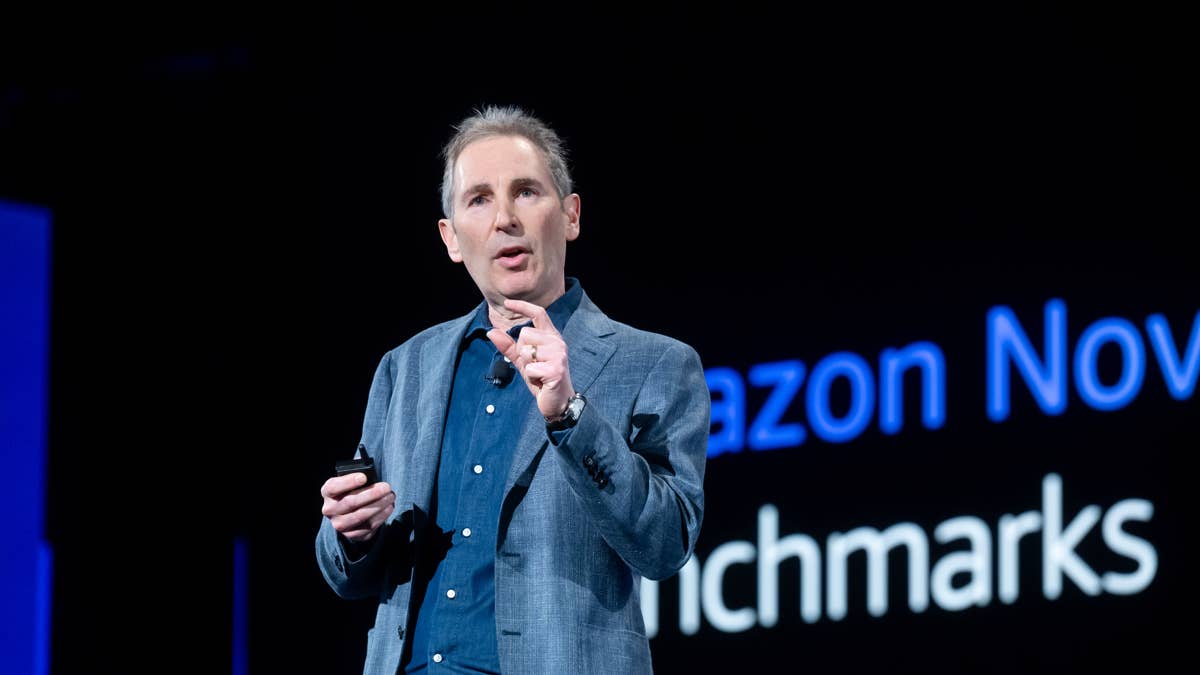
Amazon bumped its 2026 CapEx to nearly $220 billion from $200 billion, driven by higher memory costs. However, even at that level, CEO Andy Jassy said Amazon would face capacity constraints.
“The higher cost of memory is pushing this number up from our prior estimate of about $200 billion. Even at that amount, we will still not have enough capacity to meet all the demand we have in 2026, and I believe this dynamic will also be true in 2027, too,” he said.
Nevertheless, that spending pushed its trailing-12-month free cash flow from a positive $18.2 billion figure a year ago to a $7.6 billion outflow.
Amazon linked that to a massive $66.1 billion year-over-year increase in property and equipment purchases, net of proceeds and incentives.
Although operating cash flow remained strong, rising 33% to $161.4 billion, infrastructure spending consumed far more cash than the business generated after capital investment.
Be that as it may,
JPMorgan’s position is that the cash-flow deficit is essentially a timing mismatch instead of a failure on the tech giant’s part.
Amazon spends roughly 2 years on data centers before it starts generating revenue. Jassy said those facilities operate for around 30 years, while AI servers can recoup their costs in less than three years and continue generating profits afterward.
For the bull case to hold, the committed demand needs to convert into sales quickly enough for AWS growth and operating profits to offset the increase in depreciation.
Wall Street price targets for Amazon stock after earnings
Most Wall Street firms remained relatively bullish on Amazon stock post-earnings, broadly celebrating Amazon’s AWS acceleration.
Goldman Sachs was perhaps the most upbeat of the lot, arguing that the tech giant deserved a far more substantial re-rating, and not just higher earnings estimates.
On the flip side, Bank of America was much more cautious than Goldman Sachs about Amazon’s AI growth. It’s looking for much more evidence that the company can effectively translate its tremendous AI spending into strong, lasting cash flow.
- Goldman Sachs: $375, raised from $335 with a Buy rating, on the back of stronger AWS growth, AI demand, and advertising momentum, boosting Amazon’s earnings outlook.
- Truist Securities: $350, raised from $320 with a Buy rating following Amazon’s results, underscoring greater confidence in cloud growth and AI infrastructure demand.
- Morgan Stanley: $335, raised from $330 with an Overweight rating after AWS posted accelerating growth, stronger bottom-line numbers, and an improved backlog.
- RBC Capital: $330, raised from $320 with an Outperform rating, citing Amazon’s accelerating AWS growth following the quarter.
- Bank of America: $320, raised from $310 with a Buy rating after Amazon’s cloud business comfortably exceeded expectations.
- Wall Street consensus: $320.18, representing 17.9% upside, according to Seeking Alpha’s analyst-consensus data.
Sources: MarketBeat, Investing, Seeking Alpha.
Investor Takeaway on Amazon stock
Amazon bulls are compelling investors to cut through the noise of all the cash flow troubles and focus on the economic value created by AI.
That argument has a lot of merit because, especially with AWS, it doesn’t seem like the company is spending defensively to protect a fading cloud franchise.
In fact, it is investing in demand that already exceeds available capacity.
Nevertheless, investors shouldn’t treat the post-earnings rally as essentially proof that the capital spending cycle is de-risked.
For now, the most important indicators to focus on are AWS growth, cloud operating margins, backlog conversion, and free cash flow direction.
Additionally, it is also important to monitor whether Amazon’s custom chips lower computing costs, whether AI customers expand usage after initial deployments, and the management’s ability to eventually reduce capital spending as a percentage of sales.
Hence, for those invested in Amazon stock, it might not be wise to chase the stock following a post-earnings pop. Those looking to wager on the tech giant should probably wait for a better entry point.