















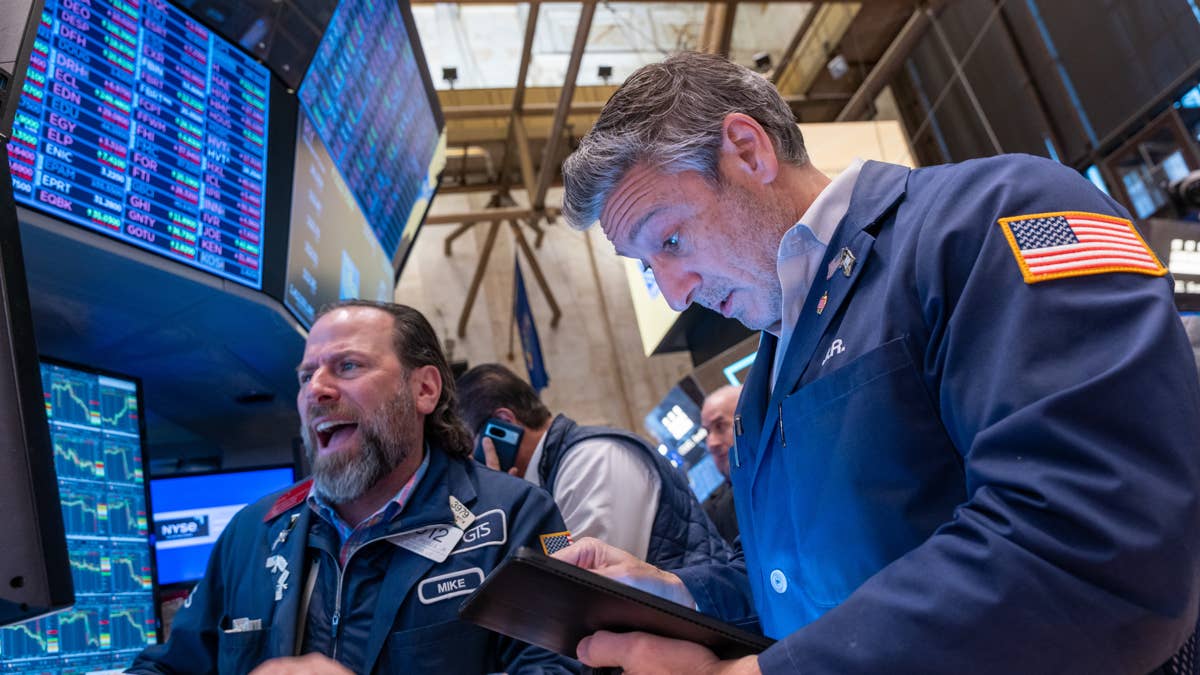
Wall Street’s nervousness over inflation and higher rates derailing the stock market was already on the radar.
Elevated oil prices threatened to lift consumer prices and stoke fears of a Fed rate hike while pressuring tech stocks that had powered the market to record highs. The Nasdaq 100’s pullback only deepened fears that the AI boom was losing steam at the worst possible time.
JPMorgan, though, is looking higher.
One of the bank’s top strategists argues that the S&P 500’s run is far from over, given the inflation headwind. It is an unusually bullish call as markets are still weighing stickier prices, elevated borrowing costs, and a widening rotation away from tech.
Why does JPMorgan see more upside for the S&P 500?
According to Business Insider reporting, JPMorgan Private Bank strategist Kriti Gupta expects the S&P 500 to reach roughly 8,200 by mid-2027.
For perspective, that implies roughly a 9.5% upside from its July 31 close of 7,489.81 according to Yahoo Finance.
Moreover, she also expects the benchmark to deliver a double-digit return over the coming year, despite Fed-rated and inflationary headwinds.
That call comes at a time when inflation and interest-rate-hike fears have begun to rattle markets.
For perspective, the S&P 500 dropped 1.52% on July 29 after the Fed kept rates steady, according to Reuters. However, the index rebounded 1.7% the next day and gained another 0.7% on July 31, backed by strong earnings momentum from Big Tech.
Related: J.P. Morgan drops Fed rate bombshell over Warsh, inflation
Gupta’s thesis is that higher rates alone cannot end bull markets.
In her opinion, the bigger risk is if rates rise alongside a sharp deterioration in growth. So far, she sees no economic weakness that’s severe enough to justify a steep stock-market pullback.
AI is critical to her thesis.
Gupta described demand as “massive,” while S&P 500 companies remain on track to produce their strongest net profit margin since the global financial crisis.
Moreover, demand for U.S. stocks from retail and institutional investors remains “off the charts.”
“We’re looking at double-digit returns again this year,” Gupta said.
The whole idea is that stronger profits and AI-led productivity can continue to outweigh inflationary pressures.
However, if rate hikes start weighing on growth rather than just cooling prices, JPMorgan’s bullish target faces a steeper reset.
Why is US inflation swinging so sharply again?
Gupta said inflation appears to be arriving in “waves,” kicking off with the post-pandemic surge and now followed by the energy shock created by the conflict with Iran.
The data support the argument, at least at the headline level.
Monthly consumer inflation shot up from 0.3% in February to 0.9% in March, 0.6% in April, and 0.5% in May, according to the Bureau of Labor Statistics. Then we saw an abrupt reversal, with the Consumer Price Index dropping by 0.4% in June, its largest monthly decline since April 2020.
Energy produced the core of the turbulence.
More Wall Street:
- Wall Street sends strong 4-word verdict on the stock market
- Wall Street’s $200 billion IPO wave threatens sell-off
- Wall Street flees software plays for triple-digit chipmaker boom
Prices surged 10.9% in March, rising another 3.8% in April and 3.9% in May, before dropping 5.7% in June. Gasoline prices followed an even more dramatic path, rising 21.2% in March and another 7% in May before dropping 9.7% in June.
Despite the June reversal, gasoline prices remained 26.7% more expensive compared to the previous year, according to TradingEconomics.
Conversely, core CPI, which strips away food and energy, remained unchanged during June and slowed to 2.6% year-over-year from 2.9%, according to Reuters. Hence, the latest inflation report looked much better than the headlines suggested, as most of the volatility stemmed from energy prices.
Where does JPMorgan see the best opportunities?
- Stay concentrated on US growth: Gupta believes the U.S. still offers the most sustainable path to bottom-line growth.
Two Big Tech stocks that impressed this earnings season with impressive post-earnings pops were Microsoft (MSFT) and Amazon (AMZN).Microsoft’s cloud business surged past $59.3 billion, rising to 27% in Q4, while Amazon’s latest quarterly sales rose 20% and AWS growth accelerated to 37%, its fastest pace in 18 quarters.
Both stocks offer direct exposure to AI demand, though CapEx remains a big risk.
- Use financials to play AI’s wider economic impact: JPMorgan and Goldman Sachs fit her thesis a lot better than smaller lenders. In particular, JPMorgan benefits from scale, consumer spending, and capital markets activity, while reporting roughly 60% more value from AI and machine learning tools. Moreover, Goldman generated record second-quarter net sales of $20.34 billion and a 23.5% return on equity.
- Target Latin America’s expanding middle class: MercadoLibre is perhaps the clearest listed way to capture the region’s growth. Q1 sales and financial income jumped 49%, with commerce rising 47% and fintech growing 51%. However, its operating margin fell to 6.9%, and credit-loss provisions more than doubled, making execution and loan quality important risks. Additionally, Nu Holdings offers more concentrated banking exposure, but wagering on it comes with greater credit and regulatory risk.
- Keep the portfolio balanced: Gupta recommends combining profitable U.S. technology with selective exposure to Latin American growth, while hedging with gold (she recommends allocating 5% to the shiny yellow metal).
What should investors expect from inflation next?
Oil prices might actually push headline inflation higher again after some brief respite.
For perspective, according to Investing, Brent and WTI crude gained over 20% in July, as renewed fighting disrupted shipping routes and revived fears of a broader supply shock.
Prices then pulled back steeply on August 3, with WTI falling 6.8% to $78.90 and Brent dropping 5.7% to $82.89 according to Livemint, as the immediate risk of another U.S. strike on Iran faded.
Though that drop might help future inflation readings (depending on its sustainability), it came too late to erase July’s energy bump.
Consequently, the July CPI report, due August 12, is likely to show another pickup in headline inflation.
Monitoring core inflation, though, will be a lot more important.
If the pressure remains localized in gasoline, transportation, and other energy-sensitive categories, the Fed might view it as a temporary supply shock. However, if the blast radius spills over to shelter, services, and other underlying categories, things could get interesting in a bad way.
For perspective, the Fed is treating that possibility very seriously.
Policymakers held the federal funds rate at3.50% to 3.75% on July 29, but three officials voted for an immediate quarter-point increase.
Fed Chair Kevin Warshsaid the following:
“We take these shocks seriously. There have been a series of them that have been hitting this economy; we’re not looking through them.”
Additionally, reports suggest markets are pricing in an 86% probability of at least a single rate hike by the end of 2026, according to the CME FedWatch tool.
The Fed also acknowledged that the energy-related supply shocks were keeping inflation elevated.
For investors, temporary oil shocks could weaken consumer spending and delay rate relief while pressuring corporate margins, without necessarily disrupting or ending the earnings cycle.
However, a sustained increase in core services, shelter, and wages will prove much more dangerous, compelling the Fed to go on the higher-for-longer path or even raise them again, complicating things for the stock market.
Related: JPMorgan resets Amazon stock target after AI payoff