












Stock picking has gotten harder this year, and Jim Cramer says it is not because the fundamentals stopped mattering. It is because Wall Street stopped looking at them.
The “Mad Money” host has spent recent months describing a market where entire groups of stocks move together on themes rather than earnings. His latest comments suggest that pattern is about to create some of the best buying windows of the year.
Cramer says the market has stopped grading stocks individually
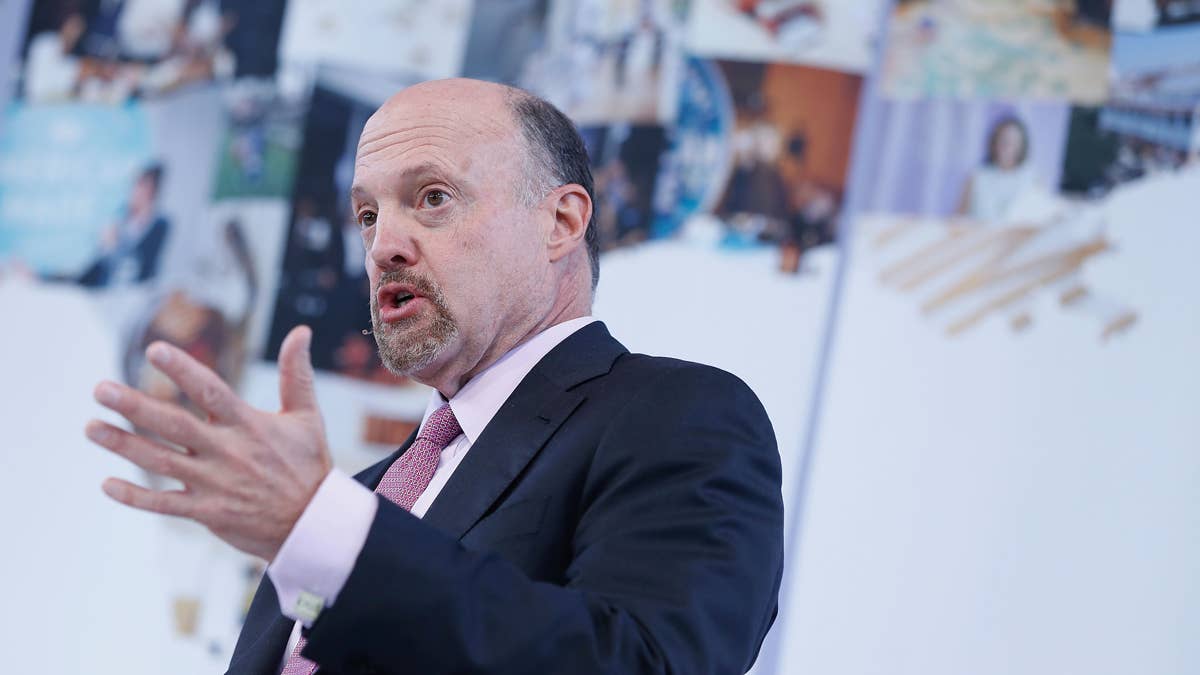
Speaking on Aug. 3, Cramer said Wall Street’s “basket trades” during the ongoing Iran war are distorting stock prices, and he urged investors to use the resulting dislocations to their advantage. “The best thing? They create real opportunities, as the stocks divorce themselves from the fundamentals until the companies report,” he told viewers on “Mad Money.”
“There are big gains to be had when the worth of the baskets blows up in the face of real earnings.”
More Jim Cramer:
- Jim Cramer has terrifying one-word message for tech stock investors
- Jim Cramer says he’s steering clear of one popular stock
- Jim Cramer reveals 4 surging chip stocks he likes best
Cramer said traders have increasingly grouped stocks by broad theme instead of company-specific fundamentals, and those baskets often dominate day-to-day price action, particularly as the Middle East conflict stretches on.
He argued the grouping frequently has little to do with any single company’s actual long-term prospects, regardless of how the stock trades this week.
He pointed to Boeing as one example of the mismatch. “Boeing, the company, not Boeing the trading plaything, gets valued on cash flow and production,” he said, noting the planemaker’s backlog of roughly 6,200 aircraft should matter far more than short-term developments in the Middle East.
Cramer’s Charitable Trust, the portfolio run by CNBC’s Investing Club, owns shares of Boeing.
Boeing and retail show how basket trades distort prices
Retailers have become another clear basket trade, according to Cramer. When geopolitical tensions and higher oil prices raised concerns about inflation, investors rotated into Costco and Walmart as perceived winners when shoppers feel squeezed at the gas pump, and out of more discretionary names like Ralph Lauren, Target, and Williams-Sonoma. Cramer’s Charitable Trust owns shares of Costco.
The retail example cuts both ways. Cramer has cautioned against buying names purely because a war headline made them look cheap, noting that approach simply had not paid off in practice.
“Buying retail because the wrong stocks have gotten cheap? No, it hasn’t worked either,” he said. His broader point is that a market-wide selloff can drag down companies with very different fundamentals, making it difficult to distinguish genuine opportunities from stocks that are cheap for a reason.
He has flagged other threats layered on top of the war narrative. In July, Cramer said the flood of new stock and bond issuance hitting Wall Street posed a bigger danger to the rally than the Iran conflict itself.
He pointed to Alphabet’s giant stock sale and SpaceX‘s IPO as examples of the pace of capital raises that could pull money away from existing positions, as TheStreet reported.
John/Getty Images
The AI versus software divide is Cramer’s biggest example
Technology became Wall Street’s biggest basket trade this year, Cramer said. For much of 2026, investors broadly favored AI infrastructure stocks while selling enterprise software, regardless of how individual businesses were actually performing, on the assumption hardware would win and software would lose to AI disruption. The divergence was striking: some chip and memory stocks posted triple-digit gains while major software names lagged badly.
Cramer has pushed back directly on pieces of that narrative. He flagged Microsoft as an unexpected casualty of the software selloff earlier this year, noting the stock kept falling even when the broader software group rallied.
“Even when the software stocks are running, you can’t keep Microsoft’s stock from falling,” Cramer said, according to CNBC. He argued the weakness reflected capex worries rather than any real erosion in Microsoft’s competitive position.
He has made a similar case for beaten-down enterprise software names broadly. Salesforce traded at just 15 times forward earnings versus a five-year average closer to 35 times, a valuation Cramer called unusually low, even while acknowledging AI-driven fear was real.
Cramer has also warned that leverage inside the AI trade itself could amplify any basket unwind. On July 30, he said forced selling from a leveraged fund called Situation Awareness, which had borrowed heavily to bet on AI hardware stocks, was driving indiscriminate selling across the sector that had little to do with fundamentals, according to CNBC.
Earnings season is Cramer’s reset button
Cramer’s core argument is that basket trading can overwhelm fundamentals in the short term, but earnings season eventually forces investors to refocus on individual companies. “It’s good to see that the fundamentals still matter, even if it only happens during earnings season, four times a year,” he said.
That reset already appears to be happening within the Magnificent 7. Cramer has said the catalyst needs just one hyperscaler to announce on an earnings call that AI spending is driving real revenue growth, or driving higher forecasts. A single confirmation could lift sentiment across all seven names.
If Cramer is right, the playbook is simple enough. Find the stocks that got caught in the wrong basket and sold off for the wrong reasons. Then wait for earnings to separate them from the ones that deserved the drop.
That’s where he thinks the real money gets made in this market.
Related: Jim Cramer has terrifying one-word message for tech stock investors