
























Every energy shock teaches the same lesson, and nobody enjoys learning it. When fuel stays expensive long enough, people stop buying it. Not because a rule told them to, but because the math at the pump stopped working.
That math broke in late February, when strikes on Iran began and tanker traffic through the Strait of Hormuz seized up. Brent crude settled at $104.82 a barrel on Sept. 17, according to CNBC.
The national average for a gallon of regular reached $4.4386 that same day, and diesel in California averaged $8.3496, according to AAA.
Seven months of those prices do predictable things. Airlines thinned schedules, Asian petrochemical plants idled, and car buyers from Jakarta to Berlin went looking for anything with a plug.
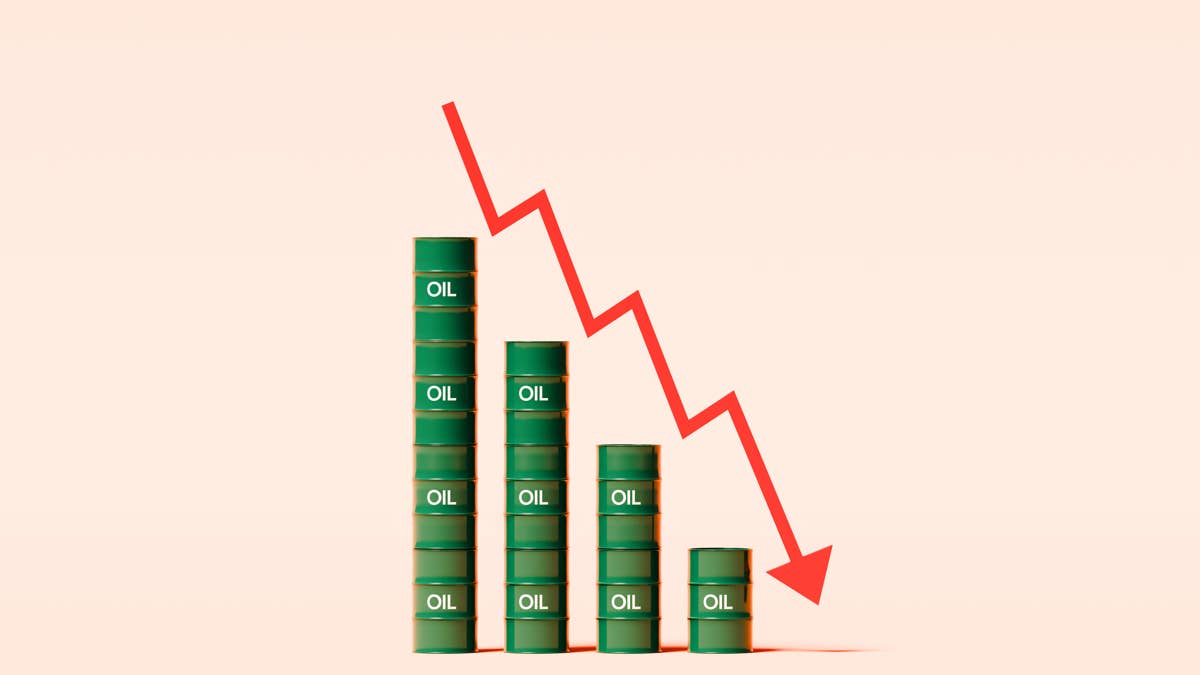
The International Energy Agency (IEA) now expects global oil consumption to shrink by 2.5 million barrels per day in 2026, a 2.4% drop from 2025 levels.
Which brings us to a figure published Sept. 16 that the market barely registered. Global emissions from fossil fuels are set to fall by roughly 0.5% this year, according to Carbon Brief.
That would be the first annual decline since the pandemic year of 2020. No treaty produced it.
How the Hormuz shutdown rewired global fuel demand
About a fifth of the world’s oil trade moves through a 21-mile-wide channel between Iran and Oman, along with a similar share of seaborne liquefied natural gas (LNG). Close it, and everything downstream reprices within weeks.
The forecasting record tells this story better than any headline does. In January, the IEA expected global oil demand to grow by 930,000 barrels per day in 2026. By September, it was modeling a 2.5 million barrel per day contraction, according to the IEA.
More Oil & Gas:
- Chevron CEO sounds the alarm on global oil supplies
- Commerzbank revamps Brent crude forecast for the rest of 2026
- Energy Secretary’s admission just tested Bessent’s oil forecast
I ran those two numbers against each other, and the swing comes to roughly 3.4 million barrels a day in nine months. That is not a forecast being trimmed at the edges. That is a demand curve snapping.
Demand destruction is the polite term for it. Jet fuel got too expensive to fly certain routes. Naphtha got too expensive to crack. Gasoline got too expensive to commute on five days a week.
The scale is without precedent. The agency has called the loss of Gulf barrels the largest supply disruption in the history of the global oil market, a point TheStreet covered when Exxon’s CEO warned the shock was not fully priced.
Why fossil fuel emissions are set to fall in 2026
The arithmetic is stranger than it first looks, because one fossil fuel is having an excellent year. Expensive gas pushed power systems in Europe, Japan, Korea and China back toward coal, and the resulting jump in coal emissions is “more than offset by declines for oil and gas,” according to Carbon Brief.
Global coal demand is now set to rise 1.2% this year to “a record 8.94 billion tonnes,” according to the IEA, reversing a forecast for a slight decline. Almost no coal moves through Hormuz. The missing LNG cargoes did the work.
Here is how the year’s forecasts have moved:
- Oil demand went from growth of 930,000 barrels per day in January to a decline of 2.5 million barrels per day in September, according to the IEA.
- Gas demand went from a forecast 2.0% increase in January to a 0.6% drop, according to the IEA’s third-quarter gas report.
- Coal demand went from a slight expected decline to a record 8.94 billion tonnes, according to the IEA’s Sept. 10 mid-year update.
- Fossil carbon dioxide (CO2) emissions hit a record 38.1 billion tonnes in 2025, according to the Global Carbon Project.
What struck me in my analysis of the emissions record is how little precedent this year has. Fossil CO2 emissions have fallen clearly twice in two decades, in 2009 and 2020, according to the Global Carbon Project.
A banking collapse and a pandemic. The record set in 2025 was announced during COP30, the 30th United Nations climate conference, in Belem, Brazil.
What a shrinking demand curve means for energy stocks
Energy equities have spent 2026 pricing the supply shock and ignoring the demand break. The Energy Select Sector SPDR Fund (XLE) traded near $65.83 on Sept. 14 against a 52-week range of $42.35 to $66.17, after a total return of about 53% over the past year, according to StockAnalysis.
Spot barrels and terminal demand are two separate trades, and only one of them is in the price. The IEA now expects oil use to stay close to flat for two years, which puts a question mark over its own call that demand would not peak until 2030.
Every month the conflict runs raises “the probability of permanent demand destruction,” according to consultancy DNV. Electric vehicles (EVs) took record shares of car markets from Australia and China to Indonesia and Thailand this year.
Related: HSBC raises its oil forecast as the Hormuz backup plan burns
For a portfolio, that is the difference between a cyclical win and a structural one. Oil majors such as Exxon Mobil (XOM) have printed refining and trading profits off this crisis, and those profits are real.
The customers are the variable nobody can hedge. Diesel crossed $6 a gallon nationally for the first time on Sept. 11, against about $3.70 a year earlier, according to AAA. Households and fleets that responded by buying something electric, or by driving less, do not automatically unbuy that decision when crude eases.
That is also the quiet risk in owning energy at a 52-week high. The sector is being valued on a barrel count that the agency in charge of counting barrels has stopped forecasting upward.
What to watch before the 2026 emissions drop sticks
Next year is a coin flip that trades on shipping lanes. If LNG flows through Hormuz recover and gas prices ease, global coal demand falls 0.4% to 8.91 billion tonnes in 2027, according to the IEA. If the strait stays shut, coal climbs again.
The Global Carbon Project will publish its next full budget at the end of the year, and that number will tell you whether 0.5% was a blip or a turn.
The world found a way to cut emissions this year. It cost $104 a barrel, a war, a record year for coal, and the first $6 diesel in American history. Nobody is putting that on a banner in Belem.
The number worth watching is not this year’s half a percent. It is how many of the drivers, airlines and utilities that switched decide to stay switched once the tankers sail again.
Related: Scott Bessent’s Hormuz declaration puts Chevron at the center