























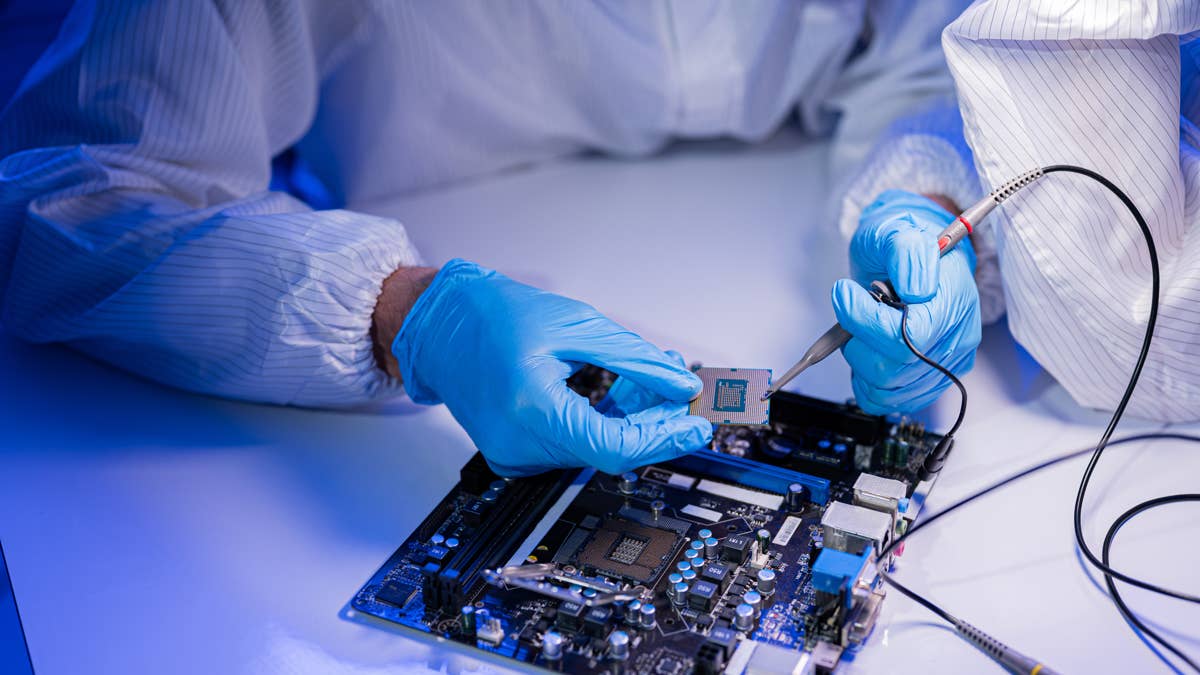
Applied Materials (AMAT), Lam Research (LRCX), and KLA (KLAC) sell machines used to manufacture and inspect processors and memory chips.
Cloud providers purchase finished processors and memory for artificial intelligence data centers.
Chip manufacturers may need more factory equipment when server orders require additional production capacity or more complex manufacturing steps.
Bank of America (BAC) semiconductor analyst Vivek Arya and his team raised their estimate for global cloud capital spending to $1.18 trillion in 2027, according to an Aug. 2 BofA semiconductor note shared with TheStreet.
BofA identified semiconductor capital equipment, the machines used to manufacture chips, as one of five chip markets positioned to benefit.
The other four were compute, memory, power semiconductors, and optical components.
BofA lists Applied Materials, Lam Research, and KLA among the Buy-rated companies in its semiconductor coverage.
Bank of America’s price targets
- Applied Materials: $720
- Lam Research: $385
- KLA: $260
The targets depend on cloud construction producing more orders for processors and memory.
Chip manufacturers must then respond by expanding production lines or adding manufacturing steps that require new equipment.
$2.3T in contracts supports BofA’s forecast
BofA estimates that capital spending, including leases, across major U.S. and Chinese cloud providers will reach $859 billion in 2026.
The bank expects the total to rise about 38% to $1.18 trillion in 2027.
The 2027 estimate is about $39 billion higher than BofA’s early-July forecast.
Capital expenditure is money used to purchase or build assets that will operate for several years. For cloud providers, those assets include data center buildings, power systems, servers, processors, and networking equipment.
BofA estimates that customer commitments and cloud backlogs at four major providers exceed $2.3 trillion, up from about $2 trillion during the previous quarter.
Related: Morgan Stanley adjusts Applied Materials stock price target pre-earnings
A remaining performance obligation (RPO) is revenue that a company has not yet recorded under an existing contract. The revenue may be recognized over several quarters or years.
Oracle (ORCL) provides one example.
Oracle reported $638 billion in RPO.
Customers had also prepaid for or directly supplied about $75 billion of hardware tied to large AI contracts. The customer funding reduces the amount Oracle must spend upfront to purchase processors for those contracts.
BofA estimates that the five largest U.S. cloud providers have raised about $270.1 billion in capital during 2026.
The total includes bonds, loan facilities, equity, and project-finance arrangements.
BofA said the long maturities and access to equity funding give the companies enough capital to continue multiyear construction.
Cloud contracts support future cloud revenue, but equipment orders depend on chip manufacturers deciding to expand their factories.
Applied Materials, Lam Research, and KLA enter the spending cycle after those factory decisions are made.
How cloud spending reaches Applied Materials, Lam, and KLA
Cloud providers order processors and high-bandwidth memory from chip companies.
Chip companies and foundries increase production when existing factories cannot satisfy those orders.
They may also add manufacturing steps because advanced processors, memory, and packaging require more complicated designs.
Applied Materials covers processors, memory, and packaging
Applied Materials supplies equipment that creates and modifies microscopic layers of material on silicon wafers.
Its machines are used to manufacture leading-edge processors and DRAM, including the high-bandwidth memory installed beside AI processors.
Applied also serves advanced packaging, which connects processors and memory so the components can exchange data more quickly.
More AI:
- Workers just sent AI companies an ultimatum
- Palantir CEO has a blunt verdict on OpenAI and Anthropic
- Elon Musk pulls no punches with AI rivals as Grok 4.5 debuts
Applied Materials reported record quarterly revenue of $7.91 billion in its fiscal second quarter.
The company expects its semiconductor-equipment business to grow more than 30% in calendar 2026, supported by leading-edge logic, DRAM and advanced packaging.
Applied has the broadest exposure of the three companies because its equipment serves processors, memory, and the packaging that connects them.
Lam Research’s revenue shows equipment demand arriving
Lam Research sells deposition systems that add thin layers of material to silicon wafers.
Its etch systems remove selected material to create the microscopic structures inside a chip.
Advanced processors and high-bandwidth memory require more layers and production steps as their designs become more complex.
Lam reported record June-quarter revenue of $6.72 billion, up 15.1% from the previous quarter.
Systems revenue reached $4.25 billion.
Systems revenue includes sales of new deposition, etch, and other wafer-fabrication equipment.
Lam forecast September-quarter revenue of $8.1 billion, plus or minus $400 million.
BofA cited Lam’s position in deposition and etch, stronger memory investment, and improving prospects for new NAND production as supports for its price target.
Lam’s latest results provide the clearest near-term evidence that more complex chip production is increasing equipment sales.
KLA detects defects before costs increase
KLA’s systems inspect wafers during production and measure whether each manufacturing step meets the required specifications.
Finding a defect early can prevent a chipmaker from performing additional work on a wafer that will later be discarded.
The cost of a late defect rises when manufacturers connect expensive processors and memory through advanced packaging.
KLA reported fiscal fourth-quarter revenue of $3.66 billion.
The company expects fiscal first-quarter revenue of $4 billion, plus or minus $200 million.
KLA CEO Rick Wallace said that more sophisticated processor designs, stricter memory requirements, and advanced packaging were increasing demand for process-control equipment.
KLA can receive more orders when chipmakers add inspection steps to prevent expensive manufacturing errors.
Applied and Lam can receive orders when factories install more production tools.
KLA can receive orders when the same factories add inspection and measurement steps.
Negative free cash flow could delay factory orders
BofA expects cloud capital spending to exceed the group’s operating cash flow from 2026 through 2028.
The bank’s model projects:
- 2026: Capital spending equal to 108.1% of operating cash flow and a negative 2.8% free-cash-flow margin.
- 2027: Capital spending equal to 113.9% of operating cash flow and a negative 5.4% margin.
- 2028: Capital spending equal to 115.7% of operating cash flow and a negative 5.8% margin.
Free cash flow is the cash left after a company pays its operating expenses and purchases long-term assets.
A negative margin means the cloud-provider group would spend more cash than its businesses generate after paying for infrastructure.
BofA expects customer commitments and long-term capital to cover part of the gap until completed data centers produce more revenue. The forecast would face pressure if cloud revenue or AI usage grows more slowly than the new capacity.
Rising AI infrastructure costs have already reduced free cash flow at major cloud providers, increasing the pressure to show that new data centers can generate revenue.
A cloud provider could postpone a data-center project after revenue or financing falls below its plan.
Processor and memory suppliers could respond by reducing production forecasts.
Foundries and memory manufacturers could then delay new factory lines.
A delayed factory expansion would move Applied Materials, Lam Research, and KLA equipment orders into later quarters.
Export restrictions create a separate risk for the three equipment companies. Restrictions on advanced manufacturing systems can reduce the products U.S. suppliers are allowed to sell to some Chinese customers.
BofA also lists slower semiconductor-equipment spending, delayed memory additions, and China exposure among the risks to its equipment-stock forecasts.
Applied Materials is scheduled to report fiscal third-quarter results on Aug. 13.
Investors can compare its new outlook with the current forecast of more than 30% growth in semiconductor equipment in 2026.
Lam’s $8.1 billion September-quarter revenue forecast and KLA’s $4 billion fiscal first-quarter forecast provide two additional tests.
A cut to any of those forecasts would show that cloud demand is taking longer to become chip-factory equipment revenue.
Related: JPMorgan resets Amazon stock target after AI payoff