
















I remember my nephew asking me how his uncle’s phone “just knows” what he wants to type next. I tried to explain prediction models and training data in the simplest language.
After a few thoughts and comments, Ryan came up with another one. He looked at me and asked, “Where does it remember everything?”
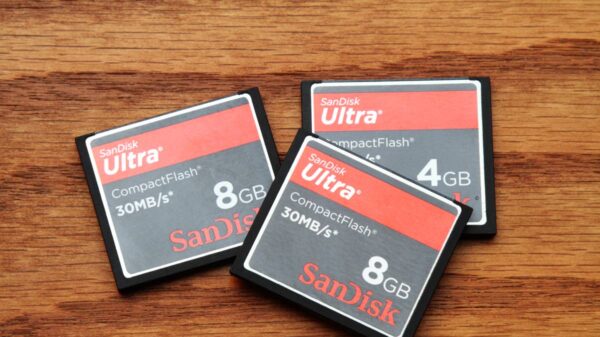
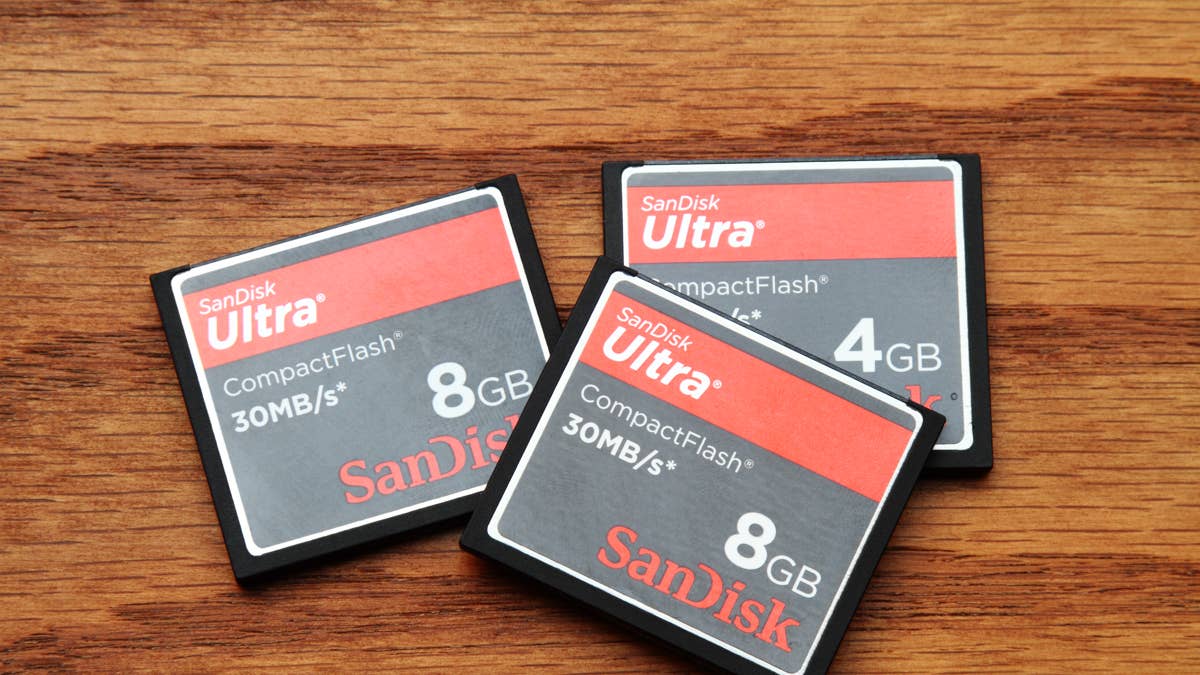
The answer is NAND flash storage. And the company that has become the world’s most important supplier of that storage for AI systems is SanDisk (SNDK).
If you didn’t know, SanDisk is the best-performing stock in the S&P 500 this year, up 599.49% year-to-date and 1,270% over the past year, according to Yahoo Finance.
On Oct. 5, Mizuho analyst Vijay Rakesh raised his SanDisk price target to $2,050 from $1,875 and reiterated a Buy rating in a note shared with TheStreet. Rakesh ranks 10th among 12,519 analysts on TipRanks with a 68% success rate and an average return per rating of 74.50%.
His verdict? Agentic AI is creating a storage-demand cycle that the market hasn’t fully priced.
Also Read: SanDisk Corp Latest News and Stories
The agentic AI shift and why storage demand is accelerating again
For three years, the dominant AI storage narrative was about training. That is massive datasets, enormous model weights, petabytes of content that had to be ingested, processed, and stored before a model could be deployed.
Agentic AI changes the demand profile in a specific way. Meta’s Muse, released Sep. 8, and OpenAI’s Dots, unveiled at DevDay on Sep. 29, are persistent systems that run autonomously, managing workflows, scheduling, and executing multi-step tasks, even when you close the app.
Muse reportedly surpassed 5 million users in just 22 days, faster than ChatGPT’s early adoption, according to a Forbes report. Dots is being positioned as an enterprise counterpart — essentially, an agent that works continuously on behalf of professionals.
More SanDisk:
- Does SanDisk pay dividends? Will it split its stock?
- SanDisk’s stock buyback program explained
- SanDisk has $93.9 billion in deals: Now comes the hard part
Every user interaction these agents process creates data that must be stored, retrieved, and kept within low-latency reach for the next inference call. The technical term is KV-cache: the key-value pairs that allow an AI agent to maintain context across long, complex tasks.
Rakesh specifically highlighted “solid inference and KV-cache demand” as durable drivers for SanDisk’s storage products.
He expects AI workloads to drive 22% of NAND demand by 2030. The agentic CPU total addressable market alone is projected to reach $80 billion by 2030, growing at a 123% compound annual growth rate over four years.
Every agentic workload running on a server CPU also creates storage demands that grow as the workloads scale.
The SanDisk numbers make the bull case stronger
If Rakesh’s thesis sounds like forward-looking speculation, SanDisk’s fiscal year 2026 results show it is already playing out.
- Fiscal Q4 2026 revenue was $8.97 billion, up 51% sequentially and 372% year over year
- Full-year revenue was $20.25 billion, up 175% YoY
- Adjusted EPS hit $39.25
- Gross margin expanded from 26.4% to a remarkable 84.6%
- Data center revenue doubled sequentially to $2.98 billion in Q4 alone, representing 437% growth for the full fiscal year.
- Source: SanDisk’s Fiscal Year 2026 Earnings.
For Q1 fiscal 2027, SanDisk guided revenue of $10.30-$10.80 billion, with non-GAAP diluted EPS of $44.00-$46.00. Those numbers are delivered; it would represent another sequential step-up.
Rosenblatt analyst Kevin Cassidy added his own conviction separately, assigning a Buy rating with a $2,400 price target, as TheStreet previously reported. He argues that new AI computing platforms are turning NAND into a “system-critical component of AI infrastructure.”
His statements — “favorable bit-cost curve” — refer to SanDisk’s technology trajectory, where improving density reduces cost per bit even as demand rises, making the business economics structurally better, not just cyclically stronger.
Where SanDisk fits in the AI stack, and what HBF could mean
Understanding where SanDisk sits helps explain why both Rakesh and Cassidy, among other analysts, are confident the demand is durable rather than a one-time surge.
Nvidia and AMD GPUs provide computing power. SanDisk provides the flash storage that keeps model weights, datasets, and user context within immediate reach.
SanDisk is also developing High Bandwidth Flash technology targeting read bandwidth comparable to High Bandwidth Memory with eight to sixteen times the capacity, though commercial validation is still ahead.
At $2,050 and $2,400 from two separate analyst teams, both targets imply meaningful upside from current levels even after the 599% year-to-date run. The storage layer of the AI stack has been underappreciated for most of the AI investment boom. Agentic AI running at scale is changing that.
Ryan’s uncle’s phone predicting what he wants to type offers a consumer-level glimpse of what millions of enterprise AI agents could soon be doing simultaneously. SanDisk is where that memory lives.
More Stocks News