

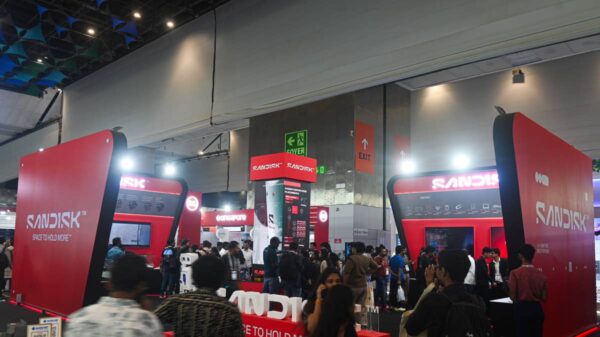

















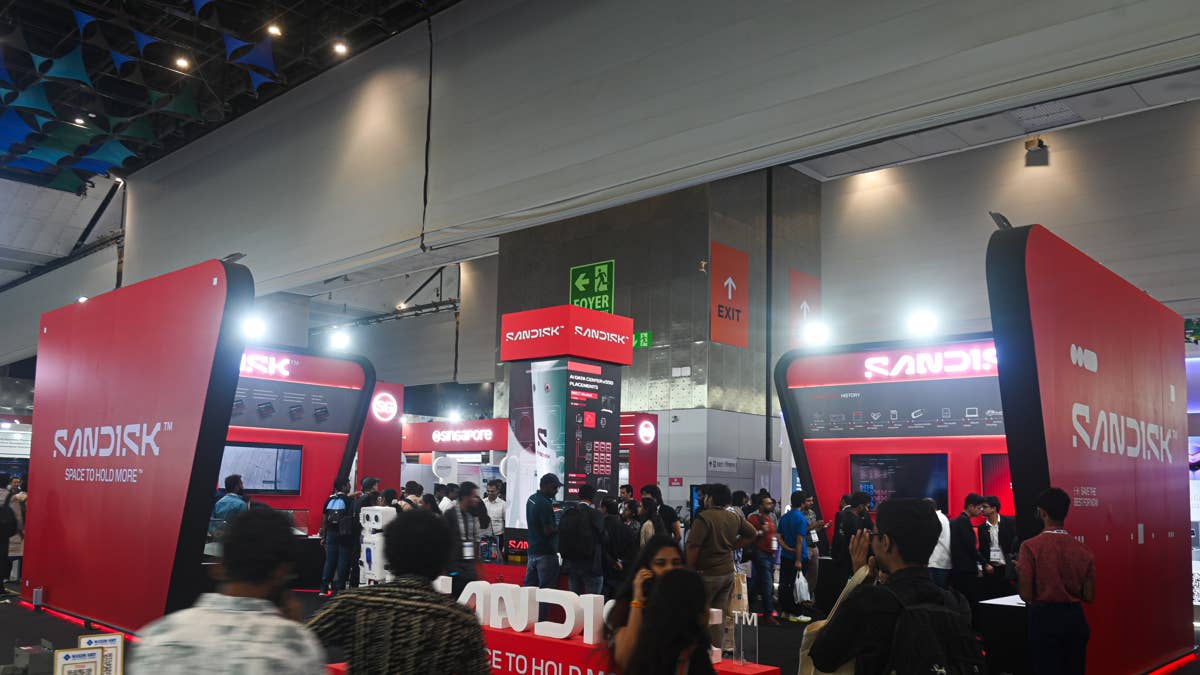
Sandisk (SNDK) has become one of the more unusual beneficiaries of the artificial-intelligence boom.
The company is not making the processors that power AI models. Instead, it is supplying something those systems increasingly need: storage.
This differentiation has grown more significant as AI data centers increase and workloads move to inference, agentic AI, and other applications that demand fast storage and access to massive volumes of data.
Sandisk’s recent figures indicate exactly how fast the industry has transformed. The business said sales in the fiscal fourth quarter were $8.97 billion, above the $8.39 billion expected, according to Reuters. Data-center revenue more than quadrupled from the preceding quarter to $2.98 billion.
Sandisk also said it currently has eight long-term contracts for $93.9 billion or more with six clients, Reuters also reported. The average contract period is four years, and the company anticipates that half of the company’s output will be under such contracts in fiscal 2027 and two-thirds in fiscal 2028.
That change is built into the stock. Sandisk finished at $1,791.82 on Sept. 18, up 11% that day and 6.2% the previous session.
But there’s a catch: The same AI boom driving Sandisk’s growth is tightening NAND supplies, attracting new competitors and forcing memory companies to make difficult decisions about where to allocate capacity.
Sandisk’s AI opportunity is becoming a storage story
Sandisk’s fiscal 2026 results show why investors are paying attention.
Data center storage has become a major growth pillar, the firm said, and its larger business includes corporate solid-state drives, client storage, and consumer goods.
- Q4 FY2026 revenue: $8.97 billion
- Q4 data-center revenue: $2.98 billion
- Long-term agreements: 8
- Customers covered: 6
- Contract value: At least $93.9 billion
- New buyback authorization: $14 billion
- Q1 FY2027 revenue outlook: $10.3 billion to $10.8 billion
The fourth-quarter revenue from data centers of $2.98 billion is particularly important because it demonstrates the speed with which the mix is changing.
Related: Micron, SanDisk get new aggressive price targets from top analyst
Data centers need more storage and processing capacity, which is creating demand for Sandisk’s enterprise solid-state drives and flash memory chips, Reuters noted.
The projection for the upcoming quarter also suggests ongoing progress for the firm.
Sandisk expects fiscal first-quarter 2027 revenue of $10.3 billion to $10.8 billion, with non-GAAP diluted earnings of $44 to $46 per share.
The NAND market is giving Sandisk more pricing power
Sandisk is experiencing a very timely growth period in the NAND cycle.
North American cloud-service providers had lately revised upward their predictions for business SSD demand. The research group anticipates that enterprise SSD orders will surpass already-high third-quarter levels in the fourth quarter.
Increased demand is also giving NAND suppliers more influence over capacity allocation and pricing, which supports future hikes in enterprise SSD costs, as TrendForce reported.
The enterprise/consumer storage split is now seeping into the wider market.
TrendForce’s latest NAND research says AI adoption and cloud investment are driving enterprise SSD demand higher, while consumer electronics demand remains sluggish.
Its prediction for 2027 in September lays out the division even more clearly: Business SSD demand is likely to grow on AI workloads, while consumer NAND is likely to see further cost pressure and increasing Chinese competition.
This creates an appealing product combination for Sandisk.
Enterprise clients purchasing storage for AI infrastructure may support higher-value goods and longer-term contracts. PCs and cellphones are consumer products; therefore, they confront a distinct demand environment.
That’s one reason Sandisk has been moving capacity into business storage.
Sandisk is spending billions to stay ahead
Sandisk is not using the present NAND scarcity as an excuse to sit back.
At its August investor day, the business shared a long-term development plan focused on its NAND technological roadmap, customer alliances, and capital allocation.
Sandisk aims to return 100% of surplus cash to shareholders after investing in the company. It has also been investing with Kioxia in innovative memory technologies.
In August, the businesses announced a high-performance 2-terabit QLC 3D flash technology for AI and data-intensive applications.
According to Sandisk tests, Sandisk’s next-generation BiCS10 technology is intended to boost memory density by 60%, improve read and write bandwidth by 100%, and increase interface performance by 33% compared to BiCS8.
The company has also authorized a $14 billion share-repurchase program, taking its total remaining authorization to $15.5 billion.
That combination of capacity and technology investment with aggressive shareholder returns lies at the heart of the Sandisk story.
Sandisk’s $93.9 billion of commitments creates a new challenge
Long-term contracts might have given Sandisk more insight on future income.
They also generate a delivery obligation.
In fact, NAND supply has become a key concern for the whole semiconductor industry.
Chinese memory startup CXMT is aiming to join NAND flash, possibly adding another rival to a market currently dominated by Samsung Electronics, SK Hynix, Micron Technology (MU), and China’s YMTC, Reuters reported Sept. 18.
Reuters also reported that SK Hynix’s Solidigm unit is considering a U.S. NAND manufacturing facility, although no final decision has been made.
Those developments illustrate how valuable NAND capacity has become.
Sandisk is responding through its partnership with Kioxia. The two companies confirmed plans in August to invest more than $31 billion in Japan through 2032, including a new memory-production facility at Kioxia’s Kitakami plant.
Those developments illustrate how valuable NAND capacity has become.
Sandisk is reacting via a cooperation with Kioxia, Reuters noted. In August, the two firms said they will spend more than $31 billion in Japan until 2032, including a new memory manufacturing facility at Kioxia’s Kitakami factory.
The stock has already priced in a lot of the AI boom
There’s one more thing investors can’t ignore: valuation.
Sandisk was split from Western Digital in February 2025 and began trading independently under the symbol SNDK.
The stock has surged in an amazing fashion. In August, Reuters reported that Sandisk shares had surged about 470% from the same time in 2026.
Historical market statistics show the stock rose to $1,791.82 on Sept. 18.
That means the question has changed.
Investors are no longer simply asking whether AI will increase demand for NAND storage.
They are asking whether Sandisk can convert that demand into durable revenue, margins, and cash flow quickly enough to justify the expectations already embedded in the stock.
Sandisk’s next chapter is about execution
Sandisk has several things working for it. Fast-expanding data center revenue. Long-term customer commitments. Better enterprise SSD demand. New NAND technology. And a big approved repurchase.
But the market is changing, too.
Capacity will increase with time. Chinese competitors are becoming bigger. Other memory vendors are boosting their exposure to corporate SSDs. And Sandisk needs to keep spending while honoring the promises it has already made to its clients.
Sandisk is a vertically integrated NAND flash corporation with chip design, intellectual property, manufacturing, and systems engineering skills, according to the company’s own filings.
So far, the figures tell us that AI is generating a powerful new demand driver for storage.
The difficult issue is how long the present scarcity of supply will endure and how much of that economics Sandisk can hold on to.
Sandisk has visibility to long-term deals totaling $93.9 billion. The next task is to translate that visibility into sustainable revenues while not losing its advantage as the NAND market becomes tougher.
Related: SanDisk CEO reveals what’s next after explosive 3,150% stock rally