









Economic resilience is probably something most Americans would welcome.
We’re seeing that consumer spending is still growing, wage gains haven’t gone away, and corporate dealmaking is showing fresh momentum. Those trends point to a country that is successfully blowing past the recent inflation shock.
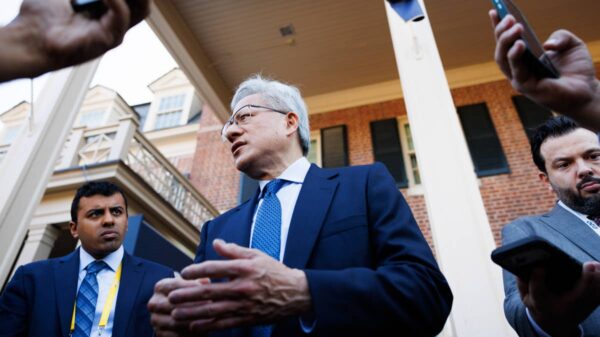
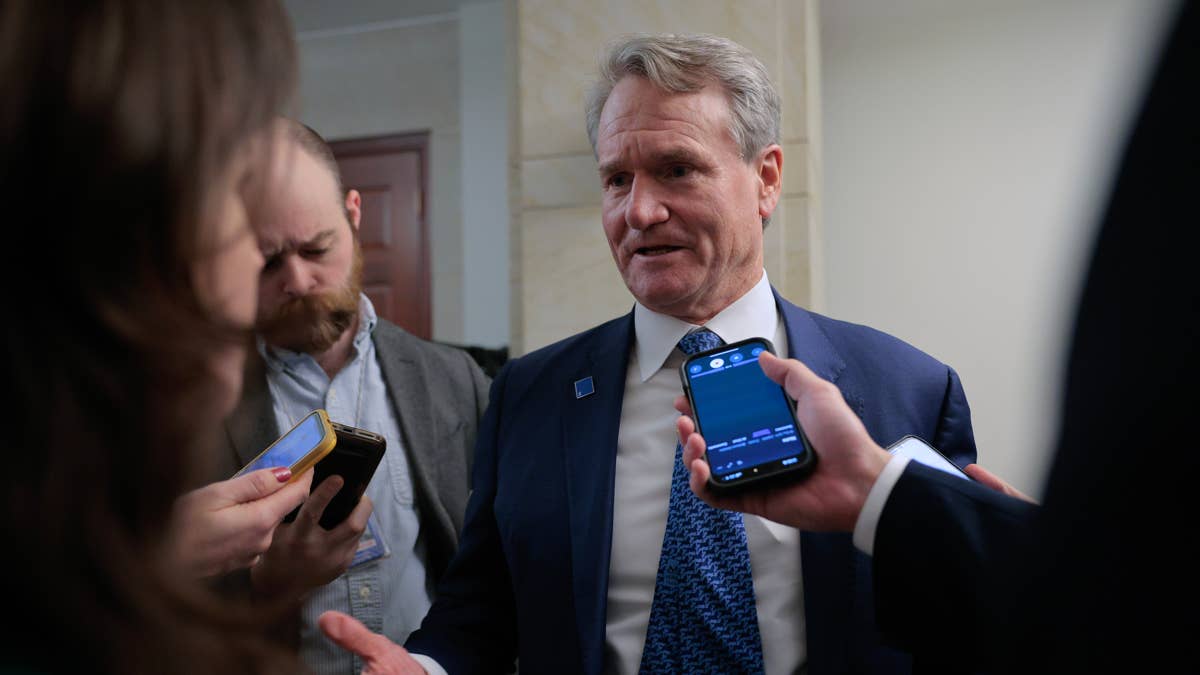
However, in an exclusive interview with CBS News’ “Face the Nation,” Bank of America CEO Brian Moynihan sees something more troubling beneath the surface.
The economy is arguably holding its own, but the relief households expected hasn’t followed. Food, housing, and fuel costs remain painful, while the strongest spending growth continues to come from consumers with the greatest financial cushions.
For investors and households, the next phase could look very different from the soft landing many had anticipated.
Economic growth isn’t disappearing, but interestingly, that relentless pace of expansion might compel an economic response few people are prepared for.
Moynihan warns inflation could outlast the recovery
Moynihan’s big concern is that inflation will likely remain sticky enough to prevent the relief everyone is expecting.
“It’s drifting down, and it’s drifting down slower than people would like it,” he said, pointing to continued pressure from housing, food, fuel, and other essential costs.
The problem extends beyond prices at the pump.
More Fed:
- Cooler inflation delivers big win for Fed interest-rate bets
- Fed’s Waller issues stark warning on inflation, interest rates
- Goldman hints at Fed’s next interest-rate bet under Warsh
Moynihan said businesses are worried about “the cost of goods that’s coming through the pipeline,” as higher energy costs feed into plastics, materials, manufacturing, and transportation.
In effect, that has complicated the economic outlook.
The delayed pass-through helps to explain why Bank of America’s economists see “inflation staying higher all the way into 2027 and 2028.”
Moreover, that forecast led to a steep reversal in the bank’s interest-rate outlook.
Moynihan said that six months ago, the team expected the Federal Reserve to cut rates. Now, the team says, “our belief is we’ll raise rates” to contain consistent inflation.
He indicated that the tightening cycle would likely begin “more towards the end of the year,” with additional increases potentially extending into next year.
For perspective, as of its June 2026 outlook, I reported that BofA expects three quarter-point Fed rate hikes, in September, October, and December 2026, totaling 0.75 points.
Taken collectively, that forms a remarkably uncomfortable setup, where inflation will take “a long time to squeeze out of the system,” while renewed rate hikes add more pressure to already-strained household budgets.
Why inflation could outlast the oil shock
Moynihan’s warning of a greater risk is that the shock spreads beyond underlying prices, keeping monetary policy restrictive even as gasoline prices retreat.
According to the Fed’s summary of economic projections, the bank expects 2026 headline PCE inflation of 3.6% and core PCE of 3.3% (median). Moreover, according to the Bureau of Economic Analysis, headline PCE was already running at 4.1% in May, while core PCE stood at 3.4%.
According to its June projections, officials forecasted headline PCE to drop to 2.3% in 2027 and 2% in 2028, with core inflation easing to 2.5% and 2.1%, respectively.
At the same time, the Energy Information Administration expects average gasoline prices to decline from $3.64 per gallon in 2026 to $3.09 in 2027, according to Energies Media.
So the higher-for-longer inflation thesis only sticks if there are second-round effects.
That would include fuel and freight costs being passed through to goods, businesses defending margins through price bumps, workers seeking compensation for lost purchasing power, and consumers beginning to expect faster inflation.
BofA’s thesis weakens if gasoline follows the EIA’s path, while core services, wages, and inflation expectations simultaneously cool.
Moynihan sees an economy pulling apart
Another major arc from the interview was Moynihan’s comments, which reinforce the idea that America is running on two economic tracks.
“Affordability is a challenge,” he said, pointing to pressure from gas, food, and inflation. Yet Bank of America’s 70 million customers are still spending roughly 6% more in June than a year earlier, indicating that headline consumption still remains resilient.
However, there’s a clear split, which the bank’s been talking about for weeks.
Moynihan said spending among the “middle third” and “top third” of households is growing more quickly, while wage growth across income groups has only recently “coalesced together around 3% to 4%.”
That feeds into another piece I did on BofA’s earlier description of a K-shaped economy, with “reflation for higher income, stagflation for lower income.”
In that particular outlook, spending by the top 1% rose 9%, versus 5.5% for lower-income households.
Interestingly, those frustrations were echoed by Vice President JD Vance during an appearance on “The Joe Rogan Experience” podcast.
“In some ways, the game is rigged,” Vance said. “We ran the experiment of offshoring all of our industrial jobs, becoming a services-and-finance economy, and allowing Wall Street to come in and buy every asset of modern life and turn it into an investable, line-goes-up asset.”
On top of that, recent investing trends underscore incredible frustration among younger retail investors, who are willing to take on much more risk to achieve outsized gains.
The crypto mania gave way to meme stocks during the pandemic, while prediction markets are the latest in this ongoing episode.
For perspective, prediction platform Kalshi said that millions accessed its platform on a weekly basis, with volumes surging past $1 billion per week in late 2025, while combined monthly trading on Kalshi and Polymarket surged from under $5 billion in September 2025 to roughly $24 billion by April 2026.
Moreover, the appetite for quick gains comes as more young adults remain at home.
Federal Reserve data shows 49% of Americans under 30 lived with a parent in 2025, up 6 percentage points from 2022 and 12 points from 2019.
What would three more rate hikes mean?
I feel Moynihan’s warning becomes a lot more consequential once BofA’s forecast is converted into an actual policy rate.
It’s important to note that the Fed is targeting a 3.5% to 3.75% range, according to CNBC.
Three conventional quarter-point increases would lift that range to 4.25% to 4.5%, with a midpoint of 4.375%.
Interestingly, that implied rate is roughly 0.63% above the Fed’s June median year-end projection of 3.75%.
It is also higher than current market expectations. According to the Fed’s July Monetary Policy Report, futures imply an effective rate near 4% by year-end, or 0.3% above its current level.
For consumers, a 0.75-point increase adds nearly $75 in annual interest for every $10,000 of fully repricing variable-rate debt. The consequences likely extend into housing affordability, small-cap refinancing, and long-duration stock valuations.
For investors, renewed rate hikes raise discount rates, which in turn make future earnings a lot less valuable and pressuring richly valued growth stocks that have dominated markets. Small-cap companies might face higher refinancing expenses, while homebuilders and REITs would contend with sluggish affordability and demand.
Banks will initially earn more on loans, though higher deposit expenses and eventual credit deterioration erode that benefit.
BofA might revisit that call if multiple core PCE readings decisively softened, wage growth fell behind inflation, and unemployment began rising.
Related: Cathie Wood sells $11.7 million of tumbling semiconductor stock