





















The semiconductor selloff that began on Wall Street on Monday spread across Asian markets on Tuesday, but it was not triggered by a single earnings miss or disappointing forecast. Instead, investors are beginning to question whether the hundreds of billions of dollars being committed to artificial intelligence infrastructure will generate returns capable of supporting the sector’s valuations.
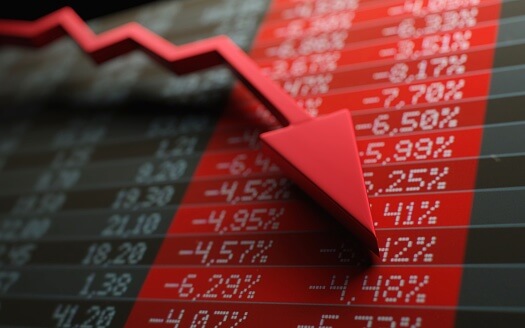
In South Korea, SK Hynix closed down 14.65% and Samsung Electronics fell more than 13%, helping send the KOSPI down 10.84% to 6,023.63. The benchmark briefly fell more than 11% intraday, triggering a market-wide circuit breaker that halted trading for 20 minutes, the eighth such halt of 2026. The previous day in the United States, NVIDIA lost 4.92%, AMD fell 8.31% and Intel declined 3.54% as the selloff spread across the semiconductor sector.
The declines matter because they came before several of the companies most exposed to the AI infrastructure cycle are due to report earnings. AMD is scheduled to release results on 4 August, followed by Super Micro Computer on 11 August, giving investors two opportunities to test whether the latest rout represents a leveraged positioning washout or the beginning of a broader semiconductor de-rating.
The Selloff Ran From Wall Street to Asia
The first leg of the move came in the United States on Monday, where chip stocks fell sharply despite the absence of a single industry-wide earnings shock. AMD suffered one of the largest declines among major semiconductor companies, losing 8.31%, while NVIDIA fell 4.92% and Intel dropped 3.54% intraday.
The pressure intensified when Asian markets opened on Tuesday. SK Hynix and Samsung Electronics suffered double-digit declines, while the KOSPI recorded one of its steepest daily losses of the year. The 20-minute trading halt demonstrated that the move had expanded beyond an isolated decline in AI-related shares and become a market-wide liquidation event.
The timing also increased the uncertainty. The Federal Reserve is meeting in the middle of the selloff, leaving highly valued growth stocks exposed to both company-specific concerns and changes in interest-rate expectations.
Three Concerns Are Driving the Chip Rout
The first concern is whether hyperscalers and other technology companies can earn sufficient returns on their AI infrastructure investments. Spending on data centres, accelerators, networking equipment, power capacity and high-bandwidth memory has reached levels that require years of sustained revenue growth to justify.
Investors are no longer questioning whether demand for AI computing exists. They are questioning whether the revenues generated by that demand will be large enough to support the capital already committed to the sector.
The second concern is competition from China. Chinese semiconductor companies are advancing in memory production, chipmaking equipment and other parts of the supply chain, raising the possibility that future capacity could pressure pricing and reduce the scarcity value attached to leading Asian and US chipmakers.
The third concern is financing. AI infrastructure projects require large upfront investments, while elevated borrowing costs and stricter investor scrutiny could make additional expansion more expensive. Any indication that customers are delaying deployments, reviewing capital expenditure or changing financing plans could affect demand across the semiconductor supply chain.
Why SK Hynix Is at the Epicentre
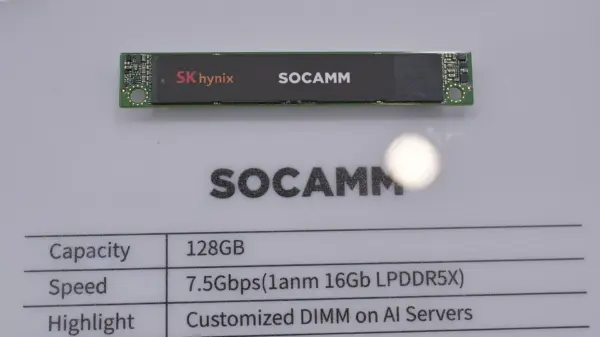
SK Hynix has become one of the clearest listed proxies for the AI infrastructure boom because of its position in high-bandwidth memory. HBM is used alongside advanced AI accelerators to move large volumes of data quickly, making the technology essential to training and operating increasingly complex artificial intelligence models.
That exposure helped SK Hynix benefit when markets expected AI infrastructure spending to continue accelerating. It also leaves the company particularly vulnerable when investors begin questioning the duration or profitability of that spending cycle.
Earlier reports that SK Hynix could slow the pace of future HBM expansion added another layer of uncertainty. A more cautious approach to capacity could indicate disciplined supply management, but investors may also interpret it as a sign that manufacturers are becoming less certain about the rate of future demand growth.
Samsung Electronics faces a related challenge. The company has been trying to strengthen its position in advanced AI memory while competing across a broader range of semiconductor products. Its decline of more than 13% showed that the market was not treating the selloff as a problem limited to one HBM supplier.
Margined Sellers May Have Amplified the Decline
The scale and speed of the decline suggest that market positioning contributed to the move. Semiconductor shares had produced substantial gains during the AI investment cycle, leaving many portfolios heavily exposed to a relatively small group of companies.
Jim Cramer described the sellers as “monstrous, motivated and often margined,” according to commentary cited by 24/7 Wall St. The description should be treated as market commentary rather than evidence of the selloff’s fundamental cause, but it captures how leverage can accelerate declines once investors begin reducing concentrated positions.
When margined investors face falling prices, they may be forced to sell additional shares to meet collateral requirements. That process can intensify a decline even when the immediate change in a company’s earnings outlook does not fully explain the size of the move.
AMD and Super Micro Now Carry the Sector
AMD is scheduled to report earnings on 4 August. Investors will be watching demand for the company’s AI accelerators, its ability to compete with NVIDIA and whether customers remain committed to expanding AI computing capacity.
The market will also focus on margins, order visibility and any indication that clients are delaying infrastructure purchases. Strong revenue growth alone may not be enough if management signals that future deployments are becoming less predictable.
AMD’s position has become more important following its expanded relationship with Anthropic. The arrangement could involve up to two gigawatts of AMD infrastructure and as much as $5 billion, increasing the company’s exposure to the build-out of large AI systems.
Related: AMD Just Bought Its Way Into Anthropic: 2 Gigawatts and Up to $5 Billion
Super Micro Computer is scheduled to report on 11 August. Its results will provide another test of demand for AI servers and complete data-centre systems. The company sits closer to the deployment stage of the infrastructure chain, meaning its orders and guidance may reveal whether customers are still moving quickly from chip purchases to operational capacity.
What Would Confirm a De-Rating
The selloff would begin to look like a broader de-rating rather than a temporary dip if earnings reports reveal slower order growth, weaker pricing, reduced capital expenditure or longer deployment schedules.
Investors will also be watching for evidence that HBM supply is beginning to catch up with demand. The scarcity of advanced memory has supported pricing and margins across the sector. Any sign that capacity is growing faster than customer requirements could change assumptions used to value SK Hynix, Samsung and other memory suppliers.
Another warning would be a widening gap between AI capital expenditure and the revenues generated from AI products. Technology companies can continue investing heavily for a period, but markets may become less willing to reward that spending if returns remain uncertain.
A recovery would require the opposite evidence. Continued hyperscaler investment, strong HBM pricing, firm order books and rising AI revenue would support the argument that the decline was driven by positioning and leverage rather than a deterioration in demand.
The next two weeks will therefore shift the debate from market commentary to reported numbers. For nearly two years, semiconductor valuations were built on the expectation that AI infrastructure spending would continue accelerating. AMD and Super Micro now have to show that the demand supporting those valuations remains intact.