






















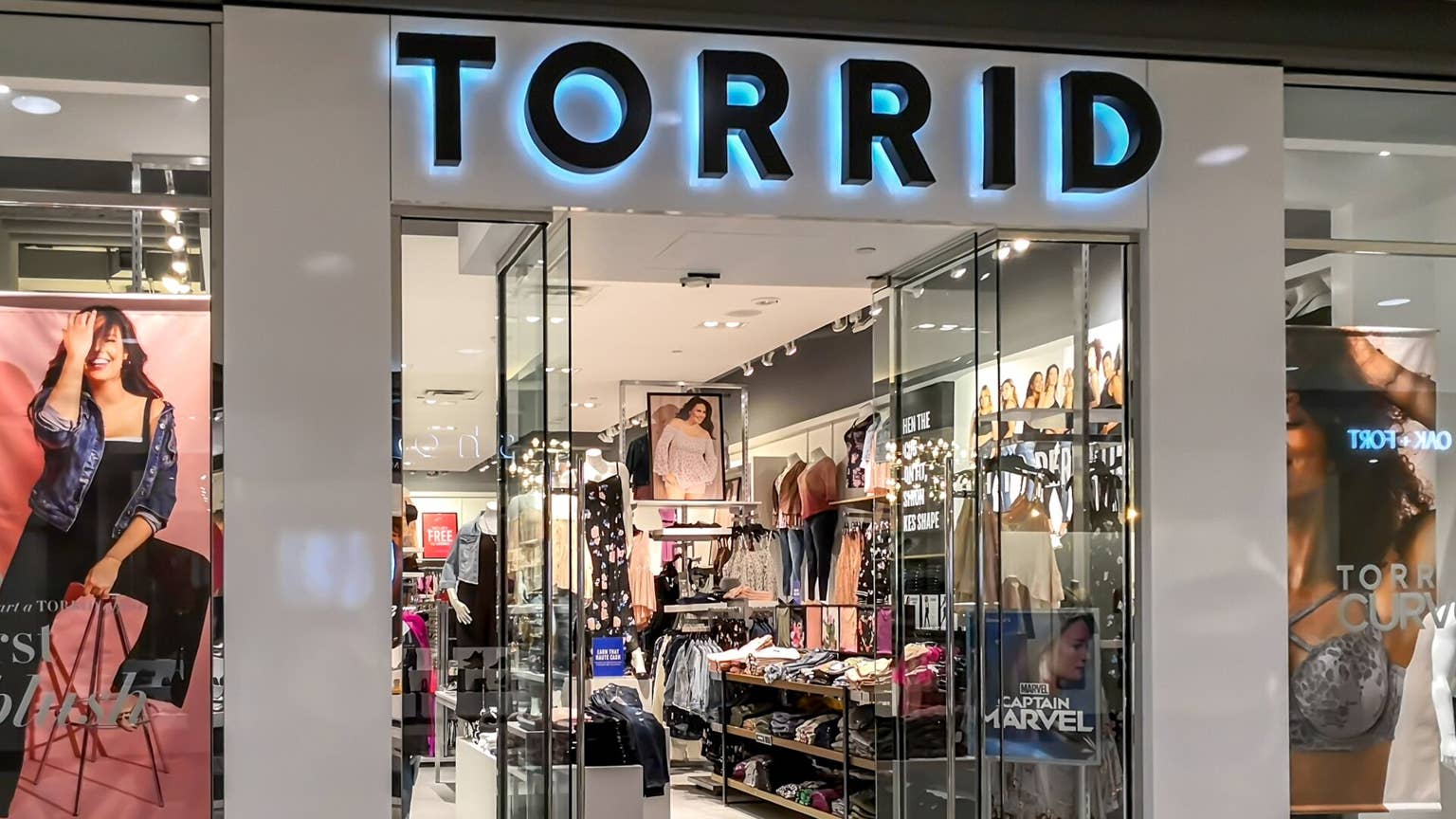
Cato Fashions has followed its rival Torrid in shrinking its store count because customers don’t use brick-and-mortar locations the way they used to.
Both of those retailers serve plus-sized women, and while I can’t speak for their audience, I can speak about buying clothes when you perhaps weigh a little more than you want to. As someone in the slow process of losing weight on a GLP-1, shopping for clothes has often been a traumatic experience.
I recently had to rent a tuxedo for a wedding, and the jacket I picked almost fit, but when I asked for the next size, the young, skinny clerk said the next one was in the “husky” line.
“That can’t possibly be the name,” I replied, and it wasn’t. It was actually the “Executive Line,” but the damage was done.
On one hand, I was proud to almost fit into the non-husky size, which is progress, but I was also fairly mortified at having my huskiness pointed out in a crowded public store.
My tale likely isn’t unique, and while Cato and Torrid probably have more sensitivity than Men’s Warehouse, clothes shopping can be triggering for some customers. That has at least partially pushed some clothing sales online, which has lowered the demand for physical stores.
Shutterstock
Cato closing more stores
Cato Fashions shared an update on its store closing plan in its third-quarter earnings release.
“Year-to-date, the company has closed 22 stores and opened two stores. The company is in the process of closing approximately 90 additional stores in the fourth quarter,” the company posted.
As of Oct. 31, 2026, the Company has 1,049 stores in 31 states, compared to 1,101 stores in 31 states as of Nov. 1, 2025.
The company also lost money in Q3.
- The Cato Corporation reported a net loss of $10.4 million or ($0.54) per diluted share for the third quarter ended Oct. 31, 2026, compared to a net loss of $5.2 million or ($0.28) per diluted share for the third quarter ended Nov. 1, 2025.
- Sales for the third quarter ended Oct. 31, 2026 were $148.0 million, a decrease of 4% from sales of $153.7 million for the third quarter ended Nov. 1, 2025. The Company’s same-store sales for the quarter decreased 1% compared to 2025.
“Although our overall sales trend improved compared to the second quarter, the effect of persistent inflation and higher fuel costs continues to erode our customers’ discretionary income,” CEO John Cato said. “The continued negative sales trend caused us to take more markdowns, which impacted our gross margins.”
He does not see the situation improving.
“We believe the pressure on our customers’ discretionary spending will continue into the fourth quarter and the foreseeable future. We will continue to manage our expenses and inventory levels as we navigate through this difficult economic environment,” he added.
Cato, it should be noted, sells plus-size clothing but serves a broader women’s apparel market, while Torrid focuses exclusively on plus-size fashion.
TheStreet
Torrid blames digital sales
Cato does not break out its digital sales. Torrid, however, shared a June 2025 plan to close about 180 underperforming stores from its fleet of just over 620, blaming the decline on customers shopping online.
“Digital continues to be our customers’ preferred channel, now approaching 70% of total demand. We’re accelerating our transformation to a more digitally-led business, which includes optimizing our retail footprint,” Torrid CEO Lisa Harper shared in the company’s first-quarter earnings release.
Consumers still like stores, but they simply don’t need them as much.
“The opportunity to try on clothes and test products is a major driver of store traffic, with 52% of consumers surveyed saying they go to stores instead of shopping online because of this. References to trying on/testing products surged 32% YoY on average at retailers and were up 58% at beauty retailers,” according to a Chatmeter report published last year.
Physical stores deliver a better experience because they introduce customers to merchandise and allow them to leave the store with their size. But if customers buy in-store once and then order online, that dramatically changes the economics for brick-and-mortar locations.
Cato might just be too small
Both Cato and Torrid have struggled to figure out the right mix of retail and digital.
RTM Nexus CEO Dominick Miserandino thinks these chains also face another issue that’s harder to fix.
“I think the problem for chains like Cato is that they’ve gotten stuck in retail’s version of the middle seat on an airplane. Nobody really wants to be there,” he told TheStreet.
It’s a question of not being big enough or niche enough to really matter.
“If I want cheap clothes, I’ve got Walmart, Target, or a dozen other places. If I want a bargain, I’ve got TJ Maxx, Ross, and Burlington. If I want something specific, I can sit on my couch and find it online in about 30 seconds. So why am I making a special trip to Cato?” he added.
It may be a problem, he noted, that these chains can’t solve.
“That’s the question these smaller chains have to answer, and I’m not sure they have a good answer anymore,” he wrote.