




















For the better part of the past year, I’ve watched fellow reporters and the tech industry at large wrestle with mandatory corporate AI tools that were supposed to make our work lives a lot easier.
Instead of saving time, many people continue to spend hours fact-checking chatbots and wrestling with automated software while trying to figure out why a “smart” system just hallucinated a basic data point.
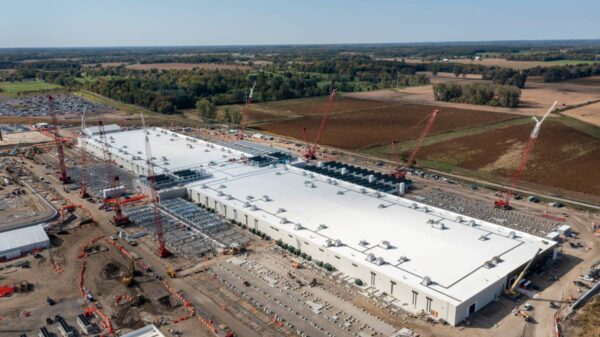
At the same time, corporate America has spent hundreds of billions of dollars blindly buying AI infrastructure. In fact, according to reporting by 24/7 Wall Street, in Q3 2026 alone, Amazon, Alphabet, Meta, and Microsoft continued to aggressively expand their AI buildouts.
Read more: Alphabet’s Google spending derails major shareholder perk
Now, those same companies are finally looking for a measurable return on their investment.
Unfortunately for the stock market, that return isn’t showing up. And according to a chilling new warning from Morgan Stanley, the AI sector is about to face a harsh reality check.
Wall Street’s ‘proof of ROI’ problem finally catches up to tech
Wall Street’s enthusiastically funded a blank-check revolution for the past couple of years or so. However, it seems the market’s now pivoting away from simply rewarding mere AI exposure, demanding concrete proof of sustainable cash flow.
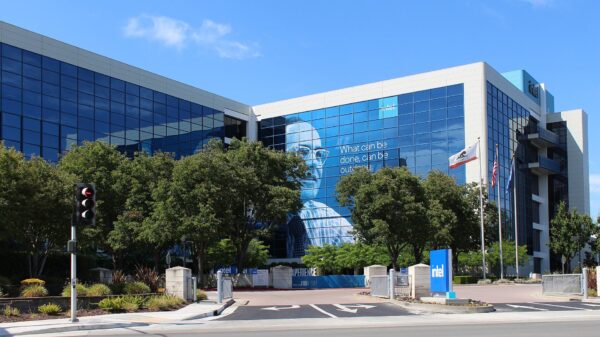
Case in point is that, as per reporting from Beinsure, the shares Semiconductor ETF (SOXX) just entered into a brutal bear market, dropping 28.1% from its June peak of $656 down to $471.51. The fund plunged over 8% in a single day after Intel forecast a major Q4 sales miss of $15 billion to $16 billion, sending its shares into a tailspin and eroding 29% of its value.
Moreover, the recent market sell-off exposes growing panic over the widening gap between rising AI infrastructure costs and actual returns.
For instance, Amazon just reported a staggering negative trailing 12-month free cash flow of $42.4 billion, while Alphabet posted roughly $9 billion in negative quarterly free cash flow as reported by CNBC.
More Artificial Intelligence:
- Meta and Microsoft just sent employees a memo about Anthropic
- Microsoft cutting off popular software with no extension Oct. 13
- Apple’s biggest AI advantage may face new privacy challenge
That tremendous cash burn is why Morgan Stanley’s chief U.S. equity strategist, Mike Wilson, just sounded the alarm. Wilson expects semiconductor stocks to suffer another 10% to 15% decline before finding a bottom around mid-November, projecting that the Philadelphia Semiconductor Index could fall to 9,500 points.
Morgan Stanley links this directly to tightening financial conditions and a dangerous structural dependency.
Chip stock earnings rely on spending commitments of a tiny handful of large technology companies. If these companies curb hardware orders to protect their own cash flow, multiple manufacturers will be hit simultaneously.
That said, Wilson also notes that this underlying correction has been grinding on for months. Since 1950, U.S. stocks have rallied following every midterm election, according to Seeking Alpha.
However, that historical playbook is far from being bulletproof. Ongoing geopolitical conflict in Iran and ongoing local pushback against massive AI data centers can still derail this much-anticipated broader market recovery.
Why everyday workers are rejecting AI
Wall Street is still obsessed with the tech giants selling AI, but surprisingly, it’s ignoring the people being forced to use it. Across corporate America, expensive enterprise AI rollouts are quietly dying in what industry insiders now call “pilot purgatory.”
Chief Information Officers are demanding measurable efficiency gains to justify massive software contracts, but the reality on the ground is far messier. According to S&P Global, the share of companies abandoning most of their AI initiatives jumped from 17% to 42% in a single year.
The adoption wall is steep; data from IDC reveals a staggering 88% of AI proofs of concept never actually reach production. Deploying a test pilot is easy, but according to Deloitte, only 21% of organizations currently have a mature governance model to safely integrate these agents into daily operations.
Moreover, there’s a foundational issue: AI simply cannot outrun bad corporate data. According to Gartner, 63% of data management leaders admit their organizations lack the necessary data practices for AI.
When cutting-edge generative models are plugged into fragmented legacy tech stacks, they immediately degrade. Also, Gartner notes that 72% of CIOs are either breaking even or actively losing money on AI deployments.
Hence, it’s tough to justify paying premium subscription fees for tools that make their exhausted teams a lot less productive.
The $1.5 trillion trap awaiting your portfolio
In essence, what does this mean for your 401(k)?
Morgan Stanley expects hyperscaler AI spending to reach a staggering $1.58 trillion by 2027 as reported by Fortune. That is a massive tab, and it would create a terrifying domino effect if corporate America stopped paying it.
Consider Nvidia. A stunning 91.7% of its projected 2027 revenue is tied strictly to demand for AI infrastructure. If middle managers stop renewing enterprise AI software contracts because their teams hate the tools, hyperscalers like Amazon and Microsoft will abruptly stop buying hardware from Nvidia and AMD.
That ripple effect will punish passive investors. Interestingly, just five companies, including Nvidia, Micron, Broadcom, and Intel, make up roughly 39% of the SOXX portfolio, which makes the ETF incredibly vulnerable to this concentration risk.
So the era of blindly “buying the dip” on AI-adjacent stocks is officially over.
Investors need to pivot away from the hype narrative and demand companies that can prove sustainable earnings power without relying on a perpetual Silicon Valley spending spree.
Related: Microsoft CEO sees a problem ahead for AI stock investors