


















Being right and getting paid are two different skills, and markets charge a steep fee for confusing them.
You can call the direction of an asset correctly for six months and still hand back most of the gain, because the instrument you picked kept charging rent while you waited. Traders learn this early and expensively.
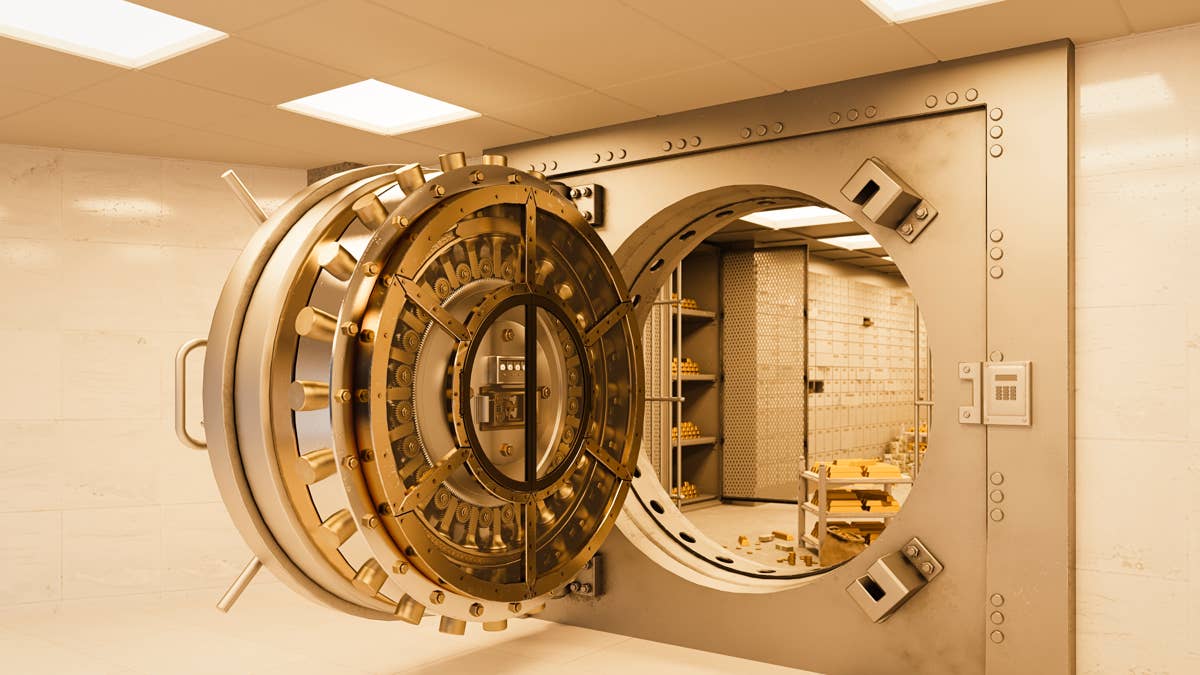
Gold has been the best classroom for that lesson all year. The metal touched an all-time high near $5,589 an ounce in late January, shed more than 18% of its value over the following months, then clawed a large piece of it back through August.
Anyone who simply believed bullion was headed higher was, over almost any 12-month window, correct. Anyone who financed that belief with short-dated calls was, at several points along the way, cleaned out.
Which brings us to the loudest thing that happened in gold last month, and it was not a purchase.
Twenty minutes after the opening bell on Monday, Aug. 24, one trader signed away every dollar of gold’s upside above $430 a share in the SPDR Gold Shares ETF (GLD) and collected $58 million in cash on the spot.
As of Monday, Aug. 31, that trade is winning.
Why gold bulls stopped buying plain call options
The setup for August was about as friendly as a gold bull could ask for. Treasury Secretary Scott Bessent said on Aug. 19 that the government would raise the maximum size of each buyback to at least $4 billion from $2 billion, targeting the 10- to 30-year part of the curve, according to Axios. The dollar sagged and bullion took off.
That is the part every gold story covered. The part almost nobody covered is what happened next inside the options market.
Related: Gold’s wild 2026 ride might not be over yet
Bulls rejuvenated by the Treasury’s effort to keep borrowing costs in check turned to exotic options and spreads to bet on higher prices, and spot gold rose 10% in August, its biggest monthly climb since January, reported Bloomberg.
Read that again, because the word doing the work is “spreads.” A spread is what you buy when you want exposure to a move but have decided the raw option is priced too richly to own outright.
You sell one contract to help pay for another. You accept a ceiling on your gains in return for a cheaper entry. It is the difference between betting a horse to win and betting it to place.
What the $58 million call spread says about gold
Here is the trade itself. The seller wrote roughly 116,000 GLD calls struck at $420 expiring Sept. 18, contracts already in the money, collecting $202 million, then spent $144 million on the same number of $430 calls, taking in $58 million and rolling into a new position, according to CNBC.
Break-even sits at $425, the midpoint of the two strikes. GLD closed Aug. 24 at $426.69, so the position needed gold to do nothing more than stop climbing for about four weeks.
More Gold & Silver:
- Gold, silver rally off ugly crash, but investors remain on edge
- Deutsche Bank just made a fresh case for buying gold
- A teen’s summer job just turned into a gold discovery
When I ran that break-even against the tape on Monday, Aug. 31’s tape, the math had moved decisively toward the seller. GLD traded near $406.58, roughly 4% below break-even, with about three weeks left before expiration.
What struck me pulling the rest of the flow data is how lonely that position was. Everything else in the pit that day leaned the other way, the same split I flagged when gold’s wild 2026 ride refused to settle into a trend.
- Traders bought more than 37,000 GLD calls on Aug. 24 against fewer than 20,000 puts, according to ThinkOrSwim data cited by CNBC.
- Thirteen of the 15 highest-volume GLD contracts that session were calls, according to SpotGamma.
- Total GLD volume ran nearly five times its 30-day average, according to Cboe LiveVol.
- Central banks bought a record 289 tonnes of gold in the second quarter, a fivefold jump on the first quarter’s revised 57 tonnes, according to the World Gold Council.
- Futures traders put the odds of a quarter-point September rate hike at 60.4% on Monday, Aug. 31, up from about 56% on Friday, Aug. 28, according to CNBC.
One large, patient seller against a crowd of buyers. The crowd had the better story. The seller had the better structure.
How Bessent and Warsh are pulling gold apart
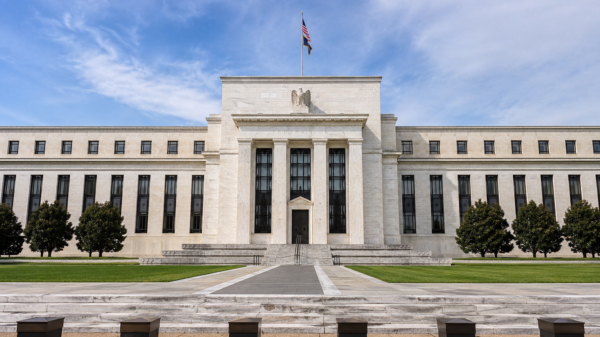
The two men who matter most to bullion are working at cross purposes, and that tension is exactly what makes selling upside profitable.
Bessent is trying to suppress long-term yields with a bigger buyback program running from Sept. 9 through Nov. 4. That pressures the dollar and helps gold.
Fed Chairman Kevin Warsh is trying to convince markets he will not tolerate 3.7% inflation. Summer price readings came in better than expected but “do not tell me that underlying trends have meaningfully improved,” Warsh said at Jackson Hole on Aug. 28, according to the Federal Reserve. Markets responded by repricing September rate-hike odds almost overnight.
Gold fell hard on that. Spot bullion traded near $4,435 an ounce the morning of Monday, Aug. 31, down from $4,598.89 at the same hour on Friday, Aug. 28, according to CNBC.
A market pulled between a Treasury secretary pushing yields down and a Fed chairman threatening to push rates up does not trend cleanly. It chops. Chop is poison for anyone holding a naked call and paradise for anyone who sold one.
What gold investors should watch before Sept. 18
The takeaway is not that gold’s rally is finished. Central banks are still buying at a record pace, and Goldman Sachs has not walked back its bull case. My analysis of the Warsh speech says a September hike is closer to a coin flip than a certainty.
The takeaway is that in a two-way market, the structure of a bet now matters more than its direction. Buying calls outright means paying for daily volatility you may never collect. Selling covered upside means getting paid for a ceiling you probably were not going to reach anyway.
Two dates decide who wins this one. The Fed’s rate decision is Sept. 16, and those GLD options expire Sept. 18, two days later.
If Warsh hikes, the seller keeps the whole $58 million. If he blinks and gold rips back above $425, a very sophisticated trader will be reminded that bullion does not care how clever your structure is.