











It started with one chart and one word.
Late on Oct. 13, tech investor Chamath Palihapitiya posted a chart showing CoreWeave bond yields at a new high. Elon Musk replied with a single word: “Yikes.”
By the next morning, the whole AI trade was left wobbling.
Over the past 18 months, CoreWeave and AI infrastructure peers have been investing heavily in the data center buildout. These capital expenditures were funded with debt.
Now investors are extremely wary, as interest rates are about to tick higher.
Why rising rates hit AI borrowers hardest
AI companies have borrowed at a record pace.
CNBC reported that Alphabet, Amazon, Meta, and Oracle had issued more than $228 billion in bonds as of Oct. 13, more than double the total in all of 2025.
Also Read: Barclays resets Oracle stock price target
JPMorgan expects the big cloud companies, known as hyperscalers, to spend $800 billion this year and more than $1 trillion a year by 2027, most of which is financed with debt.
Reuters reported that the latest inflation data will translate to rate hikes, driving interest expenses higher for CoreWeave (CRWV) and other data center firms with debt-heavy balance sheets.
A bond yield is the return investors demand. When yields rise, prices fall, and a higher yield also means the market forecasts more risk.
“The era of easy money … is starting to disappear and dissipate,” Luis Alvarado of Wells Fargo Investment Institute told CNBC.
CoreWeave’s interest bill, explained
CoreWeave is where the squeeze shows up first. Its June quarter numbers tell the story:
- Revenue: $2.6 billion, up 112.5% from a year earlier.
- Interest expense: $640 million, up from $267 million last year.
- Operating margin: negative 1.9%, so roughly break-even.
- Net loss: $626 million, or $1.14 per share.
- Debt: $27.6 billion long-term, plus $7.5 billion due within a year, against $5.5 billion in cash.
Sales doubled, yet interest expense accounted for roughly 25% of revenue.
Earnings before interest, taxes, depreciation, and amortization (EBITDA) stood at $1.3 billion, which covers the interest expense twice.
CNBC reported that S&P Credit Ratings rates CoreWeave B+, which is junk territory. Its five-year credit default swaps, a form of insurance against default, topped 1,140 basis points at one point.
Related: CoreWeave CEO responds as worry over spending bill comes due
Gavan Nolan of S&P Global Market Intelligence said 1,000 or higher generally signals credit distress.
Shares fell 15.5% on Oct. 14 and tumbled 24% last week.
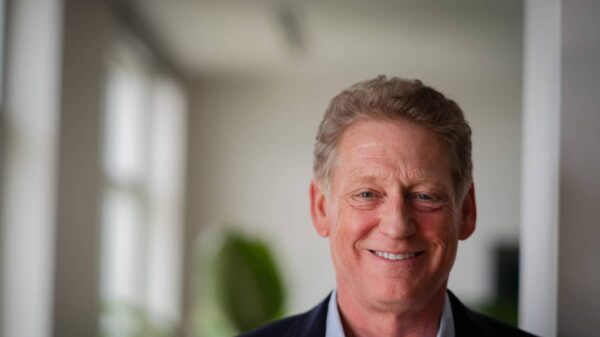
CEO Mike Intrator pushed back in a memo obtained by CNBC, stating:
“We are confident in our backlog which more than supports all of our debt obligations.”
Deutsche Bank said the backlog tops $100 billion, with about two-thirds tied to investment-grade customers such as Microsoft and Meta.
Oracle has more cushion, but less room
Oracle’s (ORCL) balance sheet looks stronger.
In its August quarter, revenue hit $19.3 billion, up 29.6%, while operating profit stood at $6.7 billion.
Its interest expense rose roughly 50% year over year to $1.4 billion. So, operating profit covers the interest almost five times.
Investing.com reported that S&P Global Ratings cut Oracle to BBB- in July, one notch above junk.
S&P sees a fiscal 2027 free cash flow deficit of $42 billion, and Oracle carries $167 billion in total debt.
Oracle shares fell nearly 10% last week and trade 61% below all-time highs.
My take on the AI debt scare
CoreWeave has contracts with the biggest names in tech, and Oracle has a $664 billion backlog.
However, CoreWeave will have to improve profit margins to manage interest expenses over time.
Given consensus estimates compiled by TIKR, CoreWeave is forecast to report a cumulative free cash flow of over $90 billion through 2029. It is projected to report a free cash flow of $10 billion in 2030.
CoreWeave will be forced to raise capital multiple times to support its cash burn rate and data center expansion plans.
More Artificial Intelligence:
- AI’s biggest business opportunity may not look like AI
- AI racks are outgrowing old power: 2 chipmakers have a strategy
- BofA splits software into winners and losers as AI agents arrive
Companies can raise money via debt or equity. Debt will impact profitability, whereas equity results in shareholder dilution.
Meanwhile, Oracle is projected to report a free cash outflow of $70 billion over the next two years.
Its free cash flow is then forecast to expand from $6.3 billion in fiscal 2029 (ending in May) to $49 billion in 2031.
Of the two, I see CoreWeave as the more fragile, given Oracle is much bigger, with stronger fundamentals.
The AI buildout is not broken. In fact, both CoreWeave and Oracle are investing heavily in capex to support demand.
However, building data centers costs billions, and much of that money is borrowed and could get more expensive.
Right now, investors want proof that cash flow can pay the interest bills.
More Stocks News