









HP Inc.’s quarterly earnings beat expectations, sending its shares up despite a tech sector downturn. However, the computer maker revealed a worrying development that could impact its profits and American laptop prices.
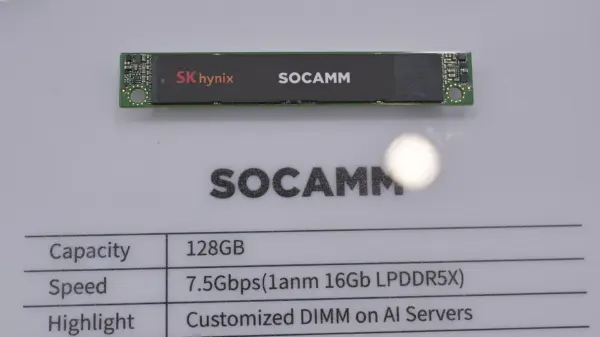
Compared with 15% to 18% at the start of the company’s fiscal year, memory and storage components now account for over 40% of the cost of producing an HP computer.
The rise is a result of mounting pressure from a worldwide memory chip industry that is increasingly focused on providing infrastructure for artificial intelligence.
HP (HPQ) shares rose sharply on Wednesday, Nov. 25, after the company reported fiscal fourth-quarter revenue and earnings above analysts’ expectations, according to Reuters. The rally stood out as the Nasdaq Composite fell 0.6%.
The findings from HP seemed promising. While adjusted profits hit 83 cents per share, quarterly sales climbed 9.3% to $16 billion.
Despite the increased sales, its adjusted profit decreased from 93 cents the previous year.
This paradox highlights a growing issue in the personal computer sector.
AI-powered laptops are among the more complex computers manufacturers are offering, but production costs are rising due to higher component prices.
The next concern for HP’s customers and stockholders is whether the business can cover those expenses without further reducing profitability or boosting prices.
HP reveals a startling increase in computer costs
During Tuesday’s results call, HP Chief Financial Officer Karen Parkhill informed investors that memory and storage now account for a much higher share of the company’s manufacturing costs.
At the start of fiscal 2026, such parts accounted for 15% to 18% of a PC’s bill of materials. Their percentage had increased to about 40% by the fourth quarter.
The cost of the parts needed to make a computer, not its ultimate sale price, is referred to as the bill of materials.
Parkhill said the company expects memory and storage costs to continue to increase in fiscal 2027, though at a slower pace.
The increasing demand for memory chips used in AI infrastructure is reflected in the strain.
Computer manufacturers must pay more for necessary components as chipmakers prioritize data center products.
Redesigned products, different component combinations, and price tweaks are some of the ways HP has responded.
Parkhill did concede, however, that rising computing costs may reduce customer demand; therefore, the corporation would like to use it only after exploring other ways to save money.
HP’s earnings beat comes with a surprising catch
HP reported several encouraging financial results for its fiscal fourth quarter ended Oct. 31.
According to its Nov. 24 earnings release, the company reported:
- Revenue: $16 billion, up 9.3% year over year.
- Adjusted earnings: 83 cents per share, down 10.8%.
- Personal Systems revenue: $11.8 billion, up 14%.
- Commercial PC revenue: Up 23%.
- Consumer PC revenue: Down 7%.
- Quarterly free cash flow: $800 million, down 45.9%.
The earnings beat was caused by another crucial element.
Tariff refunds contributed 15 cents per share to HP’s quarterly adjusted profits, which was seven cents higher than expected.
Adjusted profits would have been 68 cents per share in the absence of that advantage.
Additionally, the corporation revealed that its Personal Systems operating margin was just 3%, demonstrating the strain on its computer division.
The total number of PC units shipped decreased by 29% despite revenue growth.
The difference indicates that, despite fewer computers being delivered, revenue is being supported by higher selling prices and a larger percentage of premium items.
HP expects another difficult year for PC buyers
HP’s outlook suggests the industry will face additional pressure in 2027.
The company expects fiscal 2027 adjusted earnings between $3.15 and $3.45 per share, while free cash flow is projected at $2.9 billion to $3.1 billion.
Additionally, as consumers react to rising costs, HP anticipates ongoing impact on PC demand.
Executives spoke during the earnings call about focusing on high-end PCs and AI-enabled gadgets, where demand has shown greater resilience.
In the fourth quarter, about 60% of HP’s shipments were AI PCs.
Consumer demand is still lower, however.
HP said it introduced its new OmniBook 5 at $699 in October, using a lower-cost design to attract budget-conscious buyers.
This approach illustrates the challenging balance that manufacturers must maintain.
Profit margins may be preserved by raising prices, but doing so may cause customers to put off purchases.
Demand can be met by cheaper gadgets, but producers must figure out how to make them economically.
What HP’s 2027 outlook means for shareholders
The management of HP anticipates improved profitability as the business shifts toward more expensive PCs and as component costs rise slightly.
Investors must, however, closely review its projections.
HP will no longer use stock-based compensation in its non-GAAP profit calculations beginning in fiscal 2027.
According to the business, adjusted annual profits would have climbed by 38 cents per share if the revised approach had been applied to fiscal 2026.
That accounting change complicates direct comparisons between its fiscal 2026 earnings and the new outlook, according to HP.
In keeping with its history of yearly dividend hikes, HP also raised its quarterly payout to 31 cents per share.
The rebound on Wednesday showed investors that even amid a broader technology sell-off, better results can still draw buyers.
However, the greater test is still to come.
In an effort to regain profitability, HP must deal with rising memory costs, declining customer demand, and a shifting PC market.
According to the company’s most recent reports, sales growth alone may not be sufficient.
For customers, the issue is more straightforward: the cost of manufacturing the technology in their next laptop is rising significantly.
And that expense will eventually have to be borne by someone.
Related: Qualcomm-Huawei deal lands as U.S. tightens China tech rules
More Stocks News