
























Americans have spent months dealing with expensive gasoline. Now prices are finally moving in the right direction, raising hopes that filling the tank might become a little easier on household budgets.
How long, however, will that respite last?
Regular gasoline averaged $4.10 per gallon nationwide on Nov. 5, down from $4.23 a week earlier, according to AAA’s latest fuel-price figures. Prices remain approximately $1.02 above year-ago levels.
A average 15-gallon fill-up now costs more than $15 more than it did a year ago.
If Middle East tensions subside and oil supplies rebound, the next months may provide further respite. However, Darren Woods, CEO of Exxon Mobil (XOM), is cautioning that fixing the world’s damaged refining infrastructure would take much longer.
Woods said during Exxon’s Oct. 30 earnings call that it may take far beyond 2027, if not longer, to return to normal refining conditions.
His warning coincides with Wall Street’s dispute about whether oil prices would continue to decrease or rise.
While JPMorgan forecasts an increasing global supply glut that may ultimately put pressure on prices, Goldman Sachs predicts that Brent oil will hit $105 per barrel in December.
The amount that Americans pay for gasoline next year and the amount that Exxon makes from producing and processing oil might be determined by those conflicting projections.
Exxon CEO sees a longer road to cheaper fuel
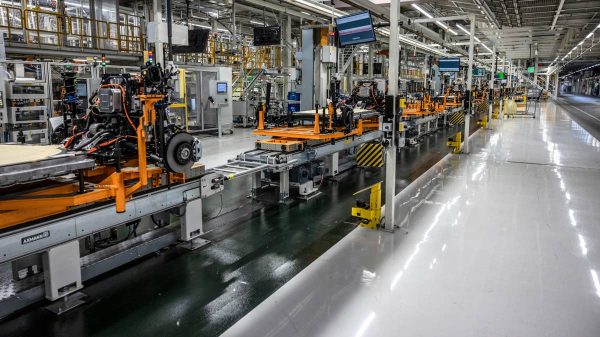
The supply of crude oil may not be the largest barrier to a sustained drop in gas prices. It is the capacity of the globe to transform that crude into finished fuels and transport them to the necessary locations.
Fuel markets cannot return to normal until global refining capacity has recovered from interruptions brought on by the crises in the Middle East and Ukraine, according to Woods.
Reopening shipping lanes, fixing damaged refineries, and boosting refined-product exports from nations with excess capacity are the three trends he recognized as having the potential to restore equilibrium.
Woods expects that process to extend well into 2027, according to Exxon.
Because the price of gasoline doesn’t always follow the price of crude oil, timing is important. Shortages of gasoline and diesel may maintain high refining margins and impede a drop in retail fuel prices, even if crude prices drop.
Instead of a consistent return to lower gas prices, that may result in inconsistent relief for American drivers.
The resumption of refinery operations, the recovery of gasoline supplies, and the normalization of shipments via the Strait of Hormuz will be the next crucial indicators.
Pump prices may decline until 2027 if those circumstances significantly improve. The current drop might be reversed by further interruptions.
Goldman Sachs and JPMorgan see different futures for oil
The most recent estimates from Wall Street show why it’s still unclear where gas prices will go.
Because of the risk of more supply interruptions, Goldman Sachs increased its December Brent oil projection from $90 to $105 per barrel.
The bank also increased its average 2027 Brent forecast to $88 from $80, according to Bloomberg’s report on Goldman’s revised outlook.
If Middle Eastern supply continues to be severely impacted, Goldman anticipates a more dire scenario where Brent might average $130 next year.
JPMorgan presents another viewpoint. Based on its estimate, the world’s oil supply outpaced demand by 1.4 million barrels per day in October. This suggests that prices may ultimately decline as production recovers and consumption declines.
Reuters reported JPMorgan’s assessment on Nov. 4.
For American customers, both situations have repercussions. Gas prices may continue to drop until 2027 if supply keeps improving.
However, even if the oil supply is rising, prolonged refinery disruptions or a fresh military escalation might keep gasoline prices high.
What the oil outlook means for Exxon stock in 2027
For investors in Exxon, the uncertainty presents a unique situation.
Higher crude prices often help the company’s upstream activities, while shortages that support margins on gasoline, diesel, and other products may help its refining operations.
Although it doesn’t completely remove vulnerability to declining energy prices, such diversification may help Exxon endure various market circumstances.
Exxon reported $15.4 billion in third-quarter earnings and $19.1 billion in free cash flow, according to its Oct. 30 earnings announcement.
More Oil & Gas:
- Chevron CEO issues stark warning on depleting oil reserves
- World’s biggest oil CEO shares stark oil price warning as pressure builds and supplies run dry
- Bank of America resets its oil price target with strong w
Stronger refining margins contributed to its Energy Products division’s $7.17 billion profits, which increased from $5.47 billion in the second quarter.
Exxon intends to buy $20 billion worth of shares in 2027, assuming favorable market circumstances.
A persistent drop in petroleum prices may pressure upstream profits and limit funds available for shareholder payouts. Nonetheless, the Energy Products division’s profitability can be supported by ongoing refining restrictions.
Therefore, in addition to crude pricing, investors should keep an eye on refining profits, production costs, and free cash flow.
Later this quarter, Exxon aims to provide further information on its financial plans for 2027. This will be followed by more comments during its fourth-quarter results call in late January.
These revisions might make it clearer how management plans to handle a crude market that could be weaker.
What American drivers should expect over the coming months
A better picture of whether gas prices continue to decline may emerge in the coming weeks.
According to the most recent data from AAA, drivers are already feeling some respite. However, fuel is still pricey, averaging about $6.26 per gallon on Nov. 5, which may keep distribution and transportation prices high.
The Energy Information Administration is scheduled to release its next Short-Term Energy Outlook on Nov. 10, providing updated projections for fuel prices and supplies.
Whether the current downturn turns into a long-term trend may be determined by that report as well as happenings in the Middle East.
Compared to trying to forecast oil markets, checking local gas costs and keeping an eye on regional averages may provide consumers planning vacation travel greater immediate savings.
Consumers should also refrain from believing that a one-day increase in petroleum would always result in higher pump prices the next morning. Usually, retail prices react slowly.
The rate at which damaged refineries and international fuel-shipping networks recover is what determines the longer-term picture, which is less obvious than the figures seen at a gas station.
Throughout 2027, Exxon’s profitability and shareholder returns may change as a result of that recovery.
It may decide whether today’s slight alleviation translates into a significant decrease in household costs for American drivers.
At last, the cost of gasoline is decreasing. Problems that won’t be resolved until next year or even later might determine whether they remain down.
Related: Exxon Mobil CFO warns of hidden risks behind oil supply shock