
























Oil prices have risen sharply this year. The U.S. Bureau of Labor Statistics shows the energy index rose 5.2% in September alone, and as fuel prices rise, other consumer goods tend to get more expensive.
That increase in fuel prices is closely linked to shipping costs.
In a Goldman Sachs research note shared with me, the bank’s commodities team, led by Yulia Zhestkova Grigsby, said the average cost to ship a barrel of crude oil has climbed above $20. Just a year ago, that same trip cost only $3. That means shipping costs became roughly seven times higher over the period.
The main reason for this is the tension around the Strait of Hormuz. Attacks on tankers have pushed insurance costs up, which has in turn raised shipping prices.
Why shipping oil has become so expensive this year
The Strait of Hormuz is a narrow stretch of water between Iran and Oman, and about one in every five barrels of global oil passes through it, according to the EIA. So when that area becomes a war zone, shipping companies worldwide charge more to cover the risk and possible route changes.
Also read: Energy secretary warns diesel ban would raise gas prices
Goldman Sachs said the Hormuz war risk alone adds about $7 per barrel to shipping costs. That is around one-third of the full price increase. The team wrote that the risk is rising because of “the recent escalation in attacks on tankers in Hormuz,” which has pushed up insurance costs and crew pay.
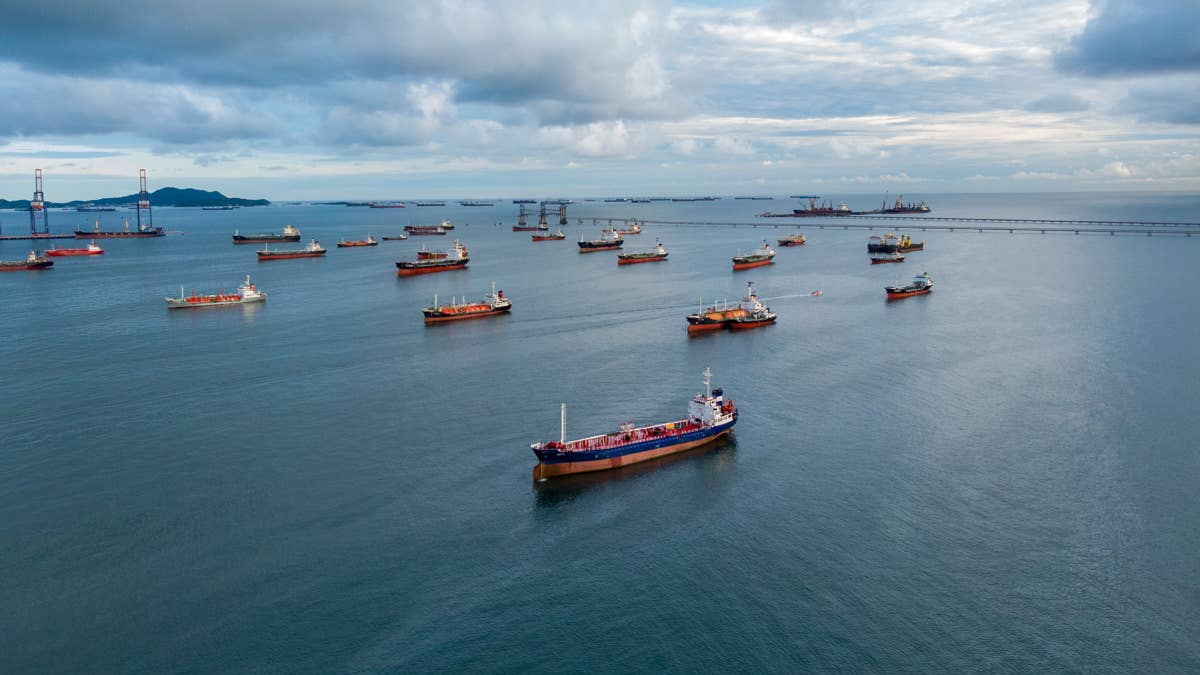
Other factors are also driving up shipping costs. Oil tankers are now meeting at sea to swap cargo, a practice called ship-to-ship transfers. That extends the time shipping vessels need for a round trip to 23 days instead of the optimal 10 days, according to Kpler.
The fuel the ships themselves need is also up nearly 70% from last year, and the US blockade on Iranian oil tankers has pulled another large group of ships out of service.
How the shipping surge affects everyone
Higher shipping costs affect drivers and homeowners through things like gasoline and heating fuel prices. It also affects refiners, especially those in places that rely on oil from far away.
Goldman Sachs noted that refiners in Asia are hit hardest by the increase. The note mentions that China buys about half its crude on long trips, and the rest of Asia buys about 80% that way.
More Oil Coverage:
- Chevron CEO disagrees with Scott Bessent’s take on the economy
- Oil fell on White House energy truce: Here’s what it means for gas
- Bessent tightens screws on Iran’s banks as gas holds at $4.33
And when shipping gets expensive, refiners either cover the loss or charge drivers more. The bank said passing costs on “is more challenging when final oil demand is more flexible,” which is the case in China because electric cars are now a popular choice.
Fuel prices tend to move together across the world, so if Asian refiners cut output because it is unprofitable, it will lead to a shortage, and prices could rise everywhere.
Oil tanker stocks that could gain from higher rates
Investors often look to tanker companies to benefit from rising shipping costs, and some top names stand out. For example, Frontline (FRO) owns one of the largest fleets of giant oil tankers. Giant tankers are the main ships that move oil through Hormuz.
Related: 16 shipping companies filed for bankruptcy in 30 days
Scorpio Tankers (STNG) is another option investors often consider. It focuses on smaller tankers that carry finished fuels like gasoline and jet fuel. If you don’t want to limit yourself to just big or small tankers, some investors like International Seaways (INSW) because it owns both.
What investors should consider before buying tanker stocks
Tanker rates depend on world events that nobody can predict. So if a peace deal reaches the Middle East, or if the US ends its blockade on Iran, shipping rates could fall within weeks.
Goldman Sachs expects Brent crude to average $90 a barrel by year-end and $80 next year, noting that high shipping costs are a major reason oil prices remain elevated. Investors should watch how many tankers are still tied up in ship-to-ship transfers and the pace of oil exports from the Persian Gulf. If these limitations relax, the shipping boom could fade quickly.
More Stocks News